
Latest Reviews

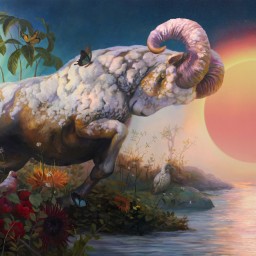
Protest the Hero return with just their sixth full length studio album and it left me feeling strange at first. I, like many of the early returns of Within, was entirely shocked by the bluntness and profanity ladened first two tracks "Mouthpiece" and "Fishhook". PtH (Protest the Hero) are a band well known for their flowery language and poetry on Keiza and Fortress that sounds very professional and thoughtful, whereas this sounds like it was written from the perspective of an eighteen year old who just attended their first political science course in university.
All that being said, something about Within really grips me on repeated playthroughs. It sounds more human and grounded in a real place rather than an imagined one. It reminds me in a way of two of my favourite records from 2020: Katie Pruitt's Expectations and Spanish Love Songs Brave Faces Everyone (quite the ironic comparison since PtH dropped undoubtedly their least juvenile record Palimpsest in the same year).
Within does become less vulgar as the record progresses, which does help it a little bit more. While later songs such as "Liberty Spike" and "The Mariner" also have the added benefit of reverting back to a nostalgic sound for PtH, its the middle section that stands out to me. "Grandfather's Axe" is quite the fun romp for a progressive metal band. And then there is "The Orchard", which also has nostalgic references to previous PtH material, but it's the lyrics that bring this song, as well as the entirety of Within together. Rody sings:
It may be hard to gauge this stanza under context, since PtH are a progressive metal band and not the easiest of music to digest. But many great political albums over the last five years have been excruciatingly challenging to approach and appreciate for how simple they are (basically the entirety of Tool's discography).
Thankfully PtH have made listening to this album a breeze with their compositions and production. "Mouthpiece" opens up the album angry and the vocal olympics being done here are superb, as well as on "Liberty Spike". The riffing in the guitar sounds epic and heavy without shifting too far away from the melody. "Grandfather's Axe" is another romp where the drumming of Mike Ieradi takes control. All the while Rody Walker's vocals adds some flare that sounds reminiscent of Daron Malakian. While the tracks "The Orchard" and "The Mariner" are more calm, they can still hit thanks to some marvelous mixing of the guitars and bass, which allows for those calming breakdowns at the end feel so much more rewarding.
What is found Within might be a shock for longtime fans of this band, or progressive metal in general. But given how juvenile the current state of affairs is, perhaps PtH are on to something here. People praise Rage Against the Machine for their raw and vicious approach to songwriting, why can't others do the same?
Best Songs: Grandfather's Axe, The Orchard, The Mariner, Mouthpiece
For Fans Of: The Dillinger Escape Plan, The Human Abstract, System of a Down
 Saxy S
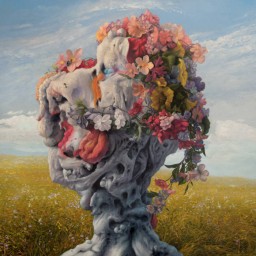
6 years is a long time to wait for a new album. When that happens, some bands try to make the ultimate comeback album. However, there are times when a band would just return with a short amount of tracks that may, in theory, disappoint fans. The new offering by these Canadian progressive metallers Protest the Hero, Within contains 6 full songs in just 36 minutes, almost like the EP Pacific Myth, but slightly longer and adding in two interludes which I guessed help cement it as a full-length studio album.
I don't blame the band for the somewhat slow progress, considering the turbulence in their lineup and health. But now, they can still display the heroes within them that shall be appreciated and never protested! Within reigns in excellent triumph despite its aforesaid short length and independent release.
"Mouthpiece" is an energetic rapid-fire way to kick off the album. The riffs and melodies will get you hooked, and d*mn, those lyrics hit hard, "In a world of vivid colour, our eyes are beaten grey". Then "Fishhook" is more punky in the music and attitude. The instrumentation and lyrical narrative really catch my attention. "Above" is the first interlude, sounding so emotional in the symphonics.
"Grandfather's Axe" is another kick-A track, adding in some thrash/speed aspects. The vocals by Rody Walker still impress me. "The Orchard" soars through as a pleasant standout. It ends with a soft serene outro sung by Jadea Kelly who has collaborated with the band in the past. Her most beautiful performance since in their debut Kezia!
"Below" is one more interlude to get you seated for what comes next. "Liberty Spike" accelerates through fast instrumentation and captivating lyrics, "A second song, for my first friend, whose loss this time, is permanent". Finally, "The Mariner" is the ambitious 7 and a half minute finale. Walker has clearly improved since his vocal issues that occured right before recording Palimpsest, and the lyrics and musical grandeur throw back to that album's highlights. Another album ends on an inspiring note!
Although Within can't beat the glory of the band's earlier albums like Kezia, it exemplifies their talent and passion within the music and lyrics. It shows that Protest the Hero are standing strong and powerful in just 36 minutes, which isn't that bad of an album length if you're up for repeated listening. They continue to hold their prog-metal ground!
Favorites: "Mouthpiece", "Grandfather's Axe", "The Orchard", "The Mariner"
 Shadowdoom9 (Andi)
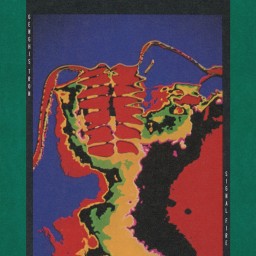
I do not fuck with Cybergrind. That shouldn't be too much of a surprise since, prior to 2021, I had no idea what Cybergrind even was! It's the merger between industrial music and grindcore. That was the primary descriptor given to Genghis Tron's debut album, Dead Mountain Mouth in 2006. Since that time, the band has moved further away from that introductory sound and closer to dreamy post-metal. Alas the music has become more uninteresting the less heavy it became.
So hearing Signal Fire for the first time left me feeling a little bit more upright than I was expecting. You see, Genghis Tron have followed in Deafheaven's footsteps and released an album that shows an appreciation for the past and builds upon it. In short, Signal Fire is the love letter between Dead Mountain Mouth and Dream Weapon. It isn't grindcore by any account, but it does return to some of its heavier roots of their previous releases while still retaining some of that dreamy atmosphere that made up the last album.
The album starts off on a great foot with "I Am All" with its heavy bass presence and the return of harsh vocals by Tony Wolski. Then the album trips over itself with two interludes sandwiched around one of the albums weakest tracks, "Future Worship". I feel like "Tomorrow Mirage" has a great idea through the first four minutes or so, but spends the final half of the track meandering in a very uninspired dream segment. The whiplash that I felt when the interlude "Without Form" transitioned into hallowing blast beats and and more vicious screaming was intense, but even that song cannot maintain that momentum for its entire length and transitions into plainspoken vocals with a light instrumental texture that sounds closer to American Football instead of Cult of Luna.
I'd like to say that Signal Fire is a more interesting album than Dream Weapon, but it's a lot less cohesive. I think that the three interlude tracks that are dispersed throughout the album kill whatever momentum may have been building up to those points, and helped even less by songs that cannot retain momentum either. Despite all the negativity, I still think that Signal Fire is a step in the right direction for Genghis Tron. Hopefully this flame can get them back on the right direction and make the type of post-metal that sounds more like Genghis Tron and not a cheap copy of someone else.
Best Songs: Born Prey, I Am All, Nothing Blooms in the Hollow, A Love So Pure
For Fans Of: KMFDM, Neurosis, Chat Pile

I could go into one of those shitty AI music program software and ask it to generate a djentcore album, and it would likely be less generic, derivative and boring than ERRA's Silence Outlives the Earth. Silence would have least been variety.
Best Songs: Cicada Siren, I. The Many Names of God
For Fans Of: Periphery, Currents, Invent Animate
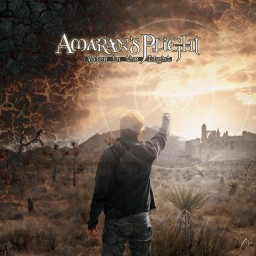
‘Voice in the Light’ is a 2007 concept album by progressive metal supergroup, Amaran’s Plight. Featuring renowned musicians such as vocalist D.C. Cooper (Royal Hunt), guitarist Gary Wehrkamp (Shadow Gallery) and drummer Nick D’Virgilio (Spock’s Beard), this ambitious release is a treat for fans of the genre, and for fans of the individuals involved.
Stylistically, this sounds a lot like Shadow Gallery. Fans of the band will no doubt enjoy this, and it shows the heavy involvement of guitarist and songwriter Gary Wehrkamp. Clocking in at one hour and 19 minutes, and stretching the physical CD to its storage limits, I won’t deny that I find the story a bit muddy at times. Whether it’s due to the long-winded duration, or just a number of filler tracks causing me to lose interest, usually by the end of the album I’m left baffled by whatever the concept was supposed to be.
Musically however, this is a very good release, with a number of particular stand-out moments. The musicianship is excellent (as you’d expect), with plenty of dazzling guitar and keyboard virtuosity, as well as fantastic vocal performances, and the album is full of both heavy and melodic tracks. Highlights include ‘Truth and Tragedy’, ‘Turning Point’, ‘Betrayed By Love’, ‘Coming of Age’, the beautiful ‘Reflections Part 1’, and in my opinion the highlight of the album, the energetic ‘Viper’.
While I doubt this is likely to be anyone’s favourite album, especially as the duration can make it a bit of a slog at times, overall, ‘Voice in the Light’ is a very solid release, and a worthy addition to any progressive metal collection.
 MartinDavey87
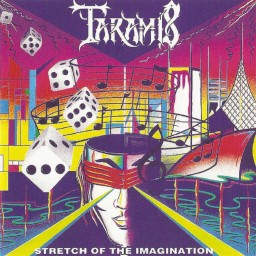
Melbourne’s Taramis are often spoken of as one of the first Australian groups to experiment with progressive & technical metal elements & I don’t have any reason to dispute that, although I’m not sure they were doing it quite as early as people sometimes make out to be the case. They started life in 1983 under the Prowler moniker, playing mainly covers & eventually releasing a demo tape called “Blood & Honour” in 1985 which I checked out for the first time only a couple of years ago, finding it to showcase a fairly traditional heavy metal sound that wasn’t exactly the “Progressive Heavy/Power/Thrash Metal” that Metal Archives would have you believe. The “Blood & Honour” cassette wasn’t too bad though & I ended up quite enjoying it as the talent the band members possessed was already evident even at that early stage in their evolution. The name change to Taramis was inspired by a character from Robert E. Howard’s "Conan the Barbarian" stories & would align with Prowler’s shift of focus towards original material in 1985. It also saw the group starting to attempt more complex, technical & progressive song structures with front man Shane "Joel" Southby’s soaring higher register vocals seeing them morphing into more of a power metal act in my opinion. Taramis’ first live show would take place on New Year’s Eve of that year & they’d quickly become a staple of Melbourne’s metal scene, largely off the back of their strong relationship with the notorious Metal For Melbourne festivals.
Taramis would release their debut album “Queen of Thieves” through the Metal For Melbourne label in 1987 & is another release that I only got around to checking out in more recent years. It’s here that you’ll see the band becoming more ambitious with their compositions & heading in more of a progressive power metal direction with the lyrical content trending towards more epic, fantasy-based themes. I quite like “Queen of Thieves” which would go on to be internationally licensed by legendary American metal label Metal Blade Records & made Taramis arguably the first Aussie metal band to secure international distribution. They’d record an untitled demo tape in 1988 which I enjoy too. In fact, I’m gonna suggest that it’s probably my favourite Taramis release these days but things went a little quiet for a few years after that release.
Now that we’ve got the historical stuff out of the way, we’re brought up to the time when I first became aware of Taramis as a 15 or 16 year old Sydneysider in the early 1990’s. My first exposure to the Victorians came through the opening track “Dreaming” from their (at the time) brand-new sophomore album “Stretch of the Imagination” which I heard played on a late-night underground metal radio program & recorded to cassette for further investigation over the week that followed. “Dreaming” would receive regular replays over the next month or so & led to me picking up a dubbed copy of “Stretch of the Imagination” shortly afterwards. I gave the album a few listens & quite liked what I heard for the most part but I’d soon place my cassette towards the back of my collection in search of increasingly more extreme music, only returning to it on Spotify this week in order to develop a firm opinion on a release that owns a fairly significant position in the early Australian metal landscape.
Taramis had undergone some significant lineup changes between their two full-length albums. Original guitarist Craig Robertson & bassist Danny Komorr had departed & been replaced by former (& future) Nothing Sacred axeman George Larin & talented bassist Evan Harris who would later go on to join well-known Melbourne power metal act Black Majesty in the mid 2010’s. These acquisitions saw Taramis’ ever-growing technical aspirations taking on a much more pronounced form with Larin also bringing with him a noticeably more aggressive & thrashier edge to the riffs & making “Stretch of the Imagination” comfortably Taramis’ most intense & complex work. Producer Doug Sanders (who had previously worked with the likes of Tyrus, Hobbs Angel of Death, Light Force, Persecution & Mass Confusion) does a reasonable job at bringing it all together too, although the guitars due sound a bit thin & tinny & the drums are very clicky indeed so it sounds very much of its time. Harris' contribution stands out as being particularly accomplished & those that enjoy a more pronounced bass guitar component in their metal will no doubt get some kicks out of his almost virtuosic performance here.
The sound of “Stretch of the Imagination” sits somewhere between progressive metal & technical thrash metal with the former being the more pronounced of the two. Both approaches are highly enjoyable & well executed from an instrumental perspective but, as with “Queen of Thieves”, it’s frontman Southby’s vocal performance that comes under the most scrutiny & will ultimately determine whether this record is for you or not. You see, while Southby’s highly theatrical & (at times) wincingly high-pitched delivery sometimes manages to hit the mark in terms of creating epic power metal atmospheres, just as often we see him failing to fully hit his notes & contorting my face into something akin to a cringe. The instrumentation is unanimously expansive & classy though which manages to save Taramis’ second full-length from being a creative failure. To highlight the flaws in more detail, the tracklisting on “Stretch of the Imagination” is noticeably inconsistent. The stronger material (see opener & album highlight “Dreaming”, the full-throttle thrash metal of “Behind These Eyes” & short closer “Delayed Reaction”) is very solid indeed & generally coincides with Southby’s more successful efforts. Similarly, half of the songs fail to capture me in the same way as I simply can’t accept Southby’s patchy attempt at Messiah Marcolin meets Bruce Dickinson air-raid operatics on songs like “Maze of Glory”, “Another Tomorrow”, power ballad “Lonely Star” or the particularly dreary “Diceman”. Thankfully, the better material is just strong enough to overcome the less impressive inclusions, leaving me with a generally positive feeling coming out of the album. The inclusion of a classy progressive metal instrumental (i.e. the fairly decent "Jigaboo Boogie") certainly helps though as it gives the listener some welcome respite from Southby’s vocal assault.
Qualms aside, I’ve quite enjoyed this revisit. I’m not sure I can prescribe to the general consensus that “Stretch of the Imagination” is Taramis’ finest work any more though. I think I simply find Southby’s delivery to be a better fit for the progressive power metal sound of “Queen of Thieves” & the 1988 demo these days so I favour those ever so slightly over this one, despite the fact that the more technical & thrashy sound would usually be something that should appeal to me more on paper. I don’t think I feel strongly enough about any of Taramis’ releases to see me returning to them in the future though if I’m being completely honest.
For fans of Sieges Even, Realm & Watchtower.
 Daniel
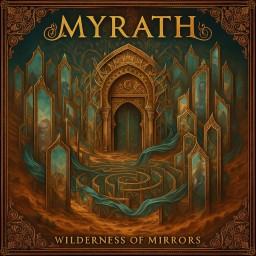
Unexpected and completely unannounced, Myrath have landed in my world and made an almighty impact by way of this month’s Infinite feature release. On paper, there was a lot to alarm me with the tags of symphonic metal and progressive metal throwing up two of some of my least favoured sub-genres. However, the reality of the actual listening experience has proven far more empowering than I ever could have expected. Wilderness of Mirrors is catchy, hooky and as result incredibly memorable. The spontaneity that presented upon my first listen was just the catalyst to a consistently rewarding album that repeated listens through seem to only improve on that initial positive reception.
The symphonic elements are thankfully not huge orchestral movements, and nor are they washy keys that flood everything either. The Middle Eastern influences on show here are incorporated skilfully into varying tempos and rhythms. Accented vocals are not always done well (Orphaned Land come to mind here) but in the main the vocals here only add to the authenticity of the music. There is some clunkiness to them sometimes, like on the track ‘Until the End’ featuring Amaranthe’s Elize Ryd where there is the annoying extension of words to make them fit the music, or on the opening to ‘Les Enfants Du Soliel’ when the choral vocals get sung over by the band’s vocalist. Whilst they are isolated moments, they do linger on the mind for a while after.
Production wise, Wilderness of Mirrors is immaculately produced. It is to be expected though. Within a few minutes of album opener ‘The Funeral’ it becomes clear that anything less production values wise would be a travesty. This is an album that is wanting to soar from the off, taking little time to awaken that massive wingspan. I would have more stars for it if perhaps the record did not dip in quality towards the end. After my personal favourite track, ‘The Clown’ things do get a little samey for me. Even though the musicianship remains strong and exuberantly showy, there is a sense of the ideas tank starting to run on empty over the final four tracks. This has still been a revelation for my usually more extreme ear however and I must have played this album for around two weeks on a daily basis.
 Vinny
Vinny
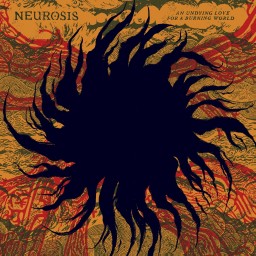
Having taken many years to come around to the lurching sludge and ethereal post-metal of Neurosis, it is testimony to how far up in my esteem they have come that I bought An Undying Love for A Burning World as soon as the pre-order was on offer. Having struggled for years with Scott Kelly’s vocals, only to see that, having finally come to terms with them he was an abusive piece of shit, the change to Aaron Turner feels natural. Not that I would ever class any Neurosis album as necessarily a safe space, to see an important (yet intolerable) member replaced could have been quite a disruptive event overall, yet AULfABW sits right in that challenging atmospheric-sludge space as if the line up has been together, making records for years.
This tension and relief in their sound (as described on their Bandcamp page) has never been more obvious. Haunting dissonance and crushing heaviness seesaw throughout the album like the most familiar of bedfellows. There is a constant sense of fraught drama lurking in the wings of most tracks, but it is hard to say anything comes off as being undesirable in the end. Whilst always vocally adversarial, Neurosis still delivers their musings with such authenticity that is hard to not find resonance with them. It is stark music that rebels against every possible wrong of the world simultaneously, yet no threat is needed when such brevity is in use. This is expression on a human level, riding on a virulent strain of futility whilst being chased by the spectre of hope. As such you could be forgiven for finding this a bleak album. To my ears it rinses the beauty out of the most unobvious spaces, acknowledging that suffering and salvation perhaps come from the same base source and are inextricably entwined as a result. Both are in effect, natural outcomes.
Having a ten-year gap between releases has seemingly reinvigorated the group as they have managed to make a record that will not only rank highly in any lists I get around to making this year, but in the scheme of their discography, this is a triumphant continuation of their already well-established legacy. Notwithstanding that there are clearly some tough times captured on the record, AULfABW is not necessarily pessimistic to my ears. It is blunt and to the point yet gloriously expansive in its scope. Far from being a kaleidoscope of styles though, the album is no deviation away from what Neurosis fans have come to expect. Records with real depth such as this one should be celebrated.
The Uncanny Puzzle
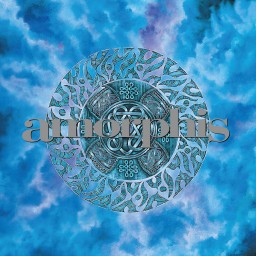
I’d consider myself a big fan of Amorphis for a long time now, after I originally discovered the band in 2015 with the incredible Under the Red Cloud. Obviously Amorphis’ career and legacy started way before this as they are one of the most consistent and prolific bands on the Progressive side of Death Metal, and 1996’s Elegy was a massive turning point in that career. With the release of their 15th album Borderlands in 2025 it’s no secret that Amorphis have found the sound that they are comfortable with, seemingly content to release similar albums for the past 20 or so years. However, that wasn’t always the case as the band went through rapid changes and evolutions in the 1990’s, morphing from a doom and gloom Death Metal band on The Karelian Isthmus into exactly what a listener of today would expect on Tuonela. Within this stretch, Elegy stands as a strange transitional piece that distinctly pushes the envelope of Amorphis’ sound in a way that they most likely never will attempt again, given their track record.
I was a very seasoned Amorphis listener before checking out Elegy, or any of their earlier material honestly. My listening rotation consisted of Skyforger and beyond for years and my curiosity was never piqued enough to go back to their humble beginnings. Because of this, I ended up listening to Tales From The Thousand Lakes and Elegy basically back to back, and it was a bit shocking. I was instantly drawn into Tales… because it was a heavier and dirtier version of the Amorphis that I had loved for years. Elegy then proceeded to blindside me with a fully Progressive Metal album that I still find very strange, no matter how many times I come back to it. It feels consistently and faintly familiar as a bunch of the tropes that are present in their later albums are here in full force, like the folky melodies layered on top of double bass and chugging rhythms as well as the oriental-like minor scales utilized on the opening “Better Unborn”. Despite these familiarities, this album continues to stump me as the whole thing feels a bit too wonky as Amorphis commits to a whole lot of ideas that don’t end up being cohesive for me.
Even though it’s been a little while since my first time through this album, I still remember being taken aback by the vocals in general. Amorphis’ current vocalist Tomi Joutsen doesn’t join the band until their 2006 effort Eclipse, so harshes are done by rhythm guitarist Tomi Koivusaari as they were in Tales… along with cleans done by newcomer Pasi Koskinen. While I think Koivusaari’s groveling, early Death Metal vocals work well on their first two albums given the darker and heavier tones, having the same delivery on an album with a brighter, borderline psychedelic tone is uncanny to me. It can feel at home on tracks like “On Rich and Poor”, but the fact that it’s so one-note completely derails tracks like “Against Widows”, especially when combined with Koskinen’s expressive, almost gothic deliveries throughout the album. Maybe it’s because I grew up with Joutsen’s masterful middle-ground between harshes and cleans, but the two extremes of the vocalists on Elegy really take me out of the whole experience. For whatever reason, both vocalists just fall flat for me throughout and, in turn, makes the album a strange experience for me to sit through no matter how many revisits I give it.
The addition of scratchy, 70’s prog guitars and the electronic noodlings is what gives Elegy it’s unique character as all these elements are intertwined with wisps of Amorphis’ normal riffing, which would become synonymous with their modern style. There’s a notable amount of parts being crammed into each track, with the lead guitar work being especially impressive in tracks like “Cares”, but sometimes these interesting parts are difficult to decipher due to being pushed back in the mix. There’s also a few very strange grooves that are attempted that really don’t land throughout the album, like the main melody in “Against Widows” or the incredibly alternative radio rock coded synths of “The Orphan” alongside Koskinen’s cleans. With Amorphis trying so many different things in this album, it’s almost a shock when a more straightforward track like “On Rich And Poor” comes on, to the point where I think it doesn’t quite fit with what Elegy is attempting.
I think I’m the one who’s simply confused on what Elegy is trying to do. It’s strange, because this album should be exactly what I’d be looking for as a fan of the band that has been beaten down by so many similar sounding albums. Objectively, Elegy is a fascinating and truly creative album that is still unique to this day with its blend of so many opposing influences. Gravelly harsh vocals amidst glittery synths, melodic folk passages atop Death Metal inspired chugs, and a distinctive atmosphere that jumps between gloomy gothic and bright psychedelia offers so much to explore, but those parts never manage to coalesce for me. In many ways, this album is Amorphis’ most important album due to how many ideas they tried before turning into a band that refuses to stray from their established sound. There are moments in the back half on “Elegy” or “Relief” where I think the creativeness of this album still shines, but Elegy remains a puzzle I personally can’t piece together.
 Xephyr
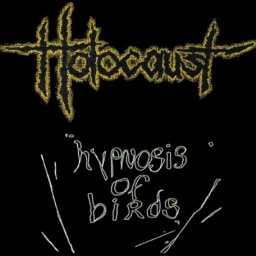
I hadn't heard the third full-length from this Scottish NWOBHM act before but this week's experience with 1992's "Hypnosis of Birds" has been unanimously positive as well as quite surprising. You see, I wasn't much of a fan of Holocaust's 1981 debut album "The Nightcomers" which is by far their most well-known release. It was a very basic, rough-&-ready heavy metal affair that's light-years away from the sophisticated progressive metal we find here. There are some hints of Holocaust's roots to be found here & there (see the first half of the opening title track or the re-recording of the band's signature piece "The Small Hours" which Metallica covered on their 1987 "Garage Days Re-Revisited" E.P.) but, for the most part, Holocaust have moved on creatively with only guitarist John Mortimer remaining from the lineup that delivered the debut. Mortimer also handles the vocals this time which are admittedly nothing special. It's the instrumentation that's the real win here with some of this material reminding me a lot of more popular progressive metal artists like Mastodon, Devin Townsend or Dream Theater. Unfortunately, there are no genuine classic of offer but the quality is consistently strong enough to make "Hypnosis of Birds" a great listen nonetheless, even if the production is a little rougher than you'd generally expect from a prog record. This is definitely my new favourite Holocaust release, over-taking the fairly underground 1980 "Heavy Metal Mania" E.P. which I quite like. And by the way, please ignore the RYM tagging which includes Avant-Garde Metal & Heavy Metal, neither of which are relevant.
For fans of Voivod, Anacrusis & The Thought Industry.
Let it be known that dropping into a new bands first full length record with lowered expectations is not always the right call. I was all ready to write this review as a scathing criticism of modern metalcore and basic and generic it all sounds; how it focuses on intensity and face melting breakdowns instead of actually writing good songs. Well that only appears to be half right on Hell Is Just a Halfway House by the djentcore act Iridium. Because, while the album isn't really that innovative by modern metalcore standards, the way in which they perform is splendid. Iridium have a very good understanding of being able to split the difference and appease both sides of this debate. The album is heavy, but not overwhelming, while still managing to make the melodic choruses very enjoyable. Hell Is Just a Halfway House does have enough variety between the different tracks as to not become too boring, which is also helped by the fact that this album is just longer than half-an-hour. I would say on an individual basis, the songs are bloated by these extended atmospheric interludes that run pretty consistent throughout the album. They don't feel distracting per se, in fact I quite enjoy them as a slight moment of reprieve, but they definitely could have been trimmed down and not be quite as frequent.
Besides that however, I can't really be super critical towards this album. Iridium have shown through their debut that heaviness and melody can coexist together in the world of metalcore. It isn't going to blow you away with how drastically different it is from the octanecore of today, but it might just change your mind on the direction that this seemingly motionless genre can go.
Best Songs: God Eater, Soul//Split, Is It Too Late?, Could9
For Fans Of: Spiritbox, Invent Animate
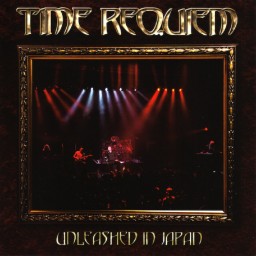
Let’s just be honest here, does anyone actually go out of their way to listen to this album? The thing is, it’s not bad, it’s just, well… weird. ‘Time Requiem’, a progressive metal band specializing in lightning-fast flurries of notes in a neoclassical vein, is the product of keyboard mastermind Richard Andersson. They’d only released one studio album prior to this, so like… why produce a live album so early in their career?
It just seems unusual. I don’t know a lot about the band, but I would take a guess that, like other, similar groups, they probably don’t gig very often, if ever. And with a limited choice of songs, it just doesn’t really offer much for the listener to sink their teeth into.
For what it’s worth though, the performances are fantastic. Each member of the band plays with machine-like precision. The sound is very good, and the crowd seem quite receptive to the band, though my guess is that this isn’t typically a Time Requiem audience.
It could also just be that I’ve always preferred studio albums to their live counterparts. But overall, this isn’t a bad release, but I doubt I’ll ever listen to it again. I’ll just stick to the bands studio output instead.
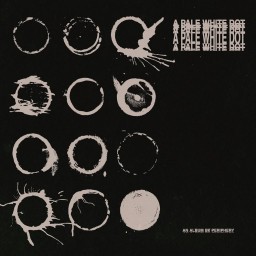
A Pale White Dot appears to represent either a turning point in the career of the band, or a side project. I echo a lot of the early sentiment surrounding this album when I hope that this is not a sign of things to come for Periphery in the future.
For starters, there isn't that much about A Pale White Dot that really stands out. None of the tracks within have that progressive nature to them; uncommon time signatures, whiplash transitions or extended runtimes. I found myself constantly falling out of sync with this album as it worked its way into the musical background as I work on other things. Songs like "Unlocking" and "Carry On" have decent fundamentals and technically sound great, but they are severely lacking in a truly jaw dropping moment that previous Periphery albums have had in spades.
The album really only has two standout moments. The first is the Will Ramos feature on "Subhuman" with its pedal-to-the-metal, unfiltered aggression. The dual vocals are a nice touch to change up the monotony, while the instrumentals have that unnerving texture, albeit far more subtle than what is to be expected by this band. The other moment is "Blackwall", which drops the guitars altogether in favour of new wave synthesizers. As the song builds up over its duration, one may become anxious in anticipation of the return of the drop tuned guitars and a vicious breakdown... only to find out that there will not be one here. The album does return to form immediately following on "Malevolent", but for these two back-to-back tracks, Periphery really made the best use of time.
The issue is that these two tracks are sandwiched in between ten songs of, relatively speaking, mediocrity. Periphery are still a very talented group, even when they are performing less technical music such as on this album, but the pedigree is far too high. This lack of stylistic variety or technical prowess just leaves A Pale White Dot seemingly empty.
Best Songs: Obsession, Mr. God, Subhuman, Everyone Dies Alone
For Fans Of: ERRA, Invent Animate, TesseracT
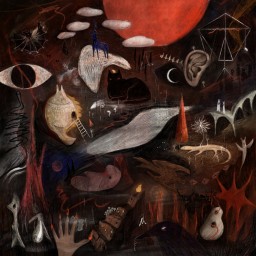
The problem with trying to sound epic in a progressive framework is that it just makes you look selfish. Plini's music in the past has had this quiet epicness surrounding albums like Homemade Cities and Impulse Voices. The issue that I have with An Unnamable Desire is that the "epicness" has now been recognized and Plini is going to do everything they can to replicate it, instead of letting it flow naturally. The heavier moments on "Manala" and the closer "The Time Will Pass Anyway" leaves this listener in an underwhelmed state. I can't deny that they transition on the closing track from heavy, djent influenced openings, to the soaring guitar leads and wide open foundation sounds really neat, but it also feels so scripted.
I know that An Unnamable Desire is scripted, but it isn't supposed to "feel" like it. Some of my favourite records of all time have a sense of improvisation to them and you can even hear that on earlier Plini albums. It does happen here sometimes, but their regularity is limited. Plini's guitar soloing has found a very comfortable place to rest, and the grandiose style suffers because of it. The solo guitar loses character, passion and purpose when the noodling becomes formulaic.
It's not a bad album per se; I actually think it is quite good. But in an attempt to chase the unattainable goal, Plini have released their most uninspired album to date. Adding a string ensemble for more than half of the record and overbloating the soundscape and the epicness leaves the records more genuine moments feeling more hollow.
Best Songs: Canyon, Now & Then, Vespertine
For Fans Of: Intervals, Animals as Leaders, Haken
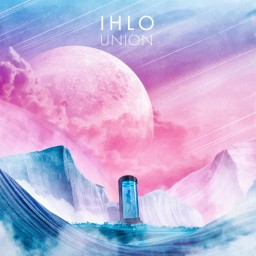
Checking out that Ihlo's second album Legacy made me up for doing the same with their other album, the 2019 debut Union. The album spawned two different categories of listeners; the fans who think it's brilliant and the purists who think they're ripping off other bands. I'm closer to the former category, finding potential brilliance in this album. At the time, this UK djenty progressive metal band had a 3-man lineup of vocalist/keyboardist Andy Robison, guitarist/bassist Phil Munro, and drummer Clark McMenemy. They would expand that lineup for touring shortly after this album's release. And while they're not copying bands like Tesseract, Haken, or Leprous, the influences show...
Tesseract is actually the most common band to compare Ihlo to, since they're djenty prog-metal bands from the UK. They don't sound that identical to each other. If there's a Tesseract album that sounds like Ihlo, it would be Altered State. What they do is add more melodies to balance out with the heavy downtuned riffing. And the vocals are all clean singing, flowing smoothly with those rhythms and electronics. There actually a couple issues that don't make Union as amazing as Legacy. Here the production sounds like it's a little too much. Even though there's real drumming, it almost sounds like they were programmed. But what am I to judge? The sound still impresses me and the band was really making their leap into the scene.
The opening title track is a solid start to this album and the band's discography. You already know what they're going for; progressive songs while making simple catchy twists. "Reanimate" is greatly structured as the riffing blends in with the strong choruses. I guess if you wanna be technical, that's the actual first taste of Ihlo, being the first single, and one of my favorite ones at that! "Starseeker" starts off tough then leads to more ambient verses. The band is in full force is in the chorus and the ending section.
"Hollow" is the best song to put in the middle of the album. There's a lot of electronic texture, with a few bursts of heaviness to make that song a highlight. "Triumph" almost lives up to its name. Beautiful riffing melody to bless your djent heart!
We're already getting to the climactic last leg of the album, starting with "Parhelion". Lots of insane synthy prog-metal talent! A nice stylistic homage to Periphery from start to finish. "Coalescence" ends the album as a 15-minute epic. This is where the band put in all their strength and talent to make a djent symphony full of riffing and ambience. The best for last has to be the glorious second half, when riffing rhythm and ambient melody collide for an out-of-this-world spell of hope.
All in all, Ihlo show their influences while having the uniqueness people seem to overlook. The blend of melodies and riffing show what geniuses those guys are, and if you stick to the bitter end, you get to witness all of its grandeur. Lots of creative energy in Union, though they would have more of that in their next offering....
Favorites: "Reanimate", "Hollow", "Parhelion", "Coalescence"
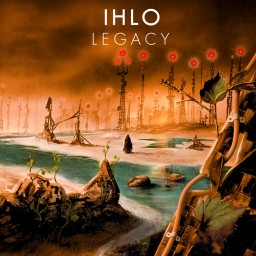
The first time I heard this band was when I was listening to a song from their debut Union in an Infinite playlist 6 months before this review. I thought the song was a nice stylistic homage to Periphery from start to finish. And now I can say the same about their new album Legacy! They're a new addition to the melodic modern progressive metal league of Leprous, Haken, The Contortionist, and Tesseract.
It took 5 years for this British progressive metal/rock band to make this follow-up to 2019's Union. Part of the delay was due to the hardships of the COVID lockdowns. But now they're here to deliver us this progressive offering. Also, don't mind the small bit of electropop elements I seem to pick up on.
Kicking things off with ethereal electronics is "Wraith". You already hear both the production and talent from the two key members of the band; guitarist Phil Monro and vocalist Andy Robison. They, along with the other members, work together to craft this complex structure in which ambience turns into metal grace, practically channeling the way of Devin Townsend. A melodic opening track to get you hooked! "Replica" is more emotional yet calm. Soon the melody builds up into more technical riffing. The blend of melody and heaviness is so unpredictable! Then comes the heavy "Source", in which the riffing and synths have stronger power in the second half. It's greatly direct while hinting at the diversity that would come in later tracks.
The clean "Empire" continues the complex structure though more prog than metal. Although it starts off reminding some of Porcupine Tree, eventually there would be more of the heavy riffing. It then leads to the short interlude "Storm". Personally I think it should've been called "Storm Coming", because it sounds more like the calm before the storm. On second thought, we're still far from the storm as "Mute" is little soft but quite addictive! Everything flows smoothly throughout these 8 and a half minutes. The vocals are quite remarkable too. I kinda wish they would go as djenty as Tesseract though. There are many different layers of spacey ambience. And if you're wondering when the heaviness would hit, it's at the 7-minute mark, starting the climactic outro, leading up to some final spoken lines like "You'll never shine as bright". Quite wonderful, though again it could've been a little heavier. The loss described in that track still stands in "Cenotaph", let out in defiance via crushing riffing. Things would get more atmospheric every now and then while tension lurks. Andy's vocals also help make that track another ambitious highlight. Everything's executed well in top-notch production, and there's no denying the horizons they fly over.
There's some brighter light in "Haar", another short direct track. It's a nice way to settle down after that towering pair of 8-minute tracks and get geared up for the monolithic finale. But before that, we have the title track, with the beat guiding you through the atmosphere. While it doesn't have a huge amount of impact, it can get you hooked for the album's ending climax. The climax being the monumental 10-minute epic "Signal". Everything's in beautiful flow. The band lets the beauty drift by, only saving the heaviness for when it's the right time. In the end, the track and the album closes the way it should. Fantastic!
This beautiful album Legacy has all the melody and power you can get. Well, maybe a slight more metal heaviness would be ideal, but that's OK. I look forward to what path they would take. The modern progressive metal/rock shaped up by VOLA and BTBAM is in the good hands of these young British lads!
Favorites: "Wraith", "Source", "Mute", "Cenotaph", "Signal"
OK, confession time: I really prefer a lot of the metal music I like to have vocals. Although I enjoy the music, the vocals help guide me through. It's probably why my interest in Animals as Leaders and Liquid Tension Experiment didn't last long, and why I haven't even touched the material from legends like Joe Satriani and Steve Vai. But there are a couple instrumental djenty prog-metal/rock artists whose material I absolutely love, those being Scale the Summit and, of course, Australian guitar maestro Plini!
His perfect streak of albums continues in his new album An Unnameable Desire. As always, Plini has his great progressive style that gives an interesting and captivating zest to this instrumental sound. If I were to give this desire a name, it would be pleasure.
"Dorenavant" is the one-minute intro with sonic ambience rising until it stops and makes way for the first full track. We get to an intimate start with the beautiful title track. Then it sweeps into "Ciel". I love this one, especially the production work by Skyharbor's Devesh Dayal and the guitar soloing by Polish guitarist Jakub Zytecki. Plini can still show off his frantic guitaring playing in "Canyon".
He actually goes further down the heavy djent rabbithole than before as evident in the groovy highlight "Now & Then". And even more in the blistering "Manala". With heaviness in the drums and guitars, this is Plini as his most metal! "Vespertine" is more tranquil, but the softness doesn't last long as there's more of the progressive chaos.
There are more apocalyptic vibes in "Ruin". Getting close to the end is "After Everything" which already sounds like the album's epic climax. However, we have one more track deserving all its glory... The metallic 7-minute finale epic "The Time Will Pass Anyway" is absolutely crushing and uplifting at the same time. I should also note the bass work by Simon Grove who has also done the mixing well alongside the mastering courtesy of Periphery's Adam "Nolly" Getgood. They helped make the epic sound so wonderful.
Yeah, as much as we can't deny the undeniable talents of Plini, you also gotta thank drummer Chris Allison, keyboardist Dave Mckay, and the mini-orchestra of John Waugh, Misha Vayman, and Yoshi Masuda, plus the production by A.J. Minette. Strong backing lineup, diverse tracks... The Australian master of modern djent still holds his title!
Favorites: "Ciel", "Now & Then", "Manala", "After Everything", "The Time Will Pass Anyway"
When it comes to weird experimentation (avant-garde metal or otherwise), I prefer when the non-metal influences aren't the main focus and the band has some metallic heaviness to balance things out. That's the problem I had with the 1982 Warning album. 4 decades later, a different band would get it all right within their progressive/tech-death sound, and that is Australian band Growth!
Extreme metal in the 2020s seems to lack experimentation for the sake of going the mainstream route. Growth makes up that in their debut The Smothering Arms of Mercy. It is the first album in an ongoing trilogy that would be continued over 5 years later in their next album Under the Under.
The debut album already gives you a great deal of dissonance in the opening "Cigarette Burns". Things get rough and tough in the furious growls and neck-breaking blast-beats. It is nothing short of a dark twisted frenzy. "The Treatment for Melancholy" isn't as melancholic as the title would imply, as the speed and intensity is leveled up. There's wild guitarwork while making room for mesmerizing melody. "Fortress of Flesh and Bone" takes a break from the face-punching action, starting off softer and more captivating. But don't think you're safe from the monster in the shadows as it lurks around for the right time to attack. Before you know it, the monster of aggression would strike and rip out your heart, leaving it hanging from its teeth, like in the title of this next track...
"Our Lady of the Hanging Heart" is more experimental while flowing in this storm of dissonance. Each instrument has its time to shine, and eventually they all combine to make an intense vortex of destruction. "Lead Us to Our Glorious Times" is more chaotic within the screamed vocals, guitars, and drumming that are all so crushing. Soon we get some clean melodic singing to show a less savage side of vocalist Luke Frizon. "Darkly, It Tightens Its Grip" doesn't loosen the band's grip on how much they can do in the many demonic twists. There's wild riffing hellfire with only glimpses of light in the darkness.
"Soul Rot" has more ferocious riffing and drumming to penetrate your ears and brain to make you find the structural construction and deconstruction worth appreciating. "Something Follows" continues the pulverizing dissonance while having some haunting riffing atmosphere. "Gird Your Loved in Armour While Yet You Wither" is the 11-minute closing gauntlet, and they're not gonna leave peacefully. The technical fury is here to stay until the very end.
If I had stumbled upon this album at the time of its release in late 2020, I'm not sure if I could've made it through this hour of brutality and seldom beauty back then. Now I can, since I've become more experienced with this sound and can find some heavy treats there. The Smothering Arms of Mercy shows Growth without mercy or limits!
Favorites: "Cigarette Burns", "Fortress of Flesh and Bone", "Our Lady of the Hanging Heart", "Darkly, It Tightens Its Grip", "Gird Your Loved in Armour While Yet You Wither"
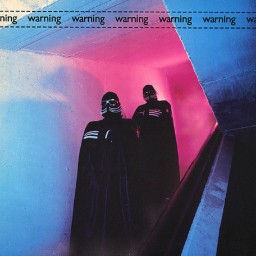
The earliest Infinite album is apparently this album by Warning, a short-lived band in Neue Deutsche Welle (different from Neue Deutsche Härte that started over a decade later). They released two albums in 1982 and 1983, then that was it. They split up and never reformed again with both members already passed away. RIP... Would I call their debut album avant-garde metal? I don't think so. It's more like alternating between the then-popular post-punk/new-wave sound and atmospheric doom. And with some of the earliest death growls ever witnessed, I can almost consider proto-death-doom, before even death metal was a thing.
"Why Can the Bodies Fly?" is an interesting catchy start, as the growls run through alongside operatic female vocals. See, this is their new wave-ish side, and the guitars are more like an afterthought. I can almost imagine Therion covering this, though it was instead covered by Austrian death metallers Pungent Stench. "Magic Castle" shows the band's doomy side with slow guitar heaviness, blended with electronic experimentation.
As for the rest of the album, it's just weird-a** sh*t. Emphasis on weird, emphasis on sh*t. As much as I wanna enjoy and appreciate this, I just can't. I also would rather hear Morgoth's cover of "Darkness". Not the most appropriate f***ing release to consider the start of The Infinite. I'll be doing another judgement submission ASAP....
Favorites (only tracks I even slightly like): "Why Can the Bodies Fly?", "Magic Castle"
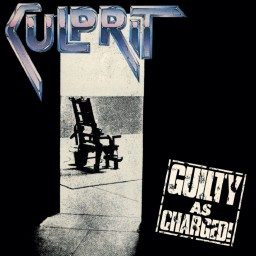
Apparently the guilty as charged culprit of being the very first progressive metal album is the (as of now) sole album by Seattle band Culprit, Guilty as Charged. Unfortunately, that theory has been debunked. I'm not sure how this album got tagged as progressive metal, when the sound is really just heavy metal and an early example of US power metal. And while there are prog-metal elements in the ways of Queensryche's Operation Mindcrime 5 years later, it's not enough to consider it prog-metal gate-opener...
Mislabelings aside, this is some great-a** sh*t! This is true classic heavy metal from Seattle, years before Nirvana's grunge sound took the city by storm. Such a shame they only lasted one album, though they've recently reformed with a live album and compilation. And the energy they have is like what Riot were doing at that time.
The 6-minute title opener has some heaviness in the guitar while staying melodic, which adds to the ambition. The fast pace has great variation to keep listeners awake. It's pretty much a grand example of the sound from both the album and the band. Also showing their heavy metal sound is "Ice in the Back". F***ing killer vocals and lyrics there! "Hell is but a flame..." When Jeff L'Heureux sings his highs, I get chills down my back like the title would imply. "Steel to Blood" continues pushing the guitarwork forward.
"I Am" is another great track, though sounding a little too mainstream. "Ambush" levels up the memorability as the catchy chorus is in sync with the focused instrumentation. "Tears of Repentance" is an amazing highlight.
Slowing things down is "Same to You" which has the melodic emotion of UK bands. The slow intro transitions through a mighty scream into that US power metal gallop that would be then adopted by German bands. With those f***ing powerful vocals and guitar, it's practically a bridge between Riot's first 5 albums and Thundersteel. "Fight Back" instrumentally made me remember a YouTube musician I forgot about for a while, Edward Sitnikov. I prefer his material though. "Players" plays off as a decent ending track.
All in all, Guilty as Charged is a solid underrated album, and more people need to hear about this band. A 2000 re-release includes a few live bonus tracks from one of their one-off reunion shows during their 25-year split including a cover of Queen's "Stone Cold Crazy". The leads and riffing throughout the songs make this a great offering. This was basically what people expected in heavy metal; lots of that 70s melody with a dash of the aggression hinted in later years or even later genres. What are you waiting for!? Wake up and smell the Culprit! The band Culprit's material, that is....
Favorites: "Guilty as Charged", "Ice in the Back", "Ambush", "Tears of Repentance", "Same to You"
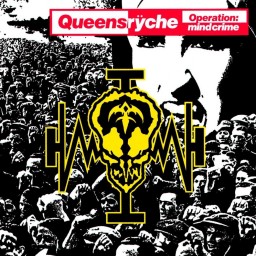
I will be honest, when I saw this record put forward for a feature release this month, I groaned inwardly. Having tried to understand the hype around this album on many occasions previously, I could never quite fathom its cult status. For me personally, it has always been Empire that is my go-to Queensrÿche album. A factor in my opinion of Operation Mindcrime has always been its arrangement. Metal/rock operas are tedious affairs to me, often where songs get snarled up in acts at various points in the record, completely disrupting the flow of the album usually. Here on this record, there is the double whammy of two, largely non-musical intro tracks to open proceedings, so my irritation soon becomes difficult to control.
Arrangement challenges aside, this outing with album has been much more fruitful than I expected. If I divert my attention away from the actual storytelling, I can acknowledge that there are some fantastic tracks on this record. I recalled that I had always liked ‘I Don’t Believe in Love’, but on this outing the class of ‘Suite Sister Mary’ shone through. I am confident that with future listens I will be able to expand on the list of standout tracks as some made a more subconscious impact this time around.
There are still some gripes, however. I struggle to describe much of this as metal in all honesty. The extravagance of the leads perhaps is all that keeps the sound this side of the hard rock style that I recognise as being more prevalent. I don’t really buy the progressive tag either. I doubt if it were all that progressive, I would have found as much positivity in the album as I have. However, let’s try to keep those positive vibes coming and end on a high note. This has been a successful revisit for me, albeit an unexpected one. I have a feeling if I edit the track listing myself on this, I could even get a higher rating for this album in the future.
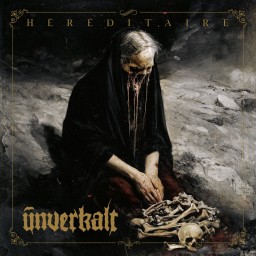
Best Songs: Oath Ov Prometheus, Penumbrian Lament, Death Is Forever
For Fans Of: Sólstafir, Dreadnought, Heretoir
I picked "Writhe" up on its release via Bandcamp and, at time of writing eight years later, it remains the only release from the New Hampshire trio, amounting to two tracks spanning 25 minutes of material. Boghaunter's version of doom metal is heavily atmospheric and dips its toes into atmospheric sludge waters more than a little. Opener "Constellation Vows" builds on clean and clear lighter motifs and then batters them down with some crushing riffs and corrosively harsh vocals, only for them to reassert themselves in a to-and-fro of contrasting and complementary tidal shifts. This feels to me to be more than the usual atmo-sludge trick of build, build release, the two atmospheric poles weaving together like the intertwining twin serpents of celtic legend and displaying a nice level of songwriting maturity. Second track, "Ordeals in Stillness" is less intricate and more straightforward doom metal, albeit no less impressive, employing a memorable and melodic, gravitationally heavy riff which is accented by sparely used keys and soaring lead work. These provide a doom-laden foundation, dripping with melancholy over which the sludgy vocals bark and snarl in protest.
I was impressed by this opening salvo from Boghaunter back in 2018 and remain so to this day and it is a great shame that so promising a debut wasn't the springboard for a career of note. Even sadder is that there seems to have been very little activity from the three guys elsewhere, although I have just found the 2025 debut three-track EP from death doom band Departure which features Boghaunter guitarist and vocalist Michael Demers on lead guitar and which, although it is more straight-up death doom, is still a good listen. I guess the history of metal is strewn with such tales of exceedingly promising acts, for whatever reason, falling by the wayside while lesser talents thrive, but I am grateful that we got this beauty of a release anyway.
 Sonny
Sonny
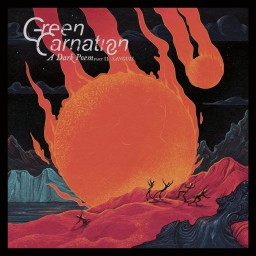
Lord of the Lost isn't the only band with a trilogy of albums having been released this year and last year. Green Carnation already have their own trilogy going on, titled A Dark Poem. The second part Sanguis was released just 7 months after the first part The Shores of Melancholia. And just like Part I, this part continues the band atmospheric gothic progressive metal sound, shining as bright as ever! That should help them stand in the prog-metal league alongside Amorphis and Opeth.
Now this alternation between heavy anthems and soft ballads may put some people off, particularly in a short 6-track album. However, I'm quite used to those kinds of jumps in some bands. Though a slight change in the order would set the style a little more straight.
The 9-minute opening title epic kicks things off hard. Music comes from the heart and mind, and they clearly have some melancholy going on, along with groovy keys. So amazing! It is followed by the ballad "Loneliness Untold, Loneliness Unfold" which goes as light as late Anathema. I would change a couple small things about it though. 1. Shorten the title so you're not just repeating it with one letter change. 2. Put it before the title epic as the album's intro, it sounds better that way. Other than that, good track!
Then things speed up in "Sweet to the Point of Bitter". Don't expect anything extreme in the vocals though, it's all clean. "I Am Time" has more melancholy in the music and the smooth vocal modesty of Kjetil Nordhus. In that sense, this is like a more progressive take on Demon Hunter's more melodic tracks.
"Fire in Ice" is bookended by an audio sample that I think is from Lord of the Rings. The music itself has the dark winter sorrow of Wolfheart (minus the harsh vocals). It's another long epic (though not as long as other progressive metal epics out there) that I enjoy, to end the action on a sweet and not bitter note. "Lunar Tale" is an uplifting ballad that is the most distant from the band's usual sound, even having some lovely flute by Ingrid Ose.
The Dark Poem saga may not be over yet, but so far those first two parts have quite impressed me. They're well connected to each other while each being their own offering. Sanguis maintains the strength while adding different moods to their writing. And I look forward to the third part to conclude the journey later this year or next year!
Favorites: "Sanguis", "I Am Time", "Fire in Ice"

This was my first time hearing about this Djentcore band from Australia and I enjoyed my time with I Guess It Was Nowhere. My initial impressions were that Above, Below would be following in the footsteps of bands like ERRA with their down tuned guitars and chunky hardcore breakdowns. And while we get a fair bit of that here, Above, Below also throw in some progressive/atmospheric sections as well. Those sections serve as a nice change of pace for the record, so that when the next chunky hardcore breakdown hits, it connects with authority.
I use the word "atmospheric" very strongly here because I believe this album could have used more of that. I kept thinking back to early Astronoid records while entrenched in a dreamy sequence and felt myself getting kicked out of it unceremoniously by the vocals. I like Jacob Wilkes clean singing, but his harsh vocals are too brash and unkept for the clean stylings of djent. I'm quite sure that this was part of the point; highlighting more of the hardcore influence through the vocals so maybe its just a difference of direction, but that doesn't excuse the vocal mixing, which is pushed so far back in the sequence. And Jacob did all of the mixing and mastering on I Guess It Was Nowhere too! Guess he really loves pumping his band up and not himself.
Overall it was pretty good. The time flew by and I enjoyed my time with I Guess It Was Nowhere. The band executes a decent variety of styles and are really good at giving the listener space before the next hardcore assault. Hooks are hit-and-miss; quite a few of them felt too much like alphabet soup instead of clear and concise phrases with catchy melodies, but the album is well played/performed and the mixing (minus the vocals) is superb.
Best Songs: Heat, Starbreather, Collapsing Eden, I Have Lost My Appetite for Spring
I'm pleasantly surprised by the amount of metal albums coming out in March. We already got hard-hitting new releases from more modern heavier bands like ERRA, Lost Society, Neurosis, and Poison the Well. And on the last Friday of that month, Iron Savior released a cover album, and another new album has arrived from... Myrath, with Wilderness of Mirrors! They have pleased me with their talented strength once again.
March just so happened to be the month that I've actually started listening to Myrath full-time after about 10 years of hearing about them but brushing them aside. With their 7th album, they continue to step up their game, with slight improvement in the production. I also loved how audible the bass is now. As always, the amount of worldwide influences makes Myrath one of the most diverse and versatile bands around. Middle Eastern symphonic progressive metal is a style that Myrath can perform at ease, and that's something worth praising a lot.
"The Funeral" is a complex opening track, and the one that encouraged me to listen to Myrath, via one of the monthly Infinite playlists. I honestly wasn't expecting oriental progressive metal to hit me so hard, but I'm glad it did. One of the greatest tracks here is the catchy "Until the End", in which vocalist Zaher Zorgati duets with Amaranthe female vocalist Elize Ryd. "Breathing Near the Roar" has left me breathless with its Middle Eastern take on the neoclassical progressiveness of The Human Abstract.
"Les Enfants du Soleil" (Children of the Sun) has touched my heart. The French lyrics are quite well-done, considering the fact that keyboardist Kevin Codfert is from France, and the band now reside there. "Still the Dawn Will Come" has catchy rhythms worth dancing and headbanging to. From the start of "The Clown", that song has a sound closer to heavy/power metal, and it's the somewhat generic kind. Well it's not bad, though it could've been improved for the album rating to be raised up to perfection. "Soul of My Soul" is another excellent single with different layers.
"Edge of the Night" has the catchy melody of Amaranthe, but replace the electronics with Middle Eastern vibes. I can say the same about "Echoes of the Fallen" which is an odd yet brilliant standout. Although it sounds more alt-ish, the progressiveness and the climatic chorus help the track stay good. All that's missing is for Ryd to guest appear in that track as well. "Through the Seasons" ends the album on a refined note.
All in all, Wilderness of Mirrors may be tied with Karma as my favorite Myrath album that isn't the glorious Tales of the Sands. It's too spectacular to ignore. Myrath needs to be appreciated more, and they shall!
Favorites: "The Funeral", "Until the End", "Les Enfants du Soleil", "Soul of My Soul", "Echoes of the Fallen"

As much as I enjoy how talented the members of Myrath are, one of them that I think stood out well amongst them is keyboardist Elyes Bouchoucha. His keys and strings help give the band's sound that magic Middle Eastern folk touch. He also sang in their debut Hope, having that Russell Allen-esque edge. Bummer that he left in 2020, though we didn't know until a couple years later because of the pandemic. Taking his place is longtime contributor and Adagio keyboardist Kevin Codfert!
This small change in lineup helped the band continue to step forward. That and the amount of time the band ended up having for this album compared to Shehili, also due to the pandemic, helped give the band a little more strength in writing. As a result, Karma is another amazing album, almost reaching the glory of Tales of the Sands.
Starting the album is "To the Stars" which has a kick-A groove boosted by the incredible drumming skills of Morgan Berthet, and of course the soaring vocals of Zaher Zorgati. Kevin Codfert's keys crank up the orchestral value, which explains the band sounding more symphonic and Western than ever, and he also does some wicked soloing. "Into the Light" is another excellent track to get you pumped up. This one's more melodic and mid-tempo with a catchy chorus. This shall get the live crowd moving. Their earlier Middle Eastern vibes are still present in "Candles Cry", specifically in the strings. The catchy chorus has different layers in the vocals and instrumentation and help make any listener anywhere welcome. The keys in "Let It Go" make that song a little too much like 80s rock, but that's OK. Still far better than that song from Frozen.
"Words are Failing" is another one of my favorite tracks in the album, getting you hooked in the strings and vocals. More of those keyboard string melodies shine before ending greatly with the powerful guitar soloing and final chorus. The anthemic "The Wheel of Time" has some funky bass. The chorus encourages you to be yourself, and the bridge explodes into some heavy power. The keys ended up drowning out most of the instrumentation in "Temple Walls", though that's really my only complaint for this entire album. "Child of Prophecy" starts off soft and chill in the keys and vocals, then guitarist Malek Ben Arbia unleashes some savage riffing, leading to another inspiring chorus.
"The Empire" adds in a bit of mid-paced power metal similarly to Almah and Serenity. And even more in "Heroes", the way German bands like Helloween and Masterplan would do it. Closing track "Carry On" has heavy darkness that was almost entirely absent in the album up to that point. Nonetheless, it has the theme of perseverance as the hero narrated by Zorgati declares that he will carry on, be the one, and find a way.
Myrath has made an album that comes to the perfection of Tales of the Sands, at probably the higher part of the 4.5-star tier. They continue to show how well different sounds from across the globe fit well together. United by metal!
Favorites: "To the Stars", "Into the Light", "Words are Failing", "The Wheel of Time", "Child of Prophecy", "Carry On"
If you're familiar with the Arabic language, you would know that Myrath is Arabic for Legacy. I guess this means that this album is the band's self-titled one. And you know that when a band releases a self-titled album, it often means that the album is highly representative of the band and their sound. Well with this album showing them discard the long complex song structures for a more accessible route, it's definitely the start of that different era.
These Tunisian progressive folk metallers have their catchy unique sound on display through 11 tracks. The Middle Eastern folk/symphonic aspects are even more apparent than their earlier releases. As a result, diverse experimentation is abound! It's already clear that their writing is as well-done as fellow oriental metal band Orphaned Land, to the point of almost rivaling them. As for the lyrics, the theme of freedom and hope has been around since the beginning. It's never tiring as long as it can motivate listeners, and even the band as well.
The cinematic folk intro "Jasmin" shall blow you away. And "Believer" shall blow you away harder than a hurricane! It is their catchiest song so far, with passion and power in the optimistic lyrics and exotic melodies. The chanting vocals sound EPIC. I can just visualize those Middle Eastern lands so well with this masterpiece of a song. The music video was made by two of the producers for Game of Thrones. The song is a gem that should really get you into the emotion of this album. The band still have their earlier more progressive side in "Get Your Freedom Back". It's almost like a sum-up of their first 3 albums and what's to come later in this one, all in 4 minutes! The progressiveness in the riffing is fused with the folk/symphonic elements. We even have a brief bridge of funky bass and drums. All catchy and progressive, similar to Orphaned Land.
On the flipside of their sound, "Nobody's Lives" takes on calm melancholy, complete with an Arabic-sung melodic chorus. The guitar rhythms flow through until stepping aside for more of those folky symphonics and some spotlight in the vocals. "The Needle" has darker intensity in the riffing and keys that sound closer to power metal. The catchy chorus will once again take over your mind with all its passion. We then get the epic "Through Your Eyes", which is where the magic really happens, especially in the piano harmonies. "The Unburnt" has some references to A Song of Ice and Fire. Those Game of Thrones producers should've made a music video for that one.
True standout "I Want to Die" is filled with epic glory, with sorrowful strings and smooth vocals. You know what, that should've been the theme for that James Bond film No Time to Die instead of that Billie Eilish song. Another progressive track "Duat" has some Ayreon-esque spacey keys. It's like a futuristic twist on their usual Middle Eastern folk-oriented sound, and that makes another brilliant highlight. Then we dig into the past for some old-school piano in "Endure the Silence", which is unusual yet shall catch your attention. One more track that is a folk-fueled rocker is "Storm of Lies". It really ends the offering as one more summary of the band's new direction. The Japanese edition includes instrumental "karaoke" versions of that track and "Believer".
All in all, Legacy has some of the most emotional diversity from Myrath, and it makes sense that this is their de facto self-titled album. As excellent as it is though, the vocals and symphonic are a little too pompous for me in some cases. Maybe it would've been perfect when I was in the more melodic metal zone at the time of the album's release. Now I prefer hearing the power from the guitars, bass, and drums that end up drowned out in those couple missteps. The surrounding albums have a greater amount of heaviness to balance out with the ambition. Still, Legacy has helped seal the band's position in the new league of melodic progressive metal. Their legacy shall carry on!
Favorites: "Believer", "Get Your Freedom Back", "Through Your Eyes", "I Want to Die", "Duat", "Storm of Lies"
In an age where melodic prog-metal giants like Dream Theater and Fates Warning are going strong decades into their careers, some listeners feel up to giving the newer and younger bands a chance. And some of those bands add something different to shake up the sound. One band being Tunisian oriental metallers Tunisia! Tales of the Sands is their 3rd album and is another step forward for the band after Desert Call which was in turn a step up from Hope. That may seem odd to say when they've switched gears in their compositional songwriting out of long epics into shorter songs, but what matters is how it's executed, within the vocals, guitars, percussion, and strings.
This kind of direction shows that Myrath is more than just the Middle Eastern Symphony X. From this album on, the lyrics alternate between English and Arabic, the vocal range is more diverse, and the drums and synths' ethnic vibes are stronger than before. Each song tells its own tale, no matter how short and long. Yet another case of how aptly titled Myrath's albums can be.
"Under Siege" is an awesome track to start with. It sounds close to the power metal of Iron Savior while throwing in the usual Middle Eastern instrumentation along with some background singing and chanting by Clementine Delauney, later known as for her vocal work with Serenity and Visions of Atlantis. It is followed by the more harmonic "Braving the Seas". The riffing almost borders in on metalcore while everything else is generally power-ish prog-metal. "Merciless Times" shows less mercy, as the blend of heavy riffing and symphonics remind me of Trail of Tears, albeit with Middle Eastern vibes and no growls. They bring back some Dream Theater-isms in the title track.
There's some more of the heavy low-tuned riffs in "Sour Sigh" (sounds like the kind of upset noise I would make). The dark heaviness that commences after the cinematic intro fits so well, even when the vocals are all cleans and no growls. "Dawn Within" pretty much continues the idea of giving the Finnish power metal of Thunderstone and Warmen a progressive oriential twist. More of that metallic melody appears in "Wide Shut".
It's also interesting hearing some electronic experimentation in "Requiem for a Goodbye", another track that pays off well in the rhythm and melody. "Beyond the Stars" has hammering aggression while Zaher Zorgatti continues his delicate yet strong singing. The original album ends with the great catchy "Time to Grow". Electronic keys pave the way for the rest of the exciting instrumentation, all in perfect synergy. Towards the end is some fantastic soloing from the guitars, bass, and drums, heading into the final chorus. A fantastic way out! The U.S. bonus track "Apostrophe for a Legend" is a top-notch rocker that should've been in the original album.
Like I said, all songs are short catchy anthems. There are none of the long epics from their first two albums. I mean it would've been nice to include at least one of those here, but it's perfect as it is. There are also no ballads, which is great because we wouldn't want the flow disrupted, would we? As amazing as Desert Call is, Tales of the Sands takes the throne for its consistency and clear production. Every twist they make gives the sound the memorable zest it needs for constant listening. This really shows the band's passion at its highest peak, and they don't lose their focus one bit. It has given the melodic progressive metal scene some hope after all those years of bands just imitating Dream Theater and Fates Warning. Myrath's talent shall be heard beyond the sands of time!
Favorites: "Under Siege", "Merciless Times", "Sour Sigh", "Requiem for a Goodbye", "Time to Grow", "Apostrophe for a Legend"
Melodic progressive metal has been shaped up in the US by Dream Theater and Symphony X. Then bands from other countries combine the genre with power metal like the Brazilian Angra and the Norwegian Pagan's Mind. And in between is one band from Tunisia that can combine power-ish progressive metal hooks and Middle Eastern vibes, Myrath. They're pretty much the band anyone thinks of when they encounter the phrase "Middle Eastern progressive metal" along with Orphaned Land. This kind of blend shines in both the heavier tracks and the ballads. You can pretty much listen to this while traveling a mystical desert as the winds call your name. That really makes the title of this album quite apt, Desert Call!
Myrath is the kind of band that would likely please the more melodic metalheads than the more extreme ones. It's probably why I waited until my recent return to the more melodic side of my metal taste to check out this band. At least the more extreme metalheads would enjoy Orphaned Land's earlier death-doom material. Desert Call is filled with melodic prog-metal anthems that can lean into rock or power metal but either way place the riffing side-by-side with oriental instrumentation and... Oh yeah, the vocals. Zaher Zorgatti has taken over on vocals that can drift through in both English and his native language. I kinda want more of keyboardist Elyes Bouchoucha's singing though.
From just the first half of "Forever and a Day", you know how excellent things are gonna get. Besides the true vocal power of Zorgatti, guitarist Malek Ben Arbia has taken on some strong riffing not too far off from Symphony X. Bouchoucha's keyboard atmosphere adds a lot as well. And the rhythm section consisting of bassist Anis Jouini and drummer Saif Louhibi help make that rhythmic impact behind the melodies. All of that has given me more hope in my exploration of melodic prog-metal and even power metal, and we're just getting started with this offering. "Tempests of Sorrows" has that guitar groove punching through the vocals, percussion, and oriental strings. The title track is where the band really master the synths, guitars, and bass in another standout.
Next up is the beyond wild madness of "Madness". The guitarwork in the opening is so crushing and frantic before leading into more of the vocals and strings. The dark insanity makes this one of the best tracks of the album. The 11-minute epic "Silent Cries" has wonderful guitar, keys, and percussion. I love it, though I prefer the debut album's epic. We breathe in some lighter air in "Memories", a soft yet progressive ballad. I wouldn't say it's super great, but it's far less generic than the song title.
Then we pump up the heaviness in "Ironic Destiny". And even more in "No Turning Back". There are some certainly some Angra-gone-Middle-Eastern vibes in the percussion and keys. "Empty World" kicks things up high, already sounding really heavy in the guitar within the first 30 seconds. I enjoy the vocals in the chorus along with the powerful guitarwork especially in the solo shredding. "Shockwave" is just full-on progressive power metal, as the atmospheric synths follow suit with the strong catchy metal instrumentation sounding close to Heavenly. And those lyrics are worth rocking out to. Also you don't wanna miss out on the US edition bonus track "Hard Times".
Symphony X and Angra fans wanting to hear that kind of sound come from the Middle East should definitely check out Myrath including this album Desert Call. Almost everything sounds so memorable and unique. It's a step up from their 2007 debut Hope, and the band would only get better in subsequent releases which, despite having simpler song structures and no more of those long epics, are still fun and enjoyable. But for now, hear this inspiring call!
Favorites: "Forever and a Day", "Desert Call", "Madness", "Silent Cries", "Empty World", "Hard Times"
Myrath is one of two leading bands of Middle Eastern progressive metal, the other being Orphaned Land, though the latter started off with a melodic death-doom sound. Myrath's debut Hope shows the band's melodic talent at a young age (guitarist Malek Ben Arbia formed the band when he was 13)...
I would say their second album Desert Call is the start of the Myrath many of us know. Not that there's anything wrong with their 2007 debut of course. Here the band has taken on a more complex progressive sound as opposed to the simpler song structures from Tales of the Sands onwards. It is basically like a Middle-Eastern Symphony X/Dream Theater. Although it doesn't have the same power as their subsequent releases, it can still please any fan of melodic prog-metal from all over the globe.
The short "Intro" has the Middle Eastern synths and percussion you would expect from a band in that region. I feel like exploring the Kharidian Desert in RuneScape with that as the soundtrack! "Confession" brings in those crushing guitars, plus the impressive vocals by keyboardist Elyes Bouchoucha (he would give his vocal role to Zaher Zorgati after this release). What impresses me the most is the Dream Theater-infused bridge soloing. Then we have the lengthy title track. However, there's some deep groove in the shorter "Last Breath" which makes another excellent track. This can really remind some of Allen/Lande, with Bouchoucha having the range of both vocalists.
Then comes the 11-minute epic "Seven Sins" which is pretty much the centerpiece of this album and possibly by the band, as their unbeatable longest song. Everything's progressive in the guitars and synths, even reaching a bit of doom. Elyes Bouchoucha can hit those gritty melodies, channeling hs inner Russell Allen. Near the 5-minute mark is moody bridge, then a minute later some power metallish leads, and another minute later, some beautiful piano. An ambitious and powerful masterpiece of a song!
"Fade Away" is an acoustic/electric ballad which isn't too bad but not great either. "All My Fears" has some rage in the guitars and gang vocals, though doesn't really stand out much. The final track "My Inner War" impresses me with its uncanny mix of Middle Eastern folk, jazz, and metal.
So their debut Hope can impress the more progressive metalheads, but it doesn't have the glory of their later albums. Still, giving metal an ethnic twist is definitely worth putting this band in the melodic prog-metal league. Some songs aren't so strong, while others show their tight might and talent, especially in that middle epic. Hope is a solid place to start listening to this band, though their subsequent releases are where you might find more hope....
Favorites: "Confession", "Last Breath", "Seven Sins", "My Inner War"
Pan.Thy.Monium is a pretty batshit band, right?
I think I judge all these batshit experimental albums by how justified the batshitness is to the music itself, and especially in the context of the whole record. What kind of statement is made here?
For the most part, Pan.Thy.Monium, on the third album, seems to be content with structuring the record with one weird moment after another. There's a moment where it abruptly transitions to honking sound effects for like two seconds, which is pretty novel, but that's just it: it's novel. Consider how many times you're going to relisten to this record, and how many times that specific moment will move you. My point is that when the album begins, there doesn't seem to be a unifying theme to the weirdness, and it sits firmly in the realm of novelty. Or does it? More on that later...
Another layer is the general musicality of it. Sure, the weirdness may just be done for the sake of it, but can you bop your head to it? Sure, you can. It's a perfectly competent album in composition, with catchy and effective parts. If anything, the weirdness makes those parts memorable so, at the end of the day, it is still more than a listenable album. You can enjoy it every time, but, of course, you're looking for something far deeper than just that when it comes to anything labelled "avant-garde", right?
The thing about this album is that while the weirdness is generally just done for the sake of it, as I said, there is division between tracks. Why not just have one long track? Instead, we have four songs, which have atypical lengths. This points to the fact that they're more akin to movements and, consequently, have distinct purposes from one another, which justifies the splitting of length. Because of that, we can deduce that there really is a unifying theme to this album, which is composed of those presumably different parts.
In order to figure that out, though, we must first identify how these tracks are different from one another. Before that, it helps to consider the actual theme we may see before we even listen to the album. According to metal archives, the music of this band in general is centered around a chaos god known as Raagoonshinnaah. A little bird once told me that this album in particular is about that same god in a power struggle against a god of light known as Amaraah. From here, we can attempt to analyze if the music itself correlates to that information.
So, the first track is called "The Battle of Geeheeb" and, already, we see confirmation of the power struggle theme. Now, the track itself is random in experimentation, although that description probably does it injustice. It's more like an explosion of creativity, where the intention is to produce some absurdism to throw the listener off balance. That seems obvious, doesn't it? Consider, however, that the music itself isn't played cheaply at all. If I was a band whose goal is to just shock the listener with weirdness, I wouldn't care about the structure of the music at all and just focus on the novelty. That tells us that there's something deeper about this than we may first assume. One different sound leads to another. An exchange of blows between the two entities, perhaps?
Do you remember "The Devil Went Down to Georgia"? You know where the Devil's piece begins, and you know where Johnny's piece begins as well. That's where i'm getting at with this. What if... the parts of this whole album is a sequence of responses between the two opposing forces? The weirdness, then, isn't just random. Well, not really. I mean, it's not JUST random. It's random, yet, but random with a purpose. It represents an altercation between two transcendent beings. In that sense, the music begins to take a form akin to abstract art. You may suppose that the more sinister-sounding parts are from Raagoonshinnaah, whereas the sick blues-y and prog-like guitar solos are Amaraah pushing back.
"Thee-Pherenth" begins with a continuation of this battle. The near beginning of this track is actually where the part I criticized earlier comes from, where it abruptly cuts to brief honking sounds. Ironically, though, I would say that the subsequent parts of this track are a bit more structured in terms of narrative. Immediately after is a death metal part, a suffocating darkness that can be interpreted as a retaliation from Raagoonshinnaah. It leads to a tense, ascending synth section, building up more and more until it climaxes into an ambient-like section. This is Raagoonshinnaah's track, alright, as the consecutive parts contain some darkness to them. Compared to the previous track, this one uses more atmospheric sections, with ambient and doom as well. Around 19 minutes into the album, though, another solo plays in the midst of one of those ambient sections, culminating in a jingling synth sound. I interpret that as Amaraah persevering even as Raagoonshinnaah constricts him with the latter's previous successful advances. In general, though, it seems that the latter has the upper hand so far, as I feel more oppression in this part rather than light, even with the occasional moments of Amaraah probably pushing back.
That's the thing with abstract art in general. We must accept a certain amount of open-endedness inherent to the piece. However, that also means that my interpretation could be way off to yours. I suppose I hardly need to say that, so let's continue, yeah?
You'll notice also that both of these tracks end in some kind of non-musical soundscape. In "The Battle of Geeheeb", it ends in a slightly optimistic synth ambient with a loud, creaking noise, which I have always attributed to a crying baby. Maybe it symbolizes Amaraah winning temporarily in that moment. It fills me with a nostalgic feeling, one that almost seems hopeful. It's the noise of life and all its potential. "Thee-Pherenth", meanwhile, ends in a more distressing sound, and you hear the creaking once more. This time, however, it's recontextualized by the new background. Now it sounds painful. It's the same motiff, but now different, as it's clear that Raagoonshinnaah is the one that's won here, which is consistent with my theory that "Thee-Pherenth" is about him gaining the upper hand in this struggle.
Interestingly, "Behrial" is entirely a synth section. It's hopeful, and definitely sounds like light. You may even call it breathtaking, after all that has transpired in the narrative. I'd like to point out that Pan.Thy.Monium also has a motiff of dreams and, sure enough, there is the sound of a ticking clock in this section in particular. But I don't see this as dreaming but, rather, waking up. To a new beginning, perhaps? A burial marks the end of one's life, yet maybe an ending is just another form of beginning.
"In Remembrance' is a minute-long silence.
...
So who won in the end, Raagoonshinnaah or Amaraah? Well, usually, I like to leave it up to interpretation. However, here's my theory... I think it's Raagoonshinnaah who won. I think an honorific remembrance leans more towards the death of light and order, as opposed to chaos. Sure, chaos and order aren't really opposed, but we usually grieve the loss of stability way more than the loss of danger and uncertainty, even when change is found in the latter. Now, the reason why there is "Behrial" in the end is because this isn't a straightforward struggle of a good guy against a bad guy. The ending suggests that while order isn't a constant in life, light persists anyways. So maybe the struggle didn't end at all. Maybe it happens in every day of existence and, even after all that, there is always light in darkness, or chaos in order, what you will... all the things that make life. That sure is something, isn't it?
 Miles Long
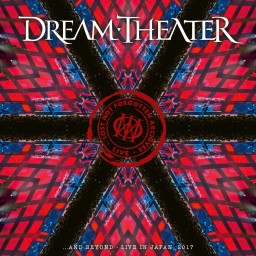
It actually took me a number of years to realise that this, Dream Theater’s second entry in their ‘Lost Not Forgotten Archives’ line of releases, is actually from the same show as the previous album, that being, ‘Images & Words – Live in Japan, 2017’.
Unlike its predecessor, which was solely the band performing their groundbreaking sophomore album in its entirety, this one is a bit of a mixed bag. Featuring eight tracks, highlights include ‘The Dark Eternal Night’, ‘As I Am’ and ‘The Gift of Music’. The musicians are all on top form as always, however, the detriment (as per usual), is vocalist James LaBrie.
It’s not his fault. I mention this with every single Dream Theater live release, but a vocal accident in the 90’s, along with his age, make him as much a struggle to listen to as it is a struggle for him to sing these songs. In particular, there are a number of tracks where I genuinely have no idea what he’s even saying.
Still, overall, this isn’t a terrible release. It’s just pointless, really. I’ve no idea why the band chose to release this concert over two different albums, except as some kind of money-making scheme specifically targeting Dream Theater nerds. And I shall forever remain proof that it worked.

With an album cover that looks for all the world like a forgotten soundtrack to an obscure French art film from the 1970’s, Hidden Fires Burn Hottest is not a record I was to find per se. An established Californian post-black metal/post-hardcore band, Bosse-de-Nage aren’t a band I would normally be looking to find either. As is sometimes the case though, unexpected finds can be the best. Although similarities persist with the likes of Deafhaven, Yellow Eyes and Agriculture, all acts I find to be usually well outside of my wheelhouse, there is something in the sound of Bosse-de-Nage that had me interested from the off.
Now, if you’re reading this thinking how I am now going to tell you what that “something” is, well sorry to have to report that I am still figuring that bit out. I mean, it could be that I am starting to more open to a wider palate of music that incorporates more post and gaze elements. Indeed, I have been listening to more hardcore recently as well as a host of other non-metal music also. So maybe the non-metal elements of Hidden Fires Burn Hottest appeal to me more than any semblance of any metal that is present does. If I am being honest, I am not actually trying all that hard to figure out what that “something” is. Instead, I find myself just going with the enjoyment of what I am hearing, paying little attention to how it got in front of me and hy I have returned to the album on a near-daily basis for the past couple of weeks.
The vocals are where the closest element of the black metal in the sound resides in the record. With the combination of spoken word and lurching, hardcore vocals alongside these, there is a distinctly jarring element to the record. Those jangling guitars and a fair but firm percussion section that build ‘Mementos’ before a fearless bass presence makes its first noticeable appearance are an early indication of the non-linear format to song writing that Bosse-de-Nage employ. This is an album with a real sense of a percussive drive being at the forefront of its direction, layered with a grim punk style attitude overall. Even the two interludes work, crafting a valid space for themselves in the track listing without becoming intrusive or disruptive as I often fear with such tracks.
Hidden Fires Burn Hottest lives up to its title billing as beneath the surface, the intensely burning light at the heart of the band that represents their passion for their art certainly can be felt by the listener. Considering at the point that I discovered this I was (probably) searching for black metal it is rare for me to embrace such an unexpected warmth in a record. That having been said, I would not say that this is a particularly happy or positive album. I can connect with the Neurosis tropes of ‘Underwater’ just as well as I do with the more direct bm approach to ‘Frenzy’ that immediately follows it. This variety in styles is very easy for the band to claim under a banner of their own individual sound I would say. Nothing sounds forced here, and we are not talking about Imperial Triumphant levels of chaos or KEN Mode style attempts at experimentation by comparison, yet the record is not standard anything in any sense of the term either.
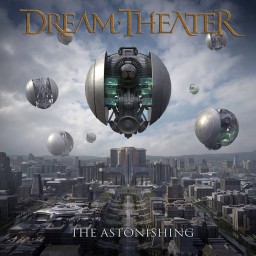
It pains me to do this. I’ve been a Dream Theater fan since 2003, when they very quickly became one of my all-time favourite bands, a position they still hold to this day (well, top three, anyway!). Their career is literally one masterpiece after another. Until drummer Mike Portnoy left the band, that is. The first album without him, 2010’s ‘A Dramatic Turn of Events’ is still an incredible release, but 2013’s self-titled ‘Dream Theater’ started to see a decline in quality, and that then brings us to this, 2016’s two-disc concept album nerd convention, ‘The Astonishing’.
It’s naff.
I mean, I’ve tried and I’ve tried, but it just feels like the band is well and truly on autopilot at this point. There is nothing overly memorable about this album, just a couple of tracks here and there. But at a combined duration of over two hours, ‘The Astonishing’ is such a drudgery to listen to in one sitting, especially for such bare rewards. Of course, the musical performances are exceptional, as you’d expect, but the rest, kind of sucks. The lyrics are naff, the songs are mostly naff, and the story is naff, though to be honest, I zone out so often that I don’t really pay much attention to it anyway.
If I had to pick out any highlights, I’d say ‘The Gift of Music’, ‘A Life Left Behind’ and ‘Our New World’ are all okay. Not brilliant, but not terrible either. If they could have condensed this album onto one disc, it MIGHT have been listenable, but as it is, an enjoyable 14 minutes out of 130 just isn’t worth the effort.
As I’m getting older (at the time of writing this, I’m 39 years old!), I find myself having less and less patience for albums that don’t grow on me quickly enough. And considering how long this slog of a record is, I think it’s time to pass on this one.
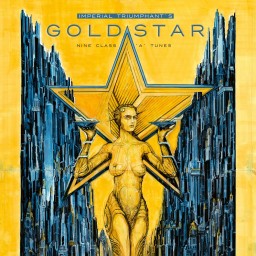
Another high-quality record from this unusual New York trio, possibly their finest work actually. Guitarist Zachary Ezrin (Folterkammer) does a great job behind the microphone with his deep death growls being both powerful & well phrased. I really enjoy the drumming of Kenny Grohowski (John Frum/Secret Chiefs 3/Titan to Tachyons) too while Sarmat bass player Steve Blanco also provides us with a capable performance. The black metal component of the Imperial Triumphant's 2010's era is long gone by this point with "Goldstar" sitting more comfortably under an Avant-Garde/Experimental Death Metal tag in my opinion. Even the dissonant elements are probably not consistent enough to call this full-blown dissonant death metal. There's a lot of progressive metal & tech death influence here though too. Unsurprisingly, I find "Goldstar"s best moments to be when the boys simply go hell for leather with the more frenetic & aggressive phases being the most effective & often marrying up with the simpler sections of the album but that's not to say that the more experimental parts of "Goldstar" aren't impressive as they're very smoothly incorporated for a record that jumps around so much. If you exclusively like your death metal of the old school variety then you'll wanna steer well clear of this release but those that like a bit of ambition & creativity should find it to be universally interesting because there's no doubt that it's a classy effort by a forward-thinking extreme metal outfit.
For fans of Pyrrhon, Ad Nauseam & Portal.

2025 was an absolutely brutal year for metalcore. Both in terms of the new music that was released as well as many of the older records that I got around to. This has been a consistent decline in quality for years and further exacerbated by metalcore being the dominant style of metal in the mainstream. So despite my best efforts to avoid metalcore in my spare time, I'm still beat over the head with disposable albums from Bury Tomorrow, Architects, Slaughter to Prevail, among others. But earlier in this year I heard Hit It! for the first time and was taken by surprise by how good it was! This is like if the electronicore of Electric Callboy was somehow infused with the more accessible stylings of Thornhill. And even that doesn't fully encompass every style/influence Vianova have on Hit It! Now to its credit, the album does have a solid flow. The intense djentcore elements are kept rather sparse and are used for artistic effect. The record has a smooth texture even through the style changes, such as the shoegaze "Future Nostalgia" that transforms into a quasi-Deafheaven groove. I think the biggest issue is in the production, and more specifically, how the songwriting hurts the low end of the mix. Many songs on Hit It! take inspiration from djent in its guitar riffing, but songs like "Melanchronic" have this off-putting groove where the bass just feels like its been pushed into the track unprovoked, which is a shame because the opening synth line hooked me in right away.
Despite this, I think that the pacing of Hit It! is excellent and does not run just status quo in the metalcore sphere. And that might turn a few people off of it entirely. But if you want a metalcore record where the songwriting is something worth a damn, then smash that play button and give it a try!
Best Songs: Future Nostalgia, Oh No (Believer), Whatever Alright, Obsolete
If you thought Colors II was the most anticipated BTBAM album, that would then be surpassed by this one, The Blue Nowhere! The album came out last September after a long 4-year interval. It is partly due to their separation from longtime rhythm guitarist Dustie Waring. After finding out about some sexual abuse allegations towards him in 2023, the band began touring without him. The allegations were proven false, and Waring suspected that it was all part of an extortion plot against him, as well as his firing being for unworthy reasons. With that, he threatened to sue the band. Long story short, the matter dropped and the band continued with a touring replacement in Tristan Auman. Waring was pretty much almost as salty as Mastodon guitarist Brent Hinds was after his departure from that band (before Hinds' tragic death, RIP). For this album, The Blue Nowhere, founding lead guitarist Paul Waggoner performed all the guitarwork by himself. It takes a real music examiner to tell the difference between Waggoner's rhythm guitar playing and that of Waring. Either way, although there can be some slight predictability that made me burned out of BTBAM in the first place years ago, we have another terrific display of the band's deathly progressive metal/rock that they've mastered since Colors.
Keeping up their conceptual tendencies that they had since Colors, the album is set in the eponymously titled hotel The Blue Nowhere. It dives into existential quandaries in a more abstract form of storytelling, as abstract as that Star Wars Visions short "BLACK". Those lyrics are, as usual, sung and growled by vocalist/keyboardist Tommy Rogers, and they take on thoughts that range from fleeting to chaotic. They're not about the story, but rather about the feeling. As you listen, you can imagine yourself in your own world away from reality, one that only you and no one else would know.
"Things We Tell Ourselves in the Dark" opens the album as both the first track and single. It's one of the most enjoyable tracks in years. It kickstarts the album right away without an intro, and doesn't follow the heaviness of the two Colors albums, but instead the wackiness of the albums in between. The song has a modern take on 80s prog, blending those bouncy hooks with doses of technical chaos. And the vocal interplay really heats it up. Then the band goes more industrial in "God Terror". The riffs, vocals, and percussion leans into something Pitchshifter would do. "Absent Thereafter" is the first of three 11-minute epics, and boy does it hit hard! It sounds so heavy while adding in some funk and other genres. It's basically almost this album's equivalent to "Ants of the Sky" and "Disease, Injury, Madness"!
"Pause" is an aptly titled pause from the action with just synthy ambience and soft yet mysterious singing from Rogers. "Door #3" has darker groove and more mental-sounding vocals by Tommy. All this makes the sound like a demented carnival. Also while I enjoy his occasional falsetto, it can be a little annoying when appearing out of nowhere. I guess that's one reason why I can't add that half-star needed for the album's perfect score. "Mirador Uncoil" is one more short interlude. I don't have much to say about that one. The second 11-minute epic "Psychomanteum" has fun energy. When Tommy Rogers bellows the song title "PSYCHOMANTEUM" at the two-minute mark, that really hit me hard, along with the h*lla heavy riffing less than a minute later. A minute after that, the extremeness is lowered down for some soft beauty. That goes on for a couple minutes, rising up to a brief wacky moment of drums, piano, and vocals. Some of that heavy riffing hits less than a minute later, heavier than the earlier riffing. Nearly a couple minutes after that, the soft beauty comes back in the form of Opeth-like ambience and guitar fiddling by Paul Waggoner, followed by more of that beautiful mood.
"Slow Paranoia" is the last 11-minute epic. As much as I enjoy this one though, I start to realize how self-copied it is. It's still wonderful, yet some sections sound like they've been done to death. That track can appear in any of the band's past albums, and no one would bat an eye or ear. With that, while this album won't reach a perfect 5-star rating from me, the 4.5-star rating is still intact. This is especially the case for these final two tracks that should've just been indexed as a two-part 14-minute suite, probably greater than the epics from the previous few albums (Coma Ecliptic, Automata, Colors II), starting with the title track. It's one of the catchiest and most radio-friendly songs by the band, like a classic-sounding ballad that I actually love. Other progressive metal artists that would do that are Devin Townsend and Haken. "Beautifully Human" ends it all by reflecting on everything the band has had here, all in the guitars, keys, vocals (both clean and harsh). Thus concludes another journey on a high note!
The Blue Nowhere can very well attract newcomers to the world of BTBAM. It can also impress longtime fans, though a little more originality would've been ideal to make this album 100% percent and get me back onboard that train. Excellent but too familiar, like having fast-food two or 3 times per week (eat healthy, kids and adults!). Nonetheless, BTBAM have made their excellent comeback, even after cutting ties with one of their longtime members. I don't know what will come next for them, but I can't wait!
Favorites: "Things We Tell Ourselves in the Dark", "Absent Thereafter", "Psychomanteum", "The Blue Nowhere", "Beautifully Human"
Montréal's Big Brave are a band I'm only recently getting into. This, their fifth album, is a mix of drone metal and post-metal with huge-sounding, pounding drum beats and discordant guitar work interwoven with some gorgeous female vocals that sound like a mixture of Siouxsie Sioux and Bjork. It's five tracks span less than forty minutes, so this isn't a long drawn-out affair unlike many drone-adjacent releases, but is focussed and kind-of to the point, for drone metal anyway. The band manage to cram a lot in and squeeze a lot out of their forty minutes, conjuring up haunting visions of crumbling edifices and long-deserted streets, especially on the title track, for a style I want to call post-human metal.
Who had a Textures reunion and album on their 2026 bingo card?
I've enjoyed Textures in the past. Their brand of progressive djent metal was quite unique at the time where the rhythmic breakdowns were an integral part of the songs instead of being some kind of obtuse metalcore breakdown. Dualism is still annual listening material to this day and a go to recommendation when people ask me what to start with when listening to quality djent music (with it being so few-and-far between quality releases anymore). But Textures were a band who probably never got the respect they deserved when it came to songwriting and a decade long wait between Genotype and Phenotype left a lot of people what could possibly happen here? Judging by the album title, you might expect this to be some kind of sequel to the previous album, but one playthrough and you can tell that this is not Textures status quo.
It took me a while to figure out why I didn't like Genotype at first. My first instinct was that the songwriting had taken a tremendous downturn over the last ten years. Instrumentals that felt like they were full of character have been replaced with stock djent grooves and heavy vocal focus and layering. The vocals have become fry and exhaustive instead of the mellow and almost harmonic texture of previous releases. After a while, I started making comparisons to the band Northlane, specifically the 2022 record Obsidian. Northlane changed their sound considerably from a traditional metalcore with djent to something that was far more atmospheric with Obsidian. After that comparison was made, any attempts by Genotype to impress me were immediately squashed.
Northlane's Obsidian has influence from Textures if you know where to look. The songs were more pop oriented than Dualism, but they could get away with it thanks to heavier roots and strong vocal performances from Marcus Bridge. Textures tried mutating Obsidian back into a Textures album and the result is lacking; the fundamentals are very pedestrian, the vocals of Daniël de Jongh are uninspired; as mentioned before, lots of shrill high singing and harsh vocals don't fit Textures at all, and the melodies between the guitar and vocals are bland.
In a way, I see Genotype as the antithesis to Tool's Fear Inoculum (I sure hope that I don't have to reference that album too many more times this year!) Textures are a band that had a good thing going. Then they disbanded, and then they came back trying to be something that they are not. The end result is disappointing. This band, who have been out of action for nearly a decade, try to keep up with the modern day progressive/djent trends and ironically, lost the feel of what Textures was all about.
Best Songs: At the Edge of Winter, Vanishing Twin, A Seat for the Like-Minded
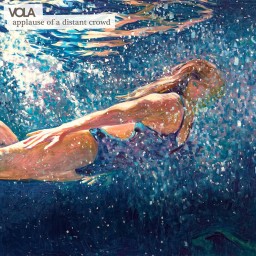
Simple, But that Doesn't Mean it's Easy
By all accounts, Applause of a Distant Crowd shouldn't work. This is an album that is too simple for progressive music. The synth leads on this album are deliberately loud and at the top of the hierarchy of sound, while the guitars play a far more harmonic and rhythmic role. The albums song lengths are rather brief, even by comparison to some tracks from Inmazes. And yet, none of Applause of a Distant Crowd sounds simple. Songs on this record have a strong tendency to grow and develop over time, whether that be a quiet modulation in time signature, the main chorus being slightly altered over time, the percussion adding a complex drum fill in place of what was a standard groove previously. And most importantly, all of it feels like it belongs within the same walls of this album.
This is a record that I hear many people discussing when bringing up Sleep Token in the modern day. And having gone back recently to hear this album again, I completely understand why. My biggest concern with Sleep Token today, which I mentioned in my review of Even in Arcadia, is how pop and progressive don't mix well together. Sleep Token want to write pop songs with a progressive foundation, but forget that most people who listen to pop music can't pay attention for longer than three minutes at a time! VOLA gets this in spades on Applause of a Distant Crowd. While the songs themselves are not as pop centric from an audible point-of-view, the shorter song lengths mixed with beautiful sung choruses make it stand out. The progressive elements are not forced directly in front of the audience like how they would on a Dream Theater album. And the light touches of intensity from the percussion and the reserved scream vocals add the heavy metal and progressive punches that this album desperately needs.
It's a bit of a shame that VOLA have not been able to retain this niche into later albums. Recent albums have done away with the pop centric attitude and have become more "djentrified", especially on Witness and overbearing synth leads on Friend of a Phantom. I hope that this doesn't turn out to be a flash-in-the-pan type album, but with each passing release, it's looking more and more like that'll be the case.
Best Songs: Ruby Pool, Applause of a Distant Crowd, We Are Thin Air, Alien Shivers, Still
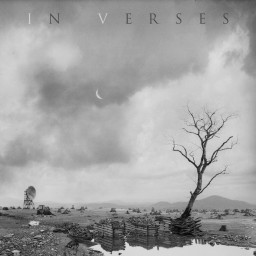
The Tool Effect
It has been over a decade since the last official Karnivool album. A lot has changed in the world since Asymmetry. And even in the world of Karnivool, the release of In Verses is a long time coming, seeing as "All It Takes" was released as a promotional single in 2021. Now as someone who likes Themata and Sound Awake I had heightened expectations of what to expect out of In Verses. That may have been the wrong approach.
Having such a long window of time between releases, regardless of the reason, creates greater hype among the audience about what to expect. For bands that have progressive elements like Tool and Karnivool, I can only imagine that those expectations are heightened further. So when In Verses comes out sounding like a "vibes" album, I do not know if the fans of this band will be as forgiving.
I know that as an onlooker I will give Karnivool the benefit of the doubt over Fear Inoculum. But something still doesn't sit right with me. Karnivool have always been pretty strong songwriters and that is on display here. The first three tracks, "Ghost", "Drone" and "Aozora" all sound great with good choruses, nice thematic development and upbeat grooves. Even "Animation" has a decent flow to it, despite being one of the albums lesser tracks. But then comes the one-two-punch of "Conversations" and "Reanimation". I think that "Reanimation" has a strong build that carries throughout the runtime, while "Conversations" is musical pleasing. But both tracks have immense downtime. It reminds me of Tool where the band will just sit on a simple ostinato for a while without growing or making it more than just its foundation. And as I sat back on this album more, I felt the same way about songs like "Ghost" and "Salva" and even "Opal".
Where I can give Karnivool credit is in their lyricism. Now a lot of In Verses thematic content revolves around disillusionment and escapism, which is commonplace in this kind of music and doesn't really stand out as a whole. But for individual tracks, the way in which Karnivool are able to manipulate lyrics from the beginning to the finish of each track is commendable. It helps tremendously with that growth that each song should have that is sometimes lacking in its instrumentals.
It was a long turnover for the band and I am glad that the ride is finally over. Now we all get to sit back and enjoy some Karnivool music. And it's honestly pretty good, if you can overlook some painful artistic directions. I would like to say that Karnivool are better equipped for "vibes metal" than a band like Tool are, but even with my guard lowered, I can't help but feel like Karnivool missed an opportunity here.
Best Songs: Drone, Aozora, Reanimation, Remote Self Control, Salva
The title of this album Genotype was held on to for a decade, originally meant for an album that was never meant to be. And now, we finally get the once-lost sequel to Phenotype! Just not how it initially was...
Metalheads were hyped up for this supposed Genotype album that ended up shelved when Textures announced their farewell tour and subsequent disbandment. Like a cliffhanger in a cancelled show, it was a big hole in the story that wasn't filled... Until the band reformed in 2023 and rewrote everything into something fresh and new, while maintaining the fact that Genotype continues the Phenotype saga. And at last, it arrived two days before my birthday! Although I didn't get it until two weeks later.
"Void" is the album's overture that welcomes back their fanbase with a colorful burst of guitars, synths, and drums. A warm light after the cold darkness of the absence! "At the Edge of Winter" is where the band's heaviness comes back to life and punches right through. Vocalist Daniel de Jongh is still in great shape after all those years away, but what impresses me the most here is the guest vocals by Charlotte Wessels. D*mn it, I gotta hear more of her former band Delain! The instrumentation and vocals sound so epic, and it's clear the band is back for real. "Measuring the Heavens" has more emotional flow. When the vocal intensity alternates with the heavy riffing, they really strike.
"Nautical Dusk" brings some darkness to the light in the rhythms. It's quite addictive, especially in the vocal power. "Vanishing Twin" is more diverse in the drum energy and the synths. Although there are mostly cleans, the growls hit hard within the stomping instrumentation at the end.
"Closer to the Unknown" is sharp and catchy. It is another perfect anthem with a total live-friendly chorus and searing leads. A short yet massive banger! Then "A Seat for the Like-Minded" takes a more ominous turn in the riffing and vocals. "Walls of the Soul" is the 8-minute closing epic, gradually building up and get more lively every minute. The percussion and riffing attack and, at the same time, let you transcend smoothly. An adventurous way to end their comeback offering!
It can be hard to pick up greatly where you left off after a long hiatus, but Textures have just done just that and more. The melodies and riffs will surely please the older fans and bring new ones in. Genotype is a true return to form for this talented band. They shall keep waving the progressive metal flag!
Favorites: "At the Edge of Winter", "Measuring the Heavens", "Closer to the Unknown", "Walls of the Soul"
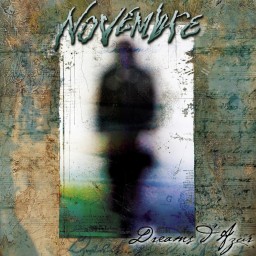
Dreams D’Azur is a re-imagining of Novembre’s debut album, Wish I Could Dream it Again… The album is completely re-recorded with new compositions and played in their newer style. Wish I Could Dream it Again… is a Death Doom record through and through, while this one trade some of the Death Doomy sound for a more contemporary Progressive Gothic Metal sound, though still retaining the Doom influence.
The biggest weaknesses with the debut were the rough production and amateur performances. It goes without saying that both issues are completely mended here. Through the years, Novembre have adopted a smooth and lush production style that contrasts and compliments their heavy style, allowing for dense compositions that sound fantastic. The bass is given especially great treatment on this album, being very audible and having plenty of excellent lead parts. The playing as well has improved dramatically, with the band transitioning from a slightly messy, green footed band to masters in their genre. The drumming on this album in particular is the best in the band’s career up to this point. The poor clean vocals from the debut are improved with harmonized, reverby vocal lines that act more like another layer of instrumentation.
What about the compositions? One issue the debut had absolutely no problem with was compositions. Novembre were already crafting amazing songs right from the beginning, and in my opinion the debut still stands on its own as an amazing Death Doom record. Here, the compositions become a bit denser, with scant layers of synths and more atmospheric guitars weaving in and out of the compositions, crafting a much more dreamy and surreal feel than the debut. From a technical standpoint, the compositions are improved quite a bit, and have more going on in each track to add to the density.
However, I will say, it’s a trade off for me. While almost everything has improved in terms of quality, I do find myself… preferring the original style. Progressive Death Doom is, to me, preferable to Progressive Gothic Metal. I loved how heavy and melancholic the original songs were, how they charged forth with energy rare to the genre but carried intense gloom and beauty. As I said before, these compositions lean a bit further to the “dreamy” side of things, and they definitely still sound amazing. But, unlike a lot of people who think this album completely negates the debut, I see different strengths in each, and this far from eclipses the original in my eyes, instead offering a different take on the incredible compositions.
 SilentScream213
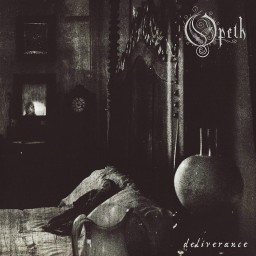
Deliverance. Opeth’s last Death Metal record, and one of the heaviest of their entire career. In somewhat uncharacteristic fashion for the band, opening track “Wreath” drops you right into the onslaught of pummeling rhythms, deathly screams, and one of the most ominous riffs the band ever wrote. The increasingly complex and odd-timed songwriting here just makes everything that much more disorienting – “Wreath” is a straight up challenging song that mixes the heaviest and brainiest of Opeth’s compositional prowess into one package that just completely annihilates you.
After that, you’re given a bit of space to breath… kind of. While “Wreath” is definitely the heaviest and most aggressive song on the album, that’s not to say the following tracks are worse in any way. Title track Deliverance focuses on pushing the band’s technicality and complexity to its limit, an over 13-minute epic of masterful musicianship and songwriting. “A Fair Judgement,” not forgetting what makes this band so special, reintegrates deeply melancholic moodiness, a Doomy dirge of Prog that shows the band had not sacrificed their emotional depth when honing their technical abilities and pushing the complexity of their songwriting.
The album is, pretty consistently, dark, ominous, heavy, and complex. More so than any of their previous albums. For that reason, it’s definitely a bit of an all-or-nothing affair; it’s the perfect fix if you’re in the mood for some uncompromisingly dark and brainy Progressive Death Metal – if not, prepare to drown in its unrelentingly ominous waves.
I was quite blown away by Agalloch’s debut album. Despite the music being relatively simple, they were already masters at crafting melancholic guitar leads and somber chord progressions that evoked a dark, emotional atmosphere. The songs were so memorable they sounded like a band that had long since mastered their craft rather than a debut. I had high hopes for their next album.
The Mantle is usually regarded as not only the band’s best, but one of the greatest Metal albums of all time, particularly standing as a monolith of Post-Metal. However, the first thing that stands out about this album is that not only is there a lot less extreme Metal (Black Metal influences here are relegated to secondary) but there’s also just a lot less Metal in general. There is so much Folk (primarily Neofolk and Dark folk) that it competes with Post-Metal as the primary genre for the album.
Thanks to this folkiness, the album is exceptionally pagan and nature-oriented, the whole journey feeling like a lonely camping expedition in the dense Cascadian forest mountains of North America. Constantly stumbling upon native burial grounds and bygone mythology while trying to escape the thoughts and feelings of the girl who just left you. This is all captured in spades, and the shift in sound from their debut creates a far more unique experience that even today remains an enigma.
The songwriting for the most part weaves acoustic passages both between and within the Metal tracks, layering guitars atop one another as they build towards crescendos. Many simple but effective guitar melodies will slowly change and build upon each other in a slightly droning fashion, resulting in a smooth ascension towards harmonic peaks. There ARE still extreme Metal sections left, and such passages with black shrieks and pounding double bass drums provide much needed energy and aggression to the otherwise passive music.
Now for all its praise, I must say, the album was a slight disappointment and step down from the debut for me. Some of the acoustic oriented tracks just sounded a bit too generic – like your average campfire dude with a guitar playing the 6 chords he knows. There is a lot of instrumental stuff here, and while some of it is exceptional (Odal, the second half of The Hawthorne Passage), other tracks just feel a bit pointless (A Celebration for the Death of Man, The Lodge) like they don’t have a strong enough idea to make them their own song, and would have been better worked into a longer track rather than standing on their own. The lyrics and vocals are quite enjoyable for me, so the final track A Desolation Song is quite good thanks to the personal, introspective lyricism despite the exceedingly simple music; the aforementioned instrumental tracks are sorely lacking because they don’t have any poetic lyrics to make up for their uneventful songwriting.
Another thing I will say – the shift away from extreme Metal towards Folk, and much of this album being clean and acoustic, makes it FAR more accessible. I have to wonder if the only reason it’s considered such a masterpiece is because it can be enjoyed by far more people than a Black Metal album can.
Let there be no mistake though; this is a FANTASTIC album. The ONLY reason I have some harsh words for it is because I am coming off of their incredible debut, and had my expectations set to the sky. If I had heard this one first, I think it would have blown me away in a totally different way. Incredibly unique experience in the Metal spectrum. I recommend this one for a nature hike in winter.
Always love to hear Neoclassical acts that are actual bands rather than First Name Last Name guitar (or keyboard) heroes. As you might expect from a Neoclassical band, Time Requiem is filled to the brim with awe-inspiring solos that boggle the mind. But not just from the guitars.
Yes of course, the guitars are majestic. The smooth running up and down scales while essentially tremolo picking is just wild to me. Thankfully, the guitars do much more than that, offering great riffs and more traditional style guitar solos as well that offer more depth than Yngwie-style wankery. Keys are another key component (ha) to this lineup, and yeah, the keyboardist does some insane wizardry that could put any classic pianist to shame. I mean, the keyboardist is the composer, so not only is he an absolute madman at his instrument, but he’s a strong songwriter as well. Keys and Guitars duel here, but they also give each other space to show off without competing for the spotlight depending on the song.
But this album isn’t just a melodic showcase! The RHYTHM section is also flashy as hell. Obviously harder to hear, but the bassist is putting in some crazy work on this thing. It can best be heard in the mind-blowing ending to “Brutal Mentor” (which in itself is just one of the best displays of technical musicianship I’ve ever heard). And the drums! God those drums are great. Speedy, technical, progressive, and doing the perfect amount of showing off insane chops without overplaying. And of course, lets not forget the vocals. Vocalist Apollo was in one of my favorite short-lived Neoclassical bands Majestic, and he helped elevate their accessibility with fantastic choruses. He does the same here.
For anyone who enjoys technical prowess in musicianship and songwriting, a must-listen. For those who don’t, it’s thankfully full of great songs that are well-written and worth much more than their technical prowess alone.
Avant-Garde Metal is one of the subgenres in which I am hardest t please. At the time of writing this, I’ve been listening to Metal for over 15 years, and haven’t awarded a single 4.5 star rating to an Avant-Garde Metal album. That is, until I took look into The Sham Mirrors.
First off, the album does something VERY important in ensuring that it’s a GOOD Avant-Garde Metal album – it’s not Circus Metal. While the album sounds bizarre and occasionally playful, it by no means ever falls into goofy territory. The arctic space aesthetic is persistent across tracks, painting a cold, surreal image of a distant future among the stars.
And then we get to the music, which is very very good. It definitely took a few listens for the non-Metal sections to grow on me (this is a very eclectic piece, with genre shifting within almost every track) but there’s a very important reason it did. You see, while each track jumps between multiple genres, they don’t feel fractured or jerky. It never feels like the band is just genre hopping for the sake of being quirky and weird. Even when shifting styles, the band retains their cold, special aesthetic. The evolution of each track feels connected, falling and rising in a fashion that feels earned. Despite the eclecticism here, there isn’t a moment that left me bored.
The Metal, which is still the meat of the album, is fantastic Symphonic Prog Metal, and the vocals, both clean and harsh, fit nicely. Drumming is fantastic, guitar leads are striking, energy is at perfect level, and tempo and intensity rise and fall to suit the music. No weak points, no wasted moments. I won’t lie and say I didn’t enjoy some sections more than others, but wow is that a well put together record, a triumph of one of the hardest genres to do well in my opinion.
Oceanic is a monstrous record, a storied masterpiece in the genre of Atmospheric Sludge, and the first Isis release to show the band with a fully developed sound and knack for building dense, layered atmospheres.
Or so they say. While listening to Oceanic, I have to confess I found myself underwhelmed. The guitars in particular are very repetitive and simple, almost exclusively power chords changing ever so slightly. They do layer nicely, yes, and the production helps gives them a heavy, dense yet smooth sound. But lead guitarwork is scarce, simple and quiet, almost completely drowned out by the repetitive chords. Similarly, other layers of effects, which usually create the rich atmosphere typical of Atmosludge, are subtle or absent, leaving the compositions surprisingly… shallow.
There are a significant amount of Post-Rock sections here, where the heavy guitars subside to let other instrumental parts have some time to craft quiet, layered soundscapes. I think these parts are done quite well, and they add great diversity to the long, plodding tracks. The contrast between these sections and the droning, repetitive heavy chords elevate both and help eliminate fatigue from the latter.
The saving grace of this album, to me, was the lyrical concept. I was far more interested in the songs once I learned of the concept and paid close attention to the lyrics and how the songs work to evoke the same mood and themes as the out-of-order story. There is a consistent aquatic feel to this album which gives it a unique atmosphere, and the twisted, troubled sexual undercurrents add to the tensity of the dissonant atmospheres.
Some Atmospheric Sludge albums have the issue of having a few really incredible tracks or moments within the tracks surrounded by long stretches of filler. Oceanic is actually quite the opposite; it is extremely consistent throughout, even among stylistic changes, the only exception being the useless untitled interlude. This means as a full album, Oceanic is a much easier listen than many of its contemporaries; however, it also lacks any memorable peaks or crescendos that truly stand out.
It's a strong album with some impressive walls of atmosphere and compelling themes and lyricism. But one of the best Atmospheric Sludge albums ever? Personally I would have to disagree. A VERY solid and consistent example of the genre, but nowhere near my favorite.
Mind-numbing. No, I don’t mean in a good way. I mean, by the end of the first track, I had taken just about all I could take of one-note soulless polyrhythmic chugging, and then preceded to suffer through 9 more tracks of the exact same thing with no variation. So repetitive is this album that when the atonal guitar noodling that would be terrible in any other context came up in track 3, I was actually excited because it was SOMETHING different. The little atmospheric reprieve near the end of the 4th track wasn’t anything special, but it was such a welcome break from the mechanical assault that my brain was tricked into enjoying it.
I actually like the guy’s harsh vocal sound, but the issue is… again… there’s absolutely no variation. It sounds like he’s trying as hard as possible to maintain one single tone, one note, one delivery… yeah, it certainly fits the music, and I get that’s what they’re going for. But just as with the rest of the music, I was sick of it after one track. Nine more aren’t going to convince me (or 8 since the last track is an instrumental).
Maybe there’s some grand meaning in those lyrics somewhere. I have no idea. This are some of the most pretentious, abstract lyricism since Tool. “Organic Shadows” has some neat lyrics about becoming mechanical, but most this is ‘I’m too smart for you’ cryptic existentialism.
“Spasm” is the most unique sounding song, and by default the best. It’s the only song to feature a different vocal approach, as well as *gasp* lead guitar work. Yeah, when you add guitar leads that actually hit notes and craft melodies over top the mechanical polyrhythmic chugging, said chugging actually becomes listenable. When used as a backdrop for other music, Djenty chugging is fine. The issue with Meshuggah is they make the Djenty chugging the focus – in fact, it’s usually the ONLY thing going on in most of the songs.
To say something respectful, they WERE doing something different and unique, that is undeniable. But I think giving something credit for being unique is overrated. The only thing that matters to me is if music sounds good – this is a hard pass.