
Sonny's Reviews


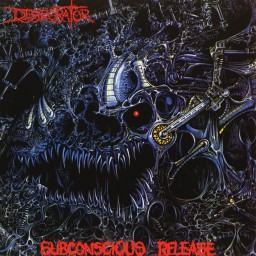
I fucking love early Autopsy and so too did Desecrator, apparently. Hailing from Nottingham, Desecrator was formed in 1989 by brothers Mike and Steve Ford (bass / vocals and guitars respectively) alongside drummer Lee Hawke. After listening to "Subconscious Release" I have no idea, but I am guessing they formed after hearing Autopsy's debut "Severed Survival", released in Spring of '89, deciding that was what they wanted to play. Now, obviiously, this isn't as good as any of the Californian's early releases, but it is a decent stab at reproducing their style in a British context. Bear in mind that at this time the big UK death metal bands came at the genre from a grindcore background, Napalm Death, Carcass and even Bolt Thrower played a blasting, high tempo version of death metal, so Desecrator, looking towards the hulking, often slower-paced, abyssal-sounding death metal of Reifert and Co. were swimming against the tide somewhat. Even more atypically, the album boasts several quite long tracks with four exceeding seven minutes in length, the band unafraid to drop into a slower, doomier tempo to add variation and atmosphere during the longer track lengths. They don't completely turn their back on the prevailing winds though, with the quick-fire medley of "Insult to Intelligence" and "Deadline" on side 2 clocking in under two minutes they give a nod to the deathgrind brigade.
To be honest the album is front-loaded with the title track kicking things off and being, by quite some way, the best track on the album - think "In the Grip of Winter" or "Gasping for Air" level good. Second track "Nothing Changes Anything" is also pretty great with a hot opening riff and a gothicky, atmospheric mid-track break, but the rest of the album struggles to live up to the promise of these two opening salvos. Don't misunderstand, the rest is fine for what it is, but a faint tinge of disappointment is inevitable after such a promising start. I am no musician myself, but I get the feeling that the band are a little limited technically, as illustrated by the generally lacklustre guitar solos and the d-beat drumming not always cutting it, leaving the listener yearning for a good old blastbeat to shake things up and hit the gas pedal. Whilst I acknowledge that the band had technical limitations, these probably don't bother me as much as they do some metalheads, I am quite partial to a slab of loose-sounding deathly carnage and when the band are in full flow I am happy as a pig in shit. However, the uninspiring solos and the odd clunky transition do pull me out of the moment, fourth track "Repressive Acceptance" for example has a couple of instances where the leadwork is quite poor and ruins a good headbang as the main riff is decent and gets me nodding along quite effectively up until that point.
In 1992 the band changed their name to Consumed and went off in a more punk rock oriented direction, leaving us with this remainig as the only testament to a promising, if technically limited, early UK death metal act. It is interesting if ultimately inessential UK death metal release that even a Dan Seagrave cover couldn't save from relative obscurity.
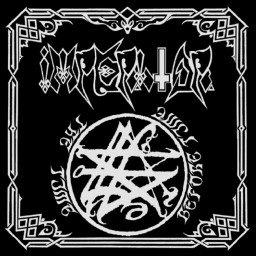
Imperator were an early polish death metal act, forming in Łódź in 1984 and originally splitting up in 1993 with this 1991 album standing as their only official studio full-length. Their version of death metal maintains a strong thrash metal component, but this isn't the kind of deaththrash you would find on "Seven Churches", but it leans rather more towards the technical sides of both death and thrash metal with most tracks containing a surfeit of musical ideas that sees them lurching between different riffs and tempos, sometimes a little bit too much for my taste. I wouldn't go as far as to say that they opt for the staccato juxtaposition of riffs that many of the most technically-focussed death metal acts feature in their songwriting and most of the transitions are fairly fluid, so aren't especially jarring, but their songwriting technique seems to involve throwing a ton of ideas into the mix and seeing which stick.
Now don't get me wrong, I may have made it sound like I didn't enjoy this, but I actually did. Most of it works, with some very fine riffs and interesting transitions, I just get a little frustrated when the band deliver a killer-sounding riff, for it to evaporate seemingly mere moments later as a new idea occurs to them and the track develops in a new direction. On the whole the interesting stuff far outweighs the little frustrations which, to be honest, don't irritate me that much, but do need pointing out. Of course, if you are a died-in-the-wool tech-death head then Imperator may be a bit tame and unambitious for you, but they hit a nice mid-point for me between old-school deaththrash and more technical metal that combines the no-nonsense aggression of the one with the ambition of the other. The album also benefits from the old-school production which makes it sound less clinical and more organic than the over-produced, triggered-to-fuck, heavily compressed aural assaults that often pass for modern death metal production jobs.
Vocals are provided by Piotr "Bariel" Tomczyk who is also guitarist and main songwriter and don't really go for the deep gutteral growls of true death metal vocalists, but are more deaththrash-centric. Lyrically the band steep themselves in the occult and demonic, which in some quarters seems to have earned the album an unwarranted black metal secondary tag. The riffs are good and are sometimes even great, whilst the soloing isn't bad, but isn't especially impressive either, often coming off like a slightly more accomplished Kerry King. The rhythm section is fine, but the drums sound muted and could have been better served pushed up a bit in the mix as they sometimes feel like they are getting lost and only register as a distant, dull thud.
What it all amounts to is that if a mix of Slayer, Obituary and Atheist rocks your boat then you may well get a fair bit out of "The Time Before Time". It is far from a perfect album but the execution and ideas presented here are of sufficient quality to provide an interesting sidebar in the chronicles of early-90s death metal. On an interesting historical note, around the time of the album's release mainman Bariel was apparently forming a side project with Dead and Euronymous of Mayhem called Moon, which was scuppered by Dead's suicide. I can't help feeling that could have been an interesting outfit. The band have resurfaced at various points over the years, but usually without Bariel and without releasing any new studio material.
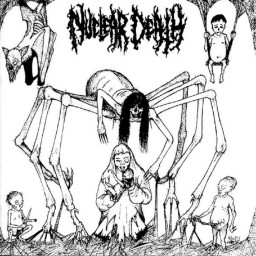
Forming in 1986 in Phoenix, Arizona, Nuclear Death must be one of the very first grindcore acts to feature a female vocalist in Lori Bravo who also played bass and was pretty much the de facto band leader. Historical interest certainly isn't the only reason to listen to Nuclear Death's 1990 debut full-length though because "Bride of Insect" is a pretty damn good album in its own right. The pacing is frantic and is dominated by the blast-crazy drumming of Joel Whitfield who was actually replaced in the band by Steve Cowan prior to the album's release. Sitting at the fore of the mix it completely drives the album with the guitar riffs buzzing away like a swarm of angry hornets in the background whilst Lori spits bile and venom with an intense, raging delivery that obviously sits higher in range than most male grind vocalist but which easily matches any of them for vicious intensity.
The dozen tracks here clock in at 27 minutes so most sit within the typical grindcore duration of sub-two and a half minutes, with the notable exception of the four minutes plus of "Fetal Lament: Homesick" which has an extended "guitar solo" that sounds more like a frenzied attack with a sharp object than any kind of artistic expression. The old-school production job gives the album a feeling of real guts and heart too, an aspect of extreme death metal that has been sterilised by the cleaner production jobs of more modern releases, especially those overly-compressed and brickwalled releases we have all had to become so familiar with over recent years.
The top and bottom of it is, if you don't like blastbeats then don't bother, but if you love metal infused with manic hardcore energy cranked up to eleven and seething with anger and frustration, then come on in and fill your boots. Featuring an ugly hand-drawn black and white cover that also lends the album crazy underground kudos, this is a real hidden gem of early 90's death and grind.
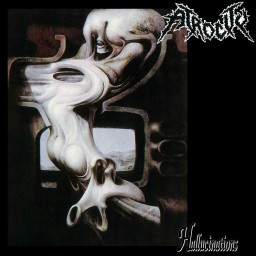
I don't recall having listened to Atrocity before, but I have gleaned from a bit of background research that they are a chameleonic act who have gone through several evolutions of sound embracing gothic, groove, folk and industrial metal. This debut, released in 1990, reveals the band's roots to be dug deep into death metal and particularly the emerging tech death sound pioneered by the likes of Death, Cynic and Atheist. Personally I have a bit of an on / off relationship with tech death as it sometimes, especially in its modern incarnation, gets a bit too jagged and staccato for my particular preferences. I do enjoy many of these early pioneering tech death albums, though, especially those that manage to retain enough of the old-school death metal sound I love and thus keep me engaged and along for the ride. Luckily, I am able to add "Hallucinations" to my list of great early tech-death releases and to expand my enjoyment of the style.
With the ambition that Atrocity exhibit here on their debut it is really no surprise that they sought to expand beyond the restrictions of just playing one style throughout their career, as if they have a pathological refusal to be labelled and stereotyped. A great example of this ambition are the twists and turns they take in a sub-three-minute track such as "Fatal Step" which leave you thinking you just listened to a track two or three times that length. The songwriting is of such strength, though, that these diverse song parts lead into each other in a natural and seemless manner that doesn't interrupt the flow of the tracks and doesn't jar with me like several other technically-focussed death metal acts do. In fact I can only really recall one occasion where I felt a bit of jigsaw-like jaggedness coming in and that was during "Hold Out (To the End)" which unfortunately failed the flow test a couple of times.
With some killer riffs, a grimy and gritty guitar sound and a vocalist who sounds like he gargles with rusty nails and barbed wire Atrocity amass more than enough old-school credits to allow me to fully engage with their more ambitious side and to really get to grips with their technical flights of fancy. In fact they really had me hooked when the organ kicked in on closing track "Last Temptation", totally destroying all preconceptions, as if they were saying that we hadn't seen anything yet. I would quite happily set this on a shelf next to "Human" and "Piece of Time" and not consider it out of its league.
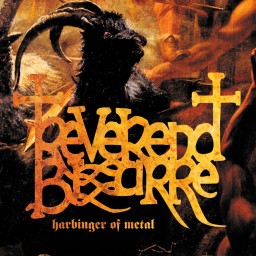
"Harbinger of Metal" was released in 2003 as an EP between the trio's first two albums and in the midst of a spate of split releases with the likes of Minotauri and Orodruin. I say it was released as an EP because it has a runtime of over 73 minutes, more than most full-length albums, but was still steadfastly labelled an EP by the band themselves. I am not sure why this would be because most of the material is consistent with that on the three main full-lengths, but then again Albert Witchfinder tended to do things his own way and for his own reasons so who am I to question the decision.
Anyway, there is some great stuff on here, with Strange Horizons and its awesome doom-laden riff (one of the band's best) being my pick. Of the seven tracks available three are quite short with "Harbinger" being a kind of introductory scene-setter and "The Ambassador" and "Into the Realms of Magickal Entertainment" being little more than interludes, so the bulk of the hour and a quarter is taken up by just four tracks, which is pretty much par for the course with the Reverend. To say that Reverend Bizarre know their shit when it comes to traditional doom metal is an understatement. During the mid-2000's they pretty much wrote the book on producing epic-length trad doom sagas and are still very much the yardstick against which I personally measure any other trad doom act of the last 25 years. The simple fact is that if a band are going to produce tracks that rely so heavily on the lengthy repetition of riffs then those riffs need to be pretty damn good and in this regard Rev Biz have very few equals. It is very hard to think of any other doom metal band that manage to do so much with so little but the sheer ponderous momentum they achieve with Witchfinder's prominently mixed bass boosting the crushing weight of Peter Vicar's riffing is a marvel to behold. That said, if you are of a more impatient mindset then maybe RB aren't the band for you because they really do like to draw things out and sometimes go to extremes on this front, repeating a riff over and over, well past the point of comfort, a charge which could certainly be levelled at the first part of "From the Void", at least until it turns into an Earl of Void drum solo! I am not the biggest fan of drum solos, so the five minutes in the middle of the track here is a bit of a challenge even for me I must admit. Things are certainly redeemed though with "The Wandering Jew" being another classic slab of doom metal goodness with yet another top RB riff. For this track and "Strange Horizons" alone the EP is well worth the entry fee, but throw in Rev Biz's hulking, doom-laden interpretation of Burzum's "Dunkelheit" that adds crushing weight to the icy, frigid melancholy of the original and we have another doom metal winner on our hands.
Reverend Bizarre truly were one of the finest traditional doom metal bands ever with a distinctive and authentic sound (and sometimes a wicked sense of humour) that pushed trad doom to its extremes whilst still remaining exceedingly listenable. Whilst this EP may not be their best release with, admittedly, a couple of weaker moments, which the band may have realised themselves hence the reason why it was separated from the main full-lengths by the EP designation, when it is good it is absolutely top drawer and as such is definitely worth the time of any discerning doom head.
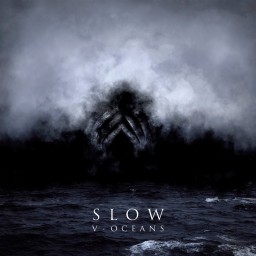
Slow is a funeral doom project of prodigious belgian Déhà, who is perhaps better known for his black metal and blackgaze work, but who is also a proficient doomster with acts like Yhdarl and Wolvennest. He has released seven albums under the Slow banner, with "V-Oceans" unsurprisingly being number five and, probably, my favourite. This is the last of the Slow albums that were produced as a solo project, Déhà since having been joined by lyricist Lore Boeykens who also contributes bass and backing vocals.
Anyone even remotely familiar with Déhà's other projects will be unsurprised to hear a significant post-metal and -gazey element to Slow's funereal dirges, but make no mistake this is still ponderously heavy stuff. The vocals are of the gravel-throated, abyssal demon bellowing kind that are the cornerstone of so many fantastic funeral doom albums and are more than ably delivered here by the main man himself. As he intones at the beginning of "Ténèbres", "This is not meant to bring you joy, this is not meant to give you any solace," and it surely doesn't if you take its message literally yet, ironically, if you are a lover of the melancholy and desperate atmospherics of funeral doom then it may well bring you great joy indeed (it certainly does for me).
With tempos that are measured by a calendar rather than a metronome, the five, 10-minute plus tracks here crawl under your skin and sit there draining your optimism like a vampiric parasite feasting on the mind's positive energy, leaving its host bereft and borne down by the weight of existence. The riffs are monumental chords that swell like tsunamis, given additional heft and gravitas by layered synths and choral effects which thankfully don't swamp the guitar and drums, but which add their weight to the crushing mass subtlely enough so as not to be distracting. "Oceans" covers a theme that has served funeral doom very well over the years with its huge swells of sound being an exceedingly effective artistic interpreter of oceanic environs and deep sea tectonics, here being used as a metaphor for the unalterable inevitability of death, in other words, all the best sentiments of funeral doom.
The number of ratings for Slow albums on RYM is paltry with this being the most-rated with a touch over 300, yet this is funeral doom of the highest order that deserves to be considered up there with giants of the genre like Bell Witch and Esoteric. OK, maybe not Esoteric, but everybody else anyway! Criminally overlooked, for me this is a top drawer entry into the funeral doom pantheon.
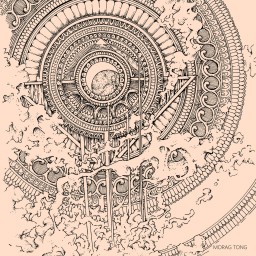
I have been a fan of London's Morag Tong for a good decade now, since the release of this debut. four-track EP back in 2016. They are named for the fictional guild of assassins featured in The Elder Scrolls game Morrowind and their reverb-drenched doom metal is as influenced as much by stoner metal as you would expect from a band of RPG-ing nerds. My original one-line review for this went "stoner doom that's nice 'n' slow and as heavy as an anchor strapped to an anvil that's tied to a millstone" and you know what, that remains true, but there is actually a bit more to it than just sheer weight so I thought I had better elaborate.
The riffs have an in-built bluesiness that reaches back as far as Sabbath's debut but which are delivered with such heft and distortion that they sound mountainously and crushingly heavy. The soloing, such as it is, has a psychedelic, spacey tinge that is fed from the band's stoner roots and which is aided by some Hawkwind-ish electronics buried quite deeply in the mix. I hesitate to call it trippy, though, because the tempo is so lethargic and the riffs just so fucking heavy that I am unsure if anything with this amount of heft can ever be labelled as such, although the title track "Through Clouded Time" does feature some quieter, more trippy moments, such as the introductory couple of minutes or so which almost sounds like a very heavy version of Fleetwood Mac's "Albatross" and a quite funky bass breakdown just after the halfway point. The two tracks either side, "Godhead" and "The Eyes of Men" are a bit more straight forward but deliver such devastatingly heavy doom riffs that they are still worthy of attention in their own rights.
Drummer Adam Asquith also handles vocals which are perfectly functional for this style of stonerised doom, whereas his drumming is really good within the confines of the genre and he and bassist Sam Lewis both featuring prominently enough in the mix to lay down a super-solid foundation upon which dual guitarists Alex Clarke and Lewis Crane can lay down the towering monoliths of the riffs. The four are obviously deeply steeped in the world of stoner doom and they sound like solid technical musicians perfectly able to translate their intentions into music, so there is a definite authenticity about what they delivered here.
In summary, this is a very impressive twenty-three minutes that handed out an attention-grabbing calling card to the UK's doom metal afficianados. Unfortunately I felt 2018's full-length "Last Knell of Om" failed to live up to this promise and I have yet to hear 2023's Grieve, so this stands as the band's high water mark for me so far. Truth is though, even if they never bettered this, it would still stand as a worthy testament. I was then and remain still, mightily impressed.
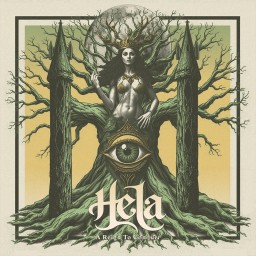
I have followed spanish doom crew Hela since their earliest days and have found them to be consistent deliverers of understated female-fronted doom metal. They are one of those bands that don't push the boat out too far from familiar shores and are quite unlikely to be anyone's favourites doom metal band, but keep plugging away, refining their sound and carving out a niche for themselves.
"A Reign to Conquer" features half a dozen 7-8 minute tracks that follow a similar pattern. Taking their cues from post-metal, they generally begin softly and serenely and build in intensity as the track progresses. The intensity level never really rises above a mildly elevated pulse rate, though, and the band don't really seem to be ploughing the old atmospheric sludge furrow of catharsis through ferocity, but are content to merely shake their proverbial fists at the sky rather than tear it down. They remain melodic throughout with some doleful riffs and new vocalist, Raquel Navarro, has a plaintive, yearning style of vocal delivery that underpins the melancholy atmosphere so vital to decent doom metal.
What Hela do they do pretty well and both the songwriting and performances are proficient and point to a very professional outfit who know what they want to deliver and exactly how go about it. This all sounds like criticism through faint praise I know and I like the band, but the simple truth is that they are a decent doom metal outfit who produce albums that are enjoyable enough, but which will seldom stick with you for too long after they end.
There is a serious side note which needs addressing regarding the production which may negatively impact most people's enjoyment - it certainly did mine. This is the fact that the album features terrible sound compression which makes it feel like it is being rammed into your ears, rather than allowing the nuances of the music as written to be experienced. This is especially sad because this feels like an album that is written with subtlety and contrast in mind. For example, listen to the album's best track "Emerald Mirror", which is amped up to levels that cause actual sound distortion when it is evidently written as a far more subtle exploration of light and shade which I feel is seriously undermined by the production. Even Raquel's vocals are distorted by the mix and a more sympathetic production job would have seen my score elevated a good half-star or more I believe.
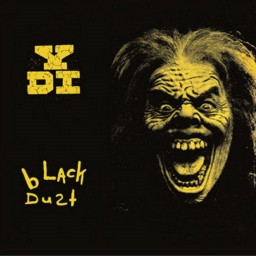
This one has been eating away at me for a while. Whenever I look at the earliest releases I haven't rated yet for the Fallen, this ugly, yellow and black fucking cover is always there staring at me like some recurring monochrome nightmare. I mean, look at it, it is fucking horrible. So today, as I am ploughing through some 1985 releases, I decided to get to grips with it and see what hides behind that menacing and manic-looking face. Well folks, don't be fooled because behind that ugly cover is an album of even more ugly-sounding music. Taking the idea of merging hardcore punk with the slower, looser and more distorted sound of Saint Vitus as originally posited by Black Flag's "My War" released the previous year, YDI have produced a noisy bastard child that dispenses with all the niceties of Black Flag's trailblazer.
This is filthy-sounding, virtually demo quality hardcore punk that has taken on board some of the aesthetics of the emergent doom metal scene to produce an album that sounds like it was recorded in an afternoon in the gutter of a Philadelphia back alley littered with used syringes and condoms. If anybody ever thought The Dead Kennedys and Black Flag were street punks then they will find "Black Dust" a fucking revelation that makes those guys sound like they went to Eton with singer Neil "Jackal Ssexzombie" Perry spewing forth a rasping bellow that makes Henry Rollins sound like a right stuck-up toff! This is such a dirty-sounding, gritty and groundbreaking record that I am genuinely not even sure if it really belongs in the Fallen at all. As is often the case with such revolutionary records, this is not easy to pigeon-hole, its hinting at what sludge would become being still in a very rudimentary stage of evolution. It is, however very noisy, very brash with an abrasive sound, ugly lyrics and a fuck-you-we-really-don't-care-what-you-think attitude that demands respect even if you don't enjoy the album itself. For myself, I am going to need to spend a bit more time with it to try to really get under its skin. I have it pegged at a 3.5/5 at the minute, but I feel this may rise as the album's essential ugliness smoothes itself out with further exposure and the involuntary gag reflex that it arouses subsides.
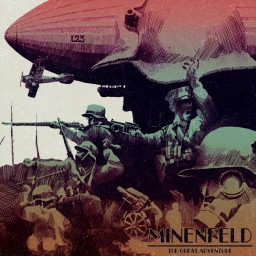
Yet another metal album themed around the global conflicts of the first half of the previous century. I really like how this one has been put together, it's nine tracks of gnarly, old-school, death metal are interspersed by archive recordings of popular WWI songs and clips of US recruitment speeches and propaganda announcements, to give the album's lyrical theme a feeling of time and place. I've been critical of modern death metal on many occasions, but this Morbid Angel-style with the emphasis on aggressive, rather than overtly technical, riffing and desperate-sounding, barked vocals is right up my street. Couple this with a period of history in which I am particularly interested and, for me at least, this is a winner.
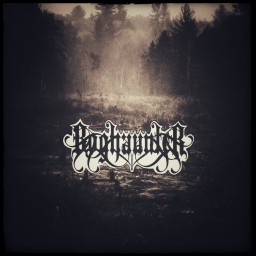
I picked "Writhe" up on its release via Bandcamp and, at time of writing eight years later, it remains the only release from the New Hampshire trio, amounting to two tracks spanning 25 minutes of material. Boghaunter's version of doom metal is heavily atmospheric and dips its toes into atmospheric sludge waters more than a little. Opener "Constellation Vows" builds on clean and clear lighter motifs and then batters them down with some crushing riffs and corrosively harsh vocals, only for them to reassert themselves in a to-and-fro of contrasting and complementary tidal shifts. This feels to me to be more than the usual atmo-sludge trick of build, build release, the two atmospheric poles weaving together like the intertwining twin serpents of celtic legend and displaying a nice level of songwriting maturity. Second track, "Ordeals in Stillness" is less intricate and more straightforward doom metal, albeit no less impressive, employing a memorable and melodic, gravitationally heavy riff which is accented by sparely used keys and soaring lead work. These provide a doom-laden foundation, dripping with melancholy over which the sludgy vocals bark and snarl in protest.
I was impressed by this opening salvo from Boghaunter back in 2018 and remain so to this day and it is a great shame that so promising a debut wasn't the springboard for a career of note. Even sadder is that there seems to have been very little activity from the three guys elsewhere, although I have just found the 2025 debut three-track EP from death doom band Departure which features Boghaunter guitarist and vocalist Michael Demers on lead guitar and which, although it is more straight-up death doom, is still a good listen. I guess the history of metal is strewn with such tales of exceedingly promising acts, for whatever reason, falling by the wayside while lesser talents thrive, but I am grateful that we got this beauty of a release anyway.
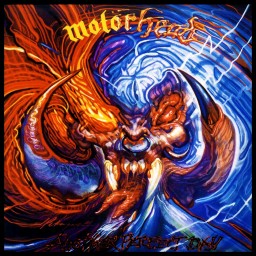
It has got to be said - I have been far too hard on "Another Perfect Day" for far too many years. Motörhead were one of my absolute favourites in the late 70's, probably even more so than Sabbath, so when the 'classic' lineup split and Fast Eddie moved on, I wasn't really prepared for what came next. Sure, I quite liked "Robbo" when he was with Thin Lizzy, but Motörhead were a whole different kettle of fish. Consequently, the release of "Another Perfect Day" saw me turning away from Lemmy and the guys for the very first time. The situation was exacerbated by my discovery of thrash metal shortly after and for a very long time I didn't really give The 'Head much thought. Time has seen my attitude change and I have really dug on a few of the later albums, yet I stubbornly refused to give much eartime to "Another Perfect Day". So now, over the last few days whilst I have been compiling my favourites of '83 list, I have spent a fair bit of time with this misfit of a record and, you know what, I have really enjoyed the experience and I keep coming back to it for just one more spin. It is almost like I am hearing it for the first time. Brian Robertson's more expansive guitar style actually complements Lemmy's thundering basslines and gruff vocal delivery beautifully and his soaring soloing is a whole lot better and more expressive than I ever gave it credit for.
On the downside, I am not so sure that there are any real standouts like "Overkill", "Stone Dead Forever", "(We Are) the Roadcrew" or "(Don't Need) Religion", but there are some solid tracks here and the soloing on a track like "One Track Mind" give the band a fresh dimension and dynamic. I guess it is better late than never but I was a pig-headed little fucker when I was younger (what do you mean I still am?) and I guess I have missed out on some good stuff over the years because of it. Remember, though, that I couldn't just bang this on a streaming platform to allow me time to get into it, I would have had to shell out hard-earned cash for an LP and from what I had heard of it at the time I wasn't prepared to do so. I am glad I got there in the end though.
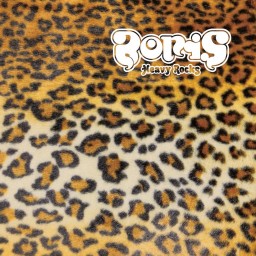
Another Boris album, another slab of noise-drenched, riotous stoner metal. The Japanese crew just sound like they were having so much fun when they recorded this album. Some of the tracks here are just so insanely energetic and anarchic they sound like they have produced the perfect soundtrack to a riot. There are songs that poke their heads above the general mayhem, such as the industrial dance-beat affected Ghostly Imagination, the ominous, sax-laden Blah Blah Blah or the closing piano-led (Not) Last Song, but mostly this is an album to break stuff to! I know we are all supposed to stroke our chins and think deeply then write reams of crap because it's Boris, but fuck that, just slam it on, bounce around the room and have some fun.
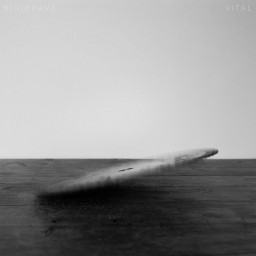
Montréal's Big Brave are a band I'm only recently getting into. This, their fifth album, is a mix of drone metal and post-metal with huge-sounding, pounding drum beats and discordant guitar work interwoven with some gorgeous female vocals that sound like a mixture of Siouxsie Sioux and Bjork. It's five tracks span less than forty minutes, so this isn't a long drawn-out affair unlike many drone-adjacent releases, but is focussed and kind-of to the point, for drone metal anyway. The band manage to cram a lot in and squeeze a lot out of their forty minutes, conjuring up haunting visions of crumbling edifices and long-deserted streets, especially on the title track, for a style I want to call post-human metal.
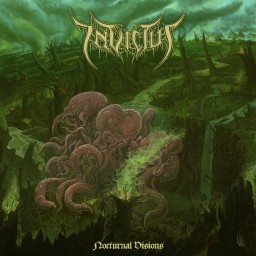
Invictus are a death metal three-piece who formed in 2015 in Nagano in Japan. They play in an old-school style that plays very much to my death metal preferences, so it is unfortunate that I haven't come across these guys until now. They don't appear to rush their releases, with this being only their second full-length, following 2020's debut, "The Catacombs of Fear", and it shows because this sounds like well-written and well-rehearsed material that the individual musicians are apparently exceedingly comfortable with.
Musically there is a reach back through time to the late Eighties and early Nineties scene with influences from the likes of Bolt Thrower, Asphyx, Autopsy and early Death all shining through. The riffing is fluent and hard-hitting with some vestigial thrash metal elements underpinning the album's potency and inexorably driving the tracks forward. Like all the best old-school protagonists Invictus are also unafraid to drop the tempo into a doomier territory from time to time. The production is very dense, feeling like it is smothering and squeezing the listener and which possibly helps to make the album sound even more brutal than it really is. I say this because although it does sound damn brutal, it is actually also quite melodic (for want of a better word) and has some killer hooks in its riffs. However the foetid production always seems to subvert those hooks and presents such an atmosphere of filth and violence that this melodicism goes to work on a much more subliminal level, so you suddenly find yourself tapping your toes and nodding your head almost unwittingly.
This is quite a short album, by modern standards, with eight tracks and a brief intro clocking in at a touch over 35 minutes. With the final track taking up 8 of those minutes, the others are mainly in the sub-4 minute region, yet seem to have far more going on in them than such brief run times would suggest, a testament to the three guys songwriting prowess. The riffs are obviously the big draw here and there aren't many guitar solos but when there are they are pretty manic - check out guitarist and vocalist Takehitopsy Seki's frenzied shredding towards the end of "Altar of Devoted Slaughter" for proof. The rhythm section of bassist Toshihiro Seki and drummer Haruki Tokutake are both impressive here and their work is the foundation of all the brutality and filthiness that bursts out of the speakers and these two guys are definitely more than just supporting players to Takehitopsy's six-string antics.
I enjoyed this one immensely as it plays to all that I have grown to love about old-school death metal, the stampeding riffs, the foetid atmospherics, the chunky bottom end dynamics and the grizzled growls of subterranean demon vocals. One of my favourite OSDM albums of recent times that I will definitely return to time and again.
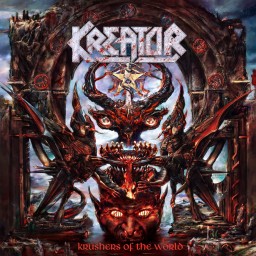
Since the turn of the century Kreator have taken to releasing a new album every four or five years and here we are at the beginning of 2026, with the world turning to shit, and the Teutonic Titans delivering full-length number 16. With Mille and Ventor both turning 60 this year, it would be overly optimistic to expect that they will ever reproduce the bile and venom that they unleashed with their classic period which spanned from "Pleasure to Kill" to "Coma of Souls". Indeed, they haven't really issued anything essential since 2005's "Enemy of God". This does not, however, mean that a new Kreator album deserves to be ignored. No, far from it because, although "Krushers of the World" is inconsistent and patchy, occasionally a brief glimpse of former brilliance does shine through.
There are riffs a-plenty and there is a decent energy to the album, but on the whole this latest is a little too groove-laden for my particular taste with choruses that often seem to have been written with optimum catchiness in mind and, as such, it lacks the biting venom of the band's best work. Some of the best moments come from the guitar solos which are deployed more sparingly than I would like, but when they are used, such as during "Barbarian and "Combatants"," they elevate the tracks with a level of intensity that the riffs and vocals don't quite encapsulate. For my money, the clear highlight of the album is "Psychotic Imperator". It sounds the closest to classic-era Kreator with an added choral section and a searing guitar solo that elevate it to head and shoulders above the rest of the album.
I guess that "Krushers of the World" delivers pretty much what you would expect from a Kreator album at this stage of their career, being cast into shadow by the monumental magnificence of their best and trying a little too hard to capture listeners with sometimes overtly catchy choruses. I am sure there are many who couldn't wait to tear this apart and I have no wish to join them as nothing here is actually poor but, apart from the aforementioned "Psychotic Imperator" I can't hear too much that will keep me returning to this either.

Fuath was originally conceived as a one-off project by Saor's Andy Marshall when he released "I" back in 2016 as an outlet for an album of atmospheric black metal compositions that were more traditionally frostbitten and aggressive than the sweeping, celtic-themed, cinematic paeons to his Scottish homeland that was the usual output of Saor. He obviously felt he had more to say within that sub-sub-genre though because here at the dawning of 2026 the project is onto its third album, predictably entitled "III".
The first Fuath album was a raw-sounding sort of affair compared to his Saor material, with a fairly sparse and frosty production job, but the second had a much fuller sound and some symphonic touched which gave it a more epic feel, but at the cost of the icy edge feeling somewhat blunted. "III" sits nicely somewhere between the two with a frostier feel than the previous album, but with a sweeping, wintry majesty that reaches beyond the scope of "I", like an icier version of Saor.
With only four lengthy tracks featuring in its 43 minutes runtime, it is an album that is inevitably built on a certain degree of repetition. Marshall is such a great writer of black metal riffs and expansive, atmospheric flourishes, though, that the tracks never become boring, but fill the mind's eye with epic wintry scenes that leave the listener feeling awed and inspired, like a musical David Lean. For me, this has always been Marshall's strength, his ability to successfully convey his own obvious love of, and respect for, the natural world through his music to even the most jaded listener. That the man is also an eminently gifted musician as well as songwriter is proved by the fact that he plays all the instruments himself, including real, rather than programmed, drums.
This is probably my favourite of the three Fuath albums as it is a perfect blend of raw and frosty black metal and cinematic imagery, making deft use of synths to round out the sound with a little more subtlety than was employed on "II", yet when at its rawest it is a match even for the likes of Paysage d'Hiver (try "The Sluagh" for proof). Andy Marshall has, over the course of six Saor and three Fuath albums, earned the right to similar acclaim afforded to US atmo-black giants like Panopticon and Wolves in the Throne Room. Whilst Fuath has yet to provide an album quite as breathtaking as Saor's "Aura" or "Forgotten Paths", "III" has left me with the certainty that this is merely a matter of time.
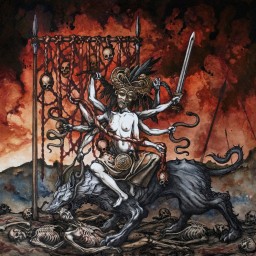
Another feature whose subject is an act I have no previous knowledge of is this latest album from Icelandic black metallers Nexion. This is only their second full-length despite their decade of existence so, hopefully, they are a band who favour quality over quantity. Now I am a big fan of Icelandic black metal bands who deliver sweeping epics that conjure up images of the mountains, hot springs and ice-fields of their native land, such as Auðn and Árstíðir lífsins, but the initial impression I got from "Sundrung" was of a less epic and more violent record that incorporates significant influence from death metal, especially production-wise. This isn't necessarily the case though, as I think the band still deliver an album of epic black metal, although it is delivered in a different way to the aforementioned acts.
The death metal influence is evident and does beef up the bands sound significantly, yet the twin guitar tremolo riffing and frequent use of harmonised, viking metal-like backing vocals does imbue it with a sense of the epic. This saga-like feeling to the tracks is futher accentuated by the use of a significant layer of atmospheric dissonance, similar in tone to that utilised by the superb Ulcerate, which makes the album feel like an Árstíðir lífsins album recorded by Deathspell Omega (this is a good thing, by the way). So, despite the violence on display, in no small part due to the savagery deployed by vocalist Jósúa Rood, there is still a sense of a striking and epic scope to the instrumentation.
For me at least, this was an album that didn't instantly grab my attention and whose inherent viciousness just sort of washed over me at first, but it is a multi-layered beast and ultimately rewards the listener the more they are willing to invest in it as it is a fairly complex entity hiding in the skin of a visceral and savage beast. While I am a metal fan of fairly simple tastes, it is great to sometimes be presented with an album that challenges initial perceptions and which makes me want to keep returning to it to dig deeper into its labyrinthine depths and "Sundrung" is definitely one such album. The only real downside for me was the drums which felt quite one-dimensional and dulled in delivery, but that is a minor issue in the scheme of things here.

I have only really been interested in drone metal for about a decade now and only started exploring it in earnest two or three years ago, but it has become one of my favourite genres and a lot of my highest scores of recent times have gone to drone metal releases. I guess that because I am quite an anxious person by nature, I find the monolithic droning of this style of metal to be inherently calming. Bong are a new name to me, despite them having been around for close to twenty years now and hailing from these British Isles I call home. They are prolific releasers of material with nine studio albums, a plethora of splits and EPs and thirty-plus live albums.
Mana-Yood-Sushai is the four-piece's third album, released in 2012, and is a sublime mix of drone metal and psychedelia that gives it a heavy eastern, mystical flavour, a sound I really love to hear brought into the sphere of metal. The album consists of only two tracks with the 27 minutes of the first track, Dreams of Mana-Yood-Sushai, being the one that really hooked me in. One of the members of Bong is sitar player, Benjamin Freeth, and his jangling strings combine perfectly with the droning chords of guitarist Mike Vest on Dreams... that seems to conjures up vistas of setting suns over mystical eastern temples that I found to be an inordinately meditative and restful piece. The track also features bassist/vocalist Dave Terry with some really nice throat singing that further enhances the eastern flavour with it's ritualistic chanting style favoured by eastern mystics.
Second track, Trees, Grass and Stone, is just shy of twenty minutes in length and is an instrumental, making it a bit more jam-like than the opener with the percussion of drummer Mike Smith driving the track and taking a more prominent role. It is also a heavier-sounding track than Dreams... the droning chords carrying increased weight and settling over the listener like a heavy blanket. As is true of an awful lot of drone metal, it is most effective when listened to at higher volumes, at the point when the experience can become almost physical and it's simple structure can fully infiltrate the listener's senses and become a transcendental sensation.
So once more a new drone metal discovery has me reaching for my higher scores and takes it's place in my list of metal favourites.
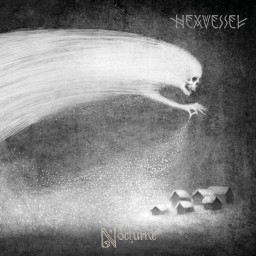
I hadn't listened to Finland's Hexvessel before, but a quick bit of background digging tells me that they began life as a psychedelic rock act and feature the UK's Kvohst on guitar and vocals. They have travelled a fair way from those beginnings because this, their seventh full-length, is undoubtedly a metal album, but one that isn't easy to pigeonhole and which weaves together a number of disparate influences into a very modern-sounding record. There are certainly doom metal elements present, particularly of the more gazey, post-metal type, but that is a long way from the full story here.
Beginning with a short, wistful piano intro, fittingly titled "Opening", which segues seamlessly into a very nice melody and the opener proper, "Sapphire Zephyrs", it becomes apparent that we are dealing with a crew who know a little bit about decent songwriting and musical transitions. The track's initial wistfulness is soon usurped by black metal-derived blasting, but with atypically clean vocals which allow it to maintain its overridingly mournful atmosphere. During its eight minutes the track takes a number of turns with changes in tempo and delivery, yet it still sounds exceedingly coherent and consistent, the hallmark of skillful songwriting. This approach is the band's modus operandi for the album as a whole which makes it feel quite progressive, especially on the longer tracks, whilst the post-metal, doomgaze elements infuse it with its suitably melancholic atmosphere. The production is very clean and allows all the band members contributions to be heard perfectly with the drums, bass and keys all clearly defined within the overall sound.
All-in-all I enjoyed this, it features some really nice melodies which resonated with me quite deeply and, as I said earlier, the songwriting is top-knotch. It isn't the heaviest album you will hear this year, but then again it isn't trying to be. The band succeed in their atmosphere-building, which feels consistent throughout and the skillful pulling together of its various component influences into a coherent whole is impressive, be it doom, black metal, post-punk or whatever else they throw into this witch's magical brew. Ultimately this is a fine addition to a relatively modern branch of post-doom metal.
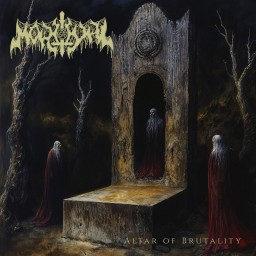
A relatively new name on the death metal scene, Mortual hail from Costa Rica and hold true to the legacy of the death metal of the Americas. Being a completely new name to me I went back to their earlier EP to get a feel for the band and found it to be a little bit messy with a poor production that saw the tracks descending into a bit of a quagmire of identical-sounding noisiness. Thankfully on this, their debut full-length, the production issues have been addressed and that has revealed a much more accomplished band than was originally projected. The title alone should be an indicator that, despite hailing from elsewhere in the Americas, we are definitely on Floridian territory here with Morbid Angel obviously being a touchstone. Their sound also incorporates the abyssal, thunderous quality of the likes of Autopsy and, probably more pertinently, Incantation which feels like it actually intensifies the brutality the band serve up.
Opening up with an absolute brute of a track in "Mortuary Rites" Mortual set out their stall in no uncertain terms with the track veering from an almost black metal-ish, lightning fast tempo to an ominously brooding crawl and back again all in the space of five minutes of thunderous riffs and battering drum patterns. I appreciate the variations in pacing and am always up for a drop into a doomy tempo as a respite from the blitzkrieg riffs and machine gun blasts. Guitarist Justin Sánchez Barrantes, aka Justin Corpse, doubles-up as vocalist and possesses an excellent guttural growl that is one of the real highlights of the album for me, his sulphurous belchings drenched in foetid filth.
The riffs are fine but, in truth, there weren't really that many that hit me hard and stuck for long and I would like to hear a few more that rolled around for a while in my head later. The guitar soloing is pretty intense and mercurial and is certainly a strong point, providing a manic energy to what is already a pretty stoked atmosphere. In all honesty though, there isn't anything here we haven't heard many times before, so what you think of the album depends on whether you are happy to hear a band playing a well-established style of metal very well or if you place more emphasis on the search for growth and experimentation in your metal. Me, I am quite at ease listening to a technically adept band with a deep understanding of the genre in which they ply their trade and an album that enhances the legacy of the giants who influenced them.
Firstly, unless you own the original 1985 vinyl, then you haven't heard "Pentagram" as it was originally released because this version has never been re-issued. The version most people (myself included) know is the 1993 Peaceville reissue which has a resequenced track listing which matches that of the 1982 " All Your Sins" demo from when the band were still called Death Row and which featured new artwork and a title change to "Relentless". As I am sure most doomheads know, Pentagram had originally formed in 1971 and gone through many lineup changes and tribulations that saw them issuing very little by way of official product with a 1972 seven-inch of "Be Forewarned" probably being the most significant. This meant that despite being around for so long, Pentagram's debut was pre-empted by the likes of Trouble and Saint Vitus who were already leaning further into doominess than the genre's godfathers Black Sabbath, so for many "Pentagram" could be seen as a backward step.
Pentagram's sound paid massive homage to Sabbath, who must have been a huge influence on sole remaining founding member Bobby Liebling back in the early 70's, which meant that they didn't lean as heavily into the slow, dirgelike pacing of Saint Vitus' debut, but more akin to that of the NWOBHM, particularly the likes of Witchfinder General. However I am not convinced that ultra-slow pacing is the be all and end all of traditional doom metal, with the riffs and guitar tone playing as much a part in creating the aesthetics of doom and here there can be no doubt of Pentagram's success with the shitty production lending a decidedly grimy filthiness to the riffs that feed fittingly into the album's occult aesthetic. A track such as "All Your Sins" could almost be a demo of an unused track from "Master of Reality" - and I mean that in the best possible way. The quickest tracks are where the band depart most from the accepted doom aesthetic with "Sign of the Wolf (Pentagram)" or "Relentless" kicking out riffs more reminiscent of "Stained Class"-era Judas Priest than "Master of Reality" or "Saint Vitus" and closer "20 Buck Spin" is essentially straight-up hard rock or heavy psych at best. Now this isn't an issue for me per se, being a big fan of late-70's Priest and early 70's heavy psych, but I must admit that the doomier stuff such as "The Ghoul" and "All Your Sins" are where it scores highest with me.
"Pentagram" must really be viewed as a band with a lengthy history finally getting to release their material in full-length form and can possibly be viewed as them 'clearing the decks' so that they could move forward now that they had a record deal. It must be put into context that, despite the emergence of bands like Saint Vitus and Trouble, "Pentagram" was released into a musical environment dominated by the aggressive high energy assault of thrash or the sleazy decadence of glam metal and didn't gain a huge following first time around, recognition not coming until the Peaceville re-release in the early Nineties. Personally, as an old 70s vintage metalhead, I think there are some good tracks here and, despite it's 1980s release date, it gives a perspective on the metal underground from the 70's that not everyone is necessarily au fait with, so it should at least be given some acknowledgement and respect within doom circles as well as the wider context of metal history.
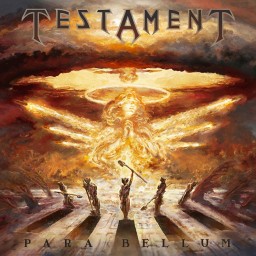
It seems like the Old School are mounting a fightback in 2025 with new albums from Coroner, Sodom, Dark Angel, Destruction, Onslaught, Hirax, Sacrifice and Testament all hitting the shelves of metal emporiums the world over. I would be lying if I said I was feverish with anticipation over any of the above, but in the past all have made thrash albums I love to a greater or lesser degree, so at least deserve a hearing. Now, I do like Testament, Chuck Billy is one of my favourite thrash metal vocalists, but somehow, much like fellow Californians Exodus, outside of their debut album they just don't excite me as much as they should, their songwriting not always flipping my switches.
Initial impressions of Para Bellum, however, are good, especially as Chuck's excoriating bellow is still as potent as ever, despite being the same age as me, old bastard (me, not Chuck)! Kicking off in thrashtastically invigorating style, the opening dual salvo of "For the Love of Pain" and "Infanticide A.I." hit pretty hard with some high-energy riffing, scintillating leadwork from Eric Peterson and Alex Skolnick and defiant roars from Chuck. They follow this up with the medium-paced chug of "Shadow People", allowing for a change of pacing and lyrical content. Whereas the opening brace are lyrically centre around the modern concern that the power-hungry few are trying to exert control over the wider population's lives, "Shadow People" takes on the old metal staple of demonic forces and black magic.
"Meant To Be" kicks off in 80's power ballad style as Testament attempt their own version of "Fade To Black", with the track building in intensity and heaviness, although the stadium-friendly, Zippo-waving chorus is a bit cheesy-sounding for my taste, the lead work is pretty decent. Whilst it misses the mark a bit, I do applaud the band trying to mix things up and provida a little bit of the epic amongst the machine-gun firestorm around it, which certainly continues apace with the next couple of tracks, "High Noon" and "Witch Hunt", both of which attempt to tear your head from your shoulders with chainsaw riffs and by sheer weight of aggression. I think new drummer, ex-Seven Spires skinsman Chris Dovas is probably worth a mention at this point. Following previous two drumstool occupants Gene Hoglan and Dave Lombardo gives Dovas some pretty big boots to fill, but his drumming is precise and powerful and provides the riffs with added impetus and velocity.
Unfortunately this point now sees the album hit a flat spot as we hit filler territory. "Nature of the Beast" is the blandest and most uninspiring track on the album for my money and I feel its presence also has a negative effect on the next track "Room 117", which isn't strong enough to lift the album, despite a decent chugging riff and a nice mid-track solo, with it feeling like it too is dragged down by the banality of its predecessor. "Havana Syndrome" encounters more of the same, with the vicious main riff being let down by a rather unimpressive chorus. The album concludes with the title track and here we hear the band back at full tilt and sounding so much better as a result as they declare war on your eardrums once more with a war-drenched slab of epic thrash glory.
There is a killer 41 minute album in here. I would have liked them to have stripped out the two filler tracks, "Nature of the Beast" and "Havana Syndrome", which would have left us with a leaner, meaner fighting machine of an album. I also know that "Meant To Be" is a misfire, but like I said, I kind of admire the intent behind it, so am inclined to want it to remain. All-in-all I am glad to have heard Para Bellum and would have no issue picking up a copy if I could get it for under a tenner.
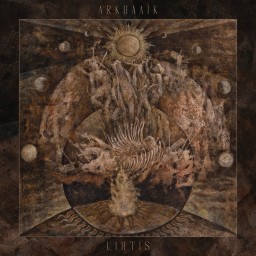
Arkhaaik are a Zurich-based three-piece who, as their name, a stylised version of "archaic" suggests, are interested in exploring pre-history, in particular the culture and practices of Bronze Age Europe. Their debut album, 2019's "*dʰg̑ʰm̥tós", was an exploration of the religion and deities of this culture, with the somewhat questionable claim to being sung in the long dead Indo-European language of the time. This 2025 follow-up takes as its theme The Hunt in both a literal and an analagous religious context.
Musically, this takes the form of blackened, old-school, cavernous death metal with death-doom tendencies, which often utilises pounding rhythms and horn-like effects to give the album a paganistic and sometimes ritualistic vibe. The tracks are fairly lengthy affairs, with the almost fifty minutes of "Uihtis" containg only four, varying from ten to fifteen minutes in duration. This affords the band plenty of leisure to build the atmospheres and vibe of arcane hunting ritual that they are striving for. Whilst metal is rightly most often judged on the quality of its riffs, and the album contains some very nice death metal riffs to be sure, I think the strength of "Uihtis" lies in its percussion and the tribalistic patterns and atmospherics that it conjures up. To this end I think drummer Vâlant deserves huge praise as his work is crucial to the album's success. The vocals also contribute massively with the bellowing roars and growls being supplemented by the whoops and howls of the (presumably successful) hunters alongside some nice native-like chants.
Despite all this aesthetical window-dressing and conceptual exposition, I guess what most metalheads want to know is, "Does it fucking slay"? I would reply with a resounding, "Oh yes, you fucking bet". I don't think it leans as heavily into the death doom side of the equation as the debut did, this being more in the vein of blackened Autopsy-style OSDM than true death doom, but with some pretty fucking brutal blasting sections and those hulking, tribalistic throbs this could indeed slay a woolly mammoth by sheer bludgeoning weight alone.
In conclusion I would say that if you are someone who loves old-school, cavernous death metal and would like to hear it used in a slightly different context then this is definitely a release you should wrap your ears around.
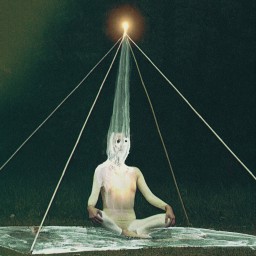
Derby's Abduction are one of those black metal bands who seemingly beaver away with no fanfare or support from the music industry at large, making me wonder how they keep at it. It isn't like the UK has exactly ever been overflowing with good black metal acts now is it? Anyway, Abduction is the brainchild of guitarist and vocalist Phil Illsley, aka A|V, with guest musicians providing drums, bass and additional guitars. I was well behind the band around the time of the 2018 album, "A Crown of Curses" which I have on cassette from the now defunct Death Kvlt Productions label, but I have lost touch with their progress over the last few years.
So here we are in 2025 and album number five. This is a well-produced and written slab of vicious and savage-sounding black metal that makes no pretence to the folky or celtic atmospherics which are often a staple of UK black metal, but which goes for the jugular in full-on attack mode. That doesn't mean the thin and tremolo-heavy sound of true raw black metal, the production is too thick and muscular for that, but it takes a more bludgeoning approach, in the vein of death metal. Even though this is still unambiguously black metal with pummelling blast beats and tremolo riffing, there is a fullness of sound that puts more meat on the genre's usually skeletal bones. The band sound very tight and the playing is excellent throughout.
A|V has an excellent vocal delivery with a howling savagery and angst-ridden desperation borne of emotional frustration that screams in the face of an uncaring universe. His lyrics are poetic and dense and I haven't had much time to sit down with them so far, but I am sure they are much deeper in meaning than I have as yet been able to ascertain. The killer riffs are powerful and are driven by a phenomenal powerhouse of a rhythm section as drummer Ed Gorrod and bassist Gavin Archer blast a path with the force of a high explosive drone strike. The tracks all flow nicely with decent variation of pacing, despite the overarching aggressive feel of the album. and the songwriting seems of as high a standard as the musicianship.
All told, this is a very good slab of UKBM and with, in my opinion, the recent decline of previous UK heavyweights such as Winterfylleth and Saor there is no reason why Abduction should not sweep in and claim the mantle of the premier UK black metal act.
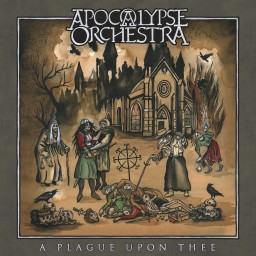
Apocalypse Orchestra are a five-piece from Gävle in Sweden and they have a penchant for doom metal heavily coloured by european folk music. They seamlessly integrate medieval folk instruments such as hurdy-gurdy, mandola, cittern and pipes with the modern electrified instruments of doom metal in a way that feels perfectly natural and unforced. The slow, plodding riffs of doom metal are used as a foundation upon which the band interprete medieval folk melodies for a modern metal-loving audience.
I do love folk music, but I am often disappointed by its unsubtle use when utilised as a trope in metal, with a lot of folk metal sounding trite and just downright cheesy. I never felt that way once though whilst listening to "A Plague Upon Thee" because it is just so tastefully done, with an apparently equal reverence for both folk and metal. You would be forgiven for suspecting AO of playing a doom metal version of viking metal, given their swedish origins, but there is a distinct lack of the whiff of longship and battleaxe within "A Plague Upon Thee", with it often being more celtic-sounding à la Saor than the Norse influences of a Bathory or Wardruna. The doom metal side of the equation is quite functional and, in truth, it doesn't vary hugely from track to track, with most of the eight tracks following the same tempo. It is perfectly well executed, but is utilised more as a foundation or rhythm section if you like, providing the staging upon which the folk melodies and instruments perform their magic.
The lyrical themes revolve around the harshness of medieval life, plague and the ever-pervasive presence and domination of religion over the lives of the peasantry. The lyrics are beautifully delivered by voclist Erik Larsson who has a great line in clean vocals, supported by almost symphonic backing vocals provided by the rest of the band. Despite the inate heaviness and mournfulness of doom metal and the generally bleak tone of the lyrics, the music still often feels almost hopeful, as if, despite the harshness of life, there is still a ray of light or shred of comfort to be gleaned amidst all the darkness and hardship.
I really enjoyed "A Plague Upon Thee" and found its folk-centric take on doom metal to be a refreshing twist on what can often be a conservative and predictable genre. That it also avoids the trap of cringy cheesiness that plagues so much folk metal is testament to the band's skillful songwriting and reverence for their sources of inspiration. If you are looking for a different take on doom metal then I would heartily recommend this.
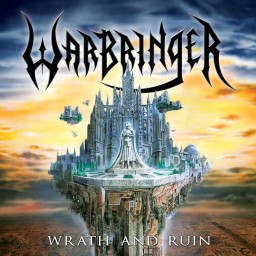
Forming in Ventura, California in 2004, Warbringer are a five-piece thrash band centred around vocalist John Kevill and guitarist Adam Carroll alongside a revolving door of drummers, bassists and second guitarists. However, they have managed to maintain a stable lineup since 2018, so "Wrath and Ruin" features the same five as previous album, 2020's "Weapons of Tomorrow". Now this may not necessarily be a good thing because I wasn't that impressed by "Weapons of Tomorrow". It was a bit too Exodus / Testament for my preference. Now there is nothing particularly wrong with either of those bands, but I like thrash that has a bit more bite, hence my love of recent chilean thrash alongside old favourites like Slayer and Kreator.
So here comes the good news, because it sounds like Warbringer have been bingeing Kreator albums in the last five years and that has given them a harder edge than previously, making me much more amenable to "Wrath and Ruin" than I may have been otherwise. A big contributor to this is that John Kevill sounds to be taking his vocal cues from Mille Petrozza this time around, with a ragged and howling bark that sounds significantly more aggressive than he has previously. The production has been a big help and its clarity has lent the riffs a more jagged, savage feel. The emphasis in the songwriting seems to have moved away from hooky melodicism towards upping the ante on aggressive riff writing and just letting rip. This doesn't manifest as an all out blitz, though, with the pacing of the tracks varying throughout from ripping high velocity salvos like "Strike From the Sky" and "The Jackhammer", through medium-paced chuggers like opener "The Sword and the Cross" and "Neuromancer" to the markedly slower menace and portentiousness of "Through a Glass, Darkly", which is possibly my favourite. The two guitarists, Carroll and Chase Becker, unleash some impressive solos, complementing each other really nicely with high-velocity stringwork that brings to mind some of Dave Mustaine's better work. The rhythm section is also damned impressive with drummer Carlos Cruz laying waste to whole city blocks with his relentlessly busy battery, ably supported by Chase Bryant's throbbing bass lines.
All in all, in 2025, Warbringer have managed to turn in a thrash album worth listening to that isn't from South America and once more giving the US a seat at the thrash metal table. I have to admit that I didn't think these Californians had an album this good in them, which just goes to show, never count anyone out and definitely not thrash metal which, despite its limitations, can still turn up diamonds occasionally.
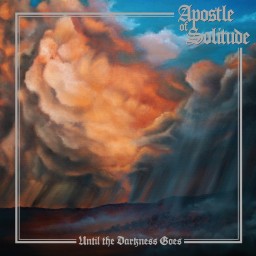
I've been a big fan of Apostle of Solitude for some years now, but I must admit to being a bit disappointed with previous release From Gold to Ash as I thought it sounded a bit flat. Happily, Until the Darkness Goes sees the band get back into form with some tremendous, thunderous doom metal, particularly during the opening half of the album with the first three tracks being some of their best work since Sincerest Misery. The guitar sound has that requisite solid "crunch" to it that the best doom metal possesses, the riffs are fairly memorable, often possessing enough power to topple small buildings (When the Darkness Comes, Relive the Day), and the tracks have plenty of melodic hooks. Chuck Brown's vocals are adequate, but I really think a top-knotch vocalist would elevate Apostle of Solitude into the upper echelons of the doom metal universe. Still, that minor criticism aside, this is an album that puts the Indianapolis doomsters back on track and is well worth the time of anyone into conventional doom metal such as Pallbearer, Lord Vicar and Reverend Bizarre.
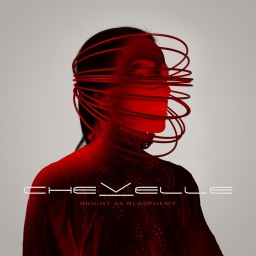
My knowledge of these Illinois alternative metallers is solely restricted to their 2021 album "Niratias", an album that I quite enjoyed at the time, even if it was not the sort of fare I normally tuck into. So here we are again and they are back with a new album, their tenth in just over 25 years and I have to say I really enjoyed it. With loads of nu-metally bounce and some wicked melodies, despite some of the lyrical themes, I found this to be a fairly upbeat and uplifting experience. The brothers sound exceedingly tight and well-drilled as befits a band well into their third decade of existence. I must confess I never really look forward to the Gateway features very much as I find an awful lot of them to be a bit bland, but the melodic sensibilities and hook-laden quality of the songwriting on "Bright as Blasphemy", coupled with the guys' evident technical competence and a production job that is almost perfectly suited to the material made this a bit of a minor revelation for me. The first three tracks and especially the two-parter "Cowards", are a great beginning to the album and whilst the rest doesn't quite hit as hard as these, as a whole this sounds as good as anything I have heard from the Gateway over the last few years.
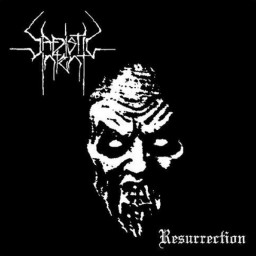
Sadistic Intent were spawned in the big bang that saw the explosion of death metal in the late eighties and early nineties. Despite clearly having the ability to punch with the heavyweights, the stars never really aligned for the Cortez brothers, whether by bad luck, poor decisions or a mixture of both. An early dispute with the record label and continuing lineup issues that saw the band unable to perform live until 1993 all took their toll. They even changed their name to Possessed in 2007 when Jeff Becerra joined full-time, reverting back to Sadistic Intent when Becerra left in 2010. As of 2025 the band have never released a full-length album either, their discography comprising only EPs, splits and seven-inchers. All this points to a band with crazy underground kudos, with the Cortez brothers also owning Dark Realm Records, a record store in Downey, California that has been cited as a death metal equivalent of Euronymous' Helvete record store in Oslo.
So how do they sound? Exactly how I like death metal to sound is the answer. That old-school, still a little bit thrashy, style that packs a hell of a wallop is what SI deliver on this short and deadly EP. It is bookended by a couple of brief instrumentals that are lent a slightly sinister atmosphere by the thin-sounding synths so beloved of early 90's extreme metal acts. However when opener proper "Asphyxiation" kicks the door in we are left in no doubt as to the band's intentions. This is brutal and suffocating death metal that swarms around your head like flies around a ripe corpse with the primal, slightly echoing, production lending it a mouldy and purulent atmosphere. The riff-writing is excellent and they are exceedingly well delivered with the band sounding very tight and well-drilled. Drummer Joel Marquez is a bit of a monster behind his kit, with interesting fills and pummelling intensity. He and bassist / vocalist Bay Cortez drive the tracks with an energetic and dynamic velocity. Meanwhile Bay's vocals are deep growls that resemble subterranean sounding Balrog roars that threaten to immolate the listener. There is perhaps not as much emphasis on guitar solos as I would have liked to have heard, but this is really a minor niggle when the riffs are so damn good and are obviously where Sadistic Intent's strength lies.
I have to admit that I am genuinely flummoxed that an early 90's death metal band that sounded this good didn't manage to attain the heights of many of their peers because riff-wise this is as good a 90's death metal release as I have heard. "Resurrection" is a must for any fan of fiilthy and demonic early death metal and if you love Morbid Angel, Possessed et al and haven't heard this yet, then you really should.
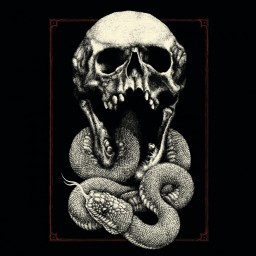
Something that I have realised over recent months is that I am not necessarily averse to dissonance in black and death metal per se, only that I have an issue with it when it is used as an implement of torture rather than as a musical device. Recent dalliances with the likes of Imperial Triumphant most definitely sit in the former category whilst the likes of Deathspell Omega's entire discography or Ulcerate's "Cutting the Throat of God" show how dissonance can be used as an atmospheric device like any other musical instrument. Of course I am aware that the really dissonant stuff is only an issue for me because of my own mental set-up and I do understand on an intellectual level why some bands deploy it as an artistic device to illustrate a point, I just am unable to enjoy it is all.
I was under the impression that I hadn't encountered these Icelanders before, but it appears that I had, awarding 2019's "Hvísl stjarnanna" a four-star rating despite not being able to recall it now. Luckily for me this month's feature from Sinmara and its disonnant approach very much belongs alongside the likes of Ulcerate and DsO and has been a wholly positive listening experience for me over the past week or so. One of the main reasons for this is that at its heart "Aphotic Womb" is a blistering and brooding black metal album. The dissonance of the tremolo riffing effectively lends the tracks a frosty iciness that elevates the savagery on display to a new level, in a way that a less atonal approach would struggle to replicate. This results in a bitter and venomous-sounding album that channels all the best that the icelandic black metal scene has to offer. We are not talking thin and raw black metal here, it has a full sound with the rhythm section playing an important part in providing both impetus and foundation whilst the guitarists unleash their six-stringed, dissonant sorcery. Vocalist Ólafur Guðjónsson has a harsh growling bark very much in the vein of DsO's Mikko Aspa, providing more proof of the french pioneers' significant influence on Sinmara. The overlying effect of the album is of a suffocating busyness that threatens to bury the listener under layers of ever-shifting sound, like being caught up in a blizzard, whipped into fury by bitingly cold, gale-force winds.
So, in conclusion, I want to heap bountiful praise upon "Aphotic Womb" for providing more fuel for the fire on which I must burn my preconceptions and for helping me to grow into enjoying a musical style I would once upon a time have really struggled with.
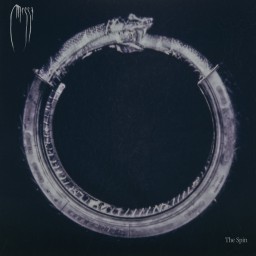
Messa's previous album, 2022's "Close" was my AOTY for that year and is one of my favourite albums of the current decade. So expectations were high for their new full-length and while it would be going too far to say I was disappointed with it, initially it fell a little bit short of my undoubtedly unrealistic expectations. Now that I have had some time to really get to grips with it my early lukewarm reaction feels a bit reactionary because "The Spin" has grown on me massively and, whilst not yet quite up there with "Close", it has still proven itself to be a damn fine record.
Leaning more into gothic territory than previously, "The Spin" is not as heavy or doomy as "Close" and is more hook-driven than the earlier album, but the interweaving of various non-metal influences is still present. Whilst undoubtedly an entire band effort, I felt that vocalist Sara Bianchin was the star of "Close", but here I think the big draw is Alberto Piccolo's fantastic guitar work. He unleashes several scintillating solos with "Immolation" and "Void Meridian" being particularly sterling examples, his riffing is spot on and his jangling guitar work is so reminiscent of the 1980's UK gothic rock scene that you would swear that Billy Duffy or Wayne Hussey had guested on the album. Piccolo also plays blues rock under the name "Little Albert" and his slide work on penultimate track "Reveal" suggests he is also proficient in that scene too.
There does seem to be a specific direction of travel to "The Spin". It begins with the emphasis very much on the gothic, specifically the opening brace of "Void Meridian" and "At Races" and the album feels as much about gothic rock as metal, with "Void Meridian" coming on like Siouxsie and the Banshees - tell me the opening bass line doesn't sound like the beginning of "Spellbound"! As the album progresses, though, it starts to move in a heavier direction, culminating with the one-two combo of the album's out and out heaviest track, "The Reveal" and the doomy "Thicker Blood". Along the way though we are treated to tracks that include the band's trademark dalliances with other diverse elements such as blues and jazz, meaning we are never going to get bored or complacent about where the band are going. They even reference Rush and in particular "La Villa Strangiato" from 1978's "Hemispheres" during the album's epic centrepiece, "The Dress" whilst the first half of "Immolation" is a piano ballad that Tori Amos would be proud of.
I sometimes get the feeling with some primarily metal artists who often look to incorporate a lot of non-metal elements that they are almost embarrassed to be tagged as metal, but I never feel that with Messa and despite their eclecticism they feel like a band who revel in their metal roots, even whilst it isn't the totality of their playbook. Sure, I am generally a bit of a caveman when it comes to metal. I love cavernous, old-school death metal, frigid and raw blasting black metal, crawling and monolithic doom, chugging thrash riffs and anthemic, singalong-at-the-top-of-your-voice classic metal choruses, but I am not a complete philistine and I am perfectly capable of enjoying bands who want to bring more to the table. I just prefer when they do it in a listenable way rather than making their albums into a test of the listener's endurance for discomfort. Thankfully, listenability is still an important quality to Messa and their eclecticism is not at the expense of accessibility. "The Spin" may not be an album that initially grabs the average metalhead by the throat, but it does reward those who spend time with it and ultimately reveals itself to be the product of a band who are eminently skillful musicians and songwriters that, despite weaving their metal with influences from bygone days, still produce exceedingly modern-sounding metal.
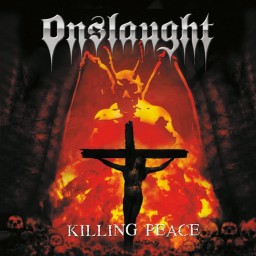
I am a big fan of Onslaught's first two albums. Let's face it they were one of the very few thrash metal bands of any real consequence that hailed from the UK, so a bit of local bias came into play to endear them to me, even though those two albums are really good anyway. However, I have never listened to any of their post-reformation albums. Well, the intervening years between the 1991 split and 2004 reformation had seen the thrash world fall under the thrall of the groove gods, with the shadow cast by the likes of Pantera and Machine Head proving to be almost all-encompassing. In the 21st century it feels like the thrash world split into two distinct camps, the bands who embraced extremity and incorporated more death or black metal into their sound (let's call these the good ones) and those who sold their souls to the groove gods (for argument's sake we will call these the bad ones) in the hunt for increased record sales. Listening to "Killing Peace" it is obvious that Onslaught took the latter path, despite their earlier stuff suggesting they would be more likely to embrace the former.
To be honest, after only a handful of tracks I had had enough of this, it's groove-oriented approach sounding far too much like a knock-off Machine Head for me to stomach it for long. I stuck it out until the end as I was out dog-walking and it was easier to keep listening than change it. However, come album's end I had the horrible empty feeling in the stomach that I get when I realise a band I once really dug has sold out and is nothing more than a trend-following shell of its former glory. In fairness only two of the guys who recorded "Power From Hell" were present on "Killing Peace", drummer Steve Grice and lead guitarist Nige Rockett who had even relegated himself to rhythm guitar in the new band, but even so, the latter album sounds like it was conceived and recorded by a completely different band, possibly one from a different dimension such is the lack of connection I make to it. For me, this is akin to the chasm in quality between St Anger and Master of Puppets.
On the plus side the production is super clean, as you would expect from an album recorded this century and there are a couple of quite gnarly solos, with opener "Burn" being a case in point. Steve Grice's drumming is very good too and is one of the only reasons to listen to this more than once, which I am doing right now, so dedicated am I to delivering a considered opinion! The lead vocals are pretty horrible though ("Destroyer of Worlds" is just painful), the gang backing vocals are even worse and those bouncy, groove-oriented riffs are anathema to all I hold dear. Add in yet another overused "I am become death" Oppenheimer sample and I have just about had it with this.
I originally had this pegged as a 2.5, but further listening has hardened my opinion agaginst it and I can't bring myself to go higher than a 2.0. I will definitely stick with Onslaught's 80s stuff and file their reform albums in the bottom drawer of the filing cabinet in the shed at the bottomof the garden marked "Do Not Listen - Ever".
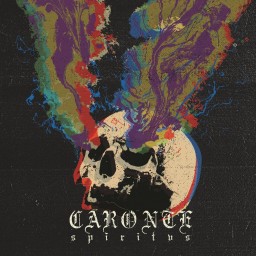
I am a big fan of this Parma five-piece and was stoked to see they had a new album out, with minimal fanfare from the metal world, a long six years since previous offering "The Wolves of Thelema". Their brand of doom metal sits smack-bang between the stoner and the epic, with a wide streak of occult psychedelia, in the vein of The Devil's Blood, running through it's dark heart.
They have a quite distinctive sound, chiefly down to mainman Dorian Bones' vocals which come on like a mixture of the gothic flavour of Paradise Lost's Nick Holmes and the expansive epicness of a Robert Lowe. Over the previous decade and a half they have also become exceedingly proficient at writing more memorable, uptempo doomy riffs that are likely to be rolling around your head for hours after the record stops spinning. The rhythm section is exceedingly solid, with both drummer Mike De Chirico and bassist Henry Bones solidly and unshowily driving the tracks along and providing a solid foundation on which everything else is built.
The opening one-two of the punchy and catchy "Scarlet Love" and the slower and doomier "Aiwass Calling" sees the album kick off in fine style with two of the album's strongest numbers. Most of the tracks are mid-paced affairs, but the band do include a couple of slower, more doom-laden numbers with the aforementioned "Aiwass Calling" and the penultimate "Fire Walk With Me" being well-placed to prevent the album from sounding too samey. I feel there is a bit of a drop-off in the middle, though, with side one closer "Antikristos" and side two opener "Beyond Daath" not really hitting the spot for me. "Antikristos" feels like the band are fishing to catch the Jex Thoth / Devil's Blood crowd and "Beyond Daath", despite having a decent riff, leans too much into the occult theatrics vocally. Luckily things pick up with the album's doomiest (and my favourite) track "Fire Walk With Me" imparting a bit of class before closer "Interstellar Snakes of Gold" rounds things out with a melodic chorus and nice riff.
As much as I enjoyed Spiritus, I find myself being reluctant to impart a top-tier score. The main reason for this is the lack of adventure the band display, particularly in the restraint with which the guitar leads are deployed and their willingness to stick to the same old formula which has, admittedly, served them very well over the years. I think the album is lacking a really good solo or two with the leads mainly used to add melody over the riffs when I couldn't help feeling that on a couple of occasions they could have really let rip, but feel constrained by the tight discipline of the songwriting. The closing section of the aforementioned "Fire Walk With Me" is the only really extensive solo and even that feels like it is being held in check when it should howl and soar.
In truth, I don't need a band to constantly be pushing the envelope and redefining themselves for me to enjoy them, but sometimes they can be found sitting just a little bit too comfortably and I feel like that about Caronte at this point in their career. There are some good tracks here, but it feels to me like there is a little too much filler too with "Antikristos", "Beyond Daath" and "Interstellar Snakes of Gold" almost feeling like a band going through the motions and I hate saying this about a band I enjoy as much as I do Caronte.
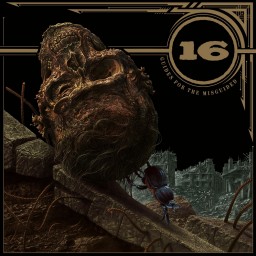
I haven't listened to a whole lot from L.A.'s 16, but what I have, I have always found to be angry and confrontational, from a band railing at the world, their relationships and even themselves. Guides for the Misguided starts off in much the same vein with a couple of quick-tempo efforts, Bobby Ferry's anguished and angsty shouting almost making me suspect that they are trying to grab the attention of the metalcore crowd and the band coming off as the result of a cross-pollination of Crowbar and Converge.
However, things soon take a turn down a different alley with third track, "Blood Atonement Blues". Starting with a piano intro that is rapidly swamped by a really nice bluesy, howling lead. The track then turns down an unexpected gothic metal sidestreet, complete with a catchy chorus which isn't as good as the rest of the track, although that howling guitar lead does make a very welcome return. At this point I must admit I was now a bit thrown off track, thinking I knew what I was getting here, but subsequently having those expectations trashed. "Fortress of Hate" is a groovier slab of sludge metal that I would, once more, associate more with Crowbar than I would -16-. This groovier approach and the deployment of generally more catchy choruses continues with "Proudly Damned" and especially "Fire and Brimstone Inc" which has one of those choruses that you just can't shift from your head.
I am then even more confounded by "Desperation Angel" which sounds like a sludge metal track that has been written by Dave Grohl and, even though it is more aggressive-sounding than most of the preceeding tracks with the harsh vocals coming back to the fore at last, it just doesn't quite hit hard enough for my liking. In fact it isn't until "Resurrection Day" that I get the anger and visciousness that I turn to a -16- album for, although the track is a little bit patchy in truth. This is followed, though, by the quite short "Give Thanks and Praises" which has much more of a hardcore feel and so is a better representation of what I personally look for from the band and which, despite it's brevity, is probably my favourite track. Admittedly the album does finish more strongly with "Give Thanks" being followed by the hulking "Kick Out the Chair".
In conclusion, "Guides for the Misguided" probably threw more curve balls at me than I was expecting. This may not be entirely out of character as this is only the third album I have heard from the band, but it does seem at odds with what I have heard previously, not with a massive departure exactly, but it feels like an album from a band toning down their aggressive tendencies in order to garner wider acceptance. Look, this is not a bad album and has some fine moments, it may turn out that this is one hell of a grower and I may look back in future days perplexed at my intital reactions, but at this moment in time I am a little disappointed that -16- have seemingly watered-down their venom.
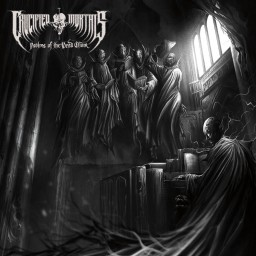
Crucified Mortals is basically a duo of vocalist, bassist and guitarist Craig Horval, aka Reaper, and drummer Ash Thomas who is actually guitarist and vocalist in a number of Ohio death metal bands. They have been joined on Psalms of the Dead Choir by Detroit lead guitarist Victor "Lore Lord" Ruiz in a guest capacity. The album is very much based on the old Slayer sound, with Reaper's vocals sounding like he is a big admirer of Max Cavalera. The riffs are pretty decent, albeit not the most original you will ever hear, but this is thrash metal almost 30 years removed from its heyday, so what do you expect? The soloing is where I scratch my head the most because Lore Lord sounds like a pretty good lead guitarist, but his solos here seem almost hesitant, as if he is uncertain of himself. Whether this is down to a misperception on my part or some hesitancy to fully express himself or lack of confidence on his part in a band that he is only performing with as a guest, I have no way of knowing. Check out the soloing towards the end of "Into Eternity" to get an idea of what I am getting at - it feels like he really wants to let rip, but is holding back for some reason.
I guess this doesn't really hold up as well as I was hoping when I suggested it and I feel my 4-star original rating is maybe a bit generous upon relistening to it. It is a perfectly fine, third tier thrash metal release that holds very few surprises for the seasoned inhabitant of the Pit. My favourite part of the album is probably the hulkingly slow intro riff to "Dusk of the Advent" which left me wondering why more thrash acts don't slow things down to a more menacing pacing sometimes, for variety's sake if nothing else. Ash Thomas' drumming is probably the one real highlight of the album for me and he seems like a very talented skinsman, despite it not necessarily being his day job.
At the end of the day this is a "C", maybe a "C+" thrash metal release and just adds fuel to the fire of my belief that the South Americans are now the only game in town when it comes to thrash metal.
So, here is yet another example of the fact that I have no idea what I am talking about, or even what I like half the time. My only other exposure to Krallice was their 2015 album, Ygg Hur, to which I awarded a measly 2.5 stars. I remember said album as being a bit technical and a bit dissonant in the way that I didn't especially enjoy around that time. As such, I wasn't particularly enthused going in to this, but it is actually pretty good and I enjoyed it a helluva lot. It is made up of fairly lengthy and repetitive tracks of muscular black metal that seem to have a beefiness derived from employing death metal production techniques. With the repetitious nature of the riffs and lengthy runtimes you would be forgiven for filing this away as atmospheric black metal but it isn't really as I don't think the repetition is deployed in a way as to create atmospheric layers, but rather to bludgeon the listener and make them feel like they have taken a metaphorical punch on the nose. There is some dissonance involved, but nothing too egregious and certainly not enough to put even my sensitivity to it on alert, just enough to add a bit of bite and edge to the tracks to prevent them becoming too warm and fuzzy.
I don't want to give the impression that this is a boring slog of repetition, though, because the songwriting and composition of a track like "Telluric Rings" is much more accomplished and nuanced than that and is a fine of example of a band who want to make interesting black metal whilst still delivering on the darker side of the genre. The band employ two vocalists, the main one, I think, is guitarist Mick Barr whose vocals are a harsh bark in a more death metal style than the more familiarly thin shrieks of second vocalist, bassist Nicholas McMaster. Speaking of which, I must also make mention of McMaster's bass playing which is busily at work doing some serious heavy lifting for a fair bit of the runtime, not content to just follow the riffing, the bass weaves some quite complex patterns, adding some nice flavour to the musical mix.
I have got to say, I am quite impressed by Diotima and feel that maybe I have been unjustified in giving Krallice short shrift in the past. Every track is strong, but the aforementioned "Telluric Rings" sounds like something special to me and is possibly heading towards becoming a firm black metal favourite of mine.
De toorn is a two-track EP running for 25 minutes and is the first of two EPs already released this year by the belgian atmospheric sludge band. Both tracks follow a very similar path, starting off in a very gentle, minimalist manner. The opener "Heden" begins with soft, heartbeat-like drumbeats and a murmuring bassline interjected with gentle guitar strumming and vocalist Colin Van Eeckhout quietly intoning the lyrics with a spoken word delivery. We all know this quiet calm cannot last and that it is just a matter of time until the wave comes crashing in. That it takes until the final quarter of the track for it to happen, just as you start to wonder if this is not the track you thought it was, it almost takes you by surprise. Van Eeckhout goes into full desperate, Burzum-like shrieking mode as the heaving tsunami riff hits and the shuddering climax is brought to fruition. Heden is definitely a case of the payoff being worthy of the build-up and is a decent, if not exactly unpredictable piece of atmo-sludge songwriting.
The problem for me is that they then try to pull off exactly the same trick with the second track, the EPs title track. This time the quiet calm, post-rock led extended intro is provided by a jangling guitar and snare beat with the vocals again pretty much being spoken word. The climax this time around hits at the two-thirds in mark and takes a very similar form to the opener. Whilst the atmospherics on both tracks are exceedingly well delivered and they are obviously very comfortable with both their instruments and songwriting technique, the similarity of the two tracks feels almost a little lazy and too comfortable for a band who have delivered much more variety in the past. Look, these guys are good, and both these tracks are too, but I expected a bit more from such a talented bunch.
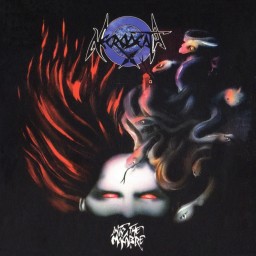
The best ever thrash album to come out of Italy is probably not that well-known, but it is a super-intense blast through riffs and thrashbeats that is both wild and exhilharating. Vocalist, Ingo, has a really evil-sounding bark that gives the album even more of a dark edge. If you have listened to much South American thrash then you will feel perfectly at home here. Driving right up to the border between death and thrash metal, whilst definitely remaining on the thrash side, this takes the intensity of the Big 3 teutonic thrashers and injects it with the evil darkness of atmosphere found on Possessed's Seven Churches. In common with most people I suspet, this passed me by in the Eighties, but I am glad I stumbled upon it years later and it still carries an effective and vital intensity even nowadays. A much overlooked 80's thrash metal gem.
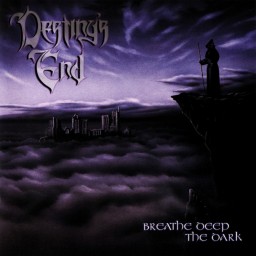
I was recommended this by a friend on RYM earlier in the year and finally got round to giving it a spin. It appears that Destiny's End were a fairly short-lived USPM outfit that featured Helstar vocalist James Rivera. Forming in '97, they released a couple of albums before splitting in 2001, "Breath Deep the Dark" being the debut. If I do dip my toes into power metal, which I do like to do every now and then - I am nothing if not persistent - then it is to the US version that I turn. In truth this ain't sctually half bad and is a reasonable example of USPM, to my inexperienced ears at least. There is a whole heap of energy and enthusiasm on display here, along with reasonably impressive technical ability. There are a shed full of riffs and the soloing is energetic and frenetic without ever becoming too self-indulgent, with twin guitarists Dan DeLucie and Perry Grayson (who actually featured on the Isen Torr EP "Mighty and Superior" that I love) playing off each other to great effect. James Rivera's vocals are up front and in your face, which I guess is the norm for power metal and while he likes to exercise his range, he isn't much given to the vocal histrionics that ruin many a PM album for me.
All-in-all I would have to say that this was quite a nice surprise and I am a little flummoxed as to why Destiny's End are so obscure - their two albums are on here but have zero ratings so far. I have certainly heard worse USPM and I would definitely recommend this to anyone for who enjoys the genre. I am undecided whether it deserves a 4/5 just yet, so I have gone with a 3.5+!