
Rexorcist's Reviews



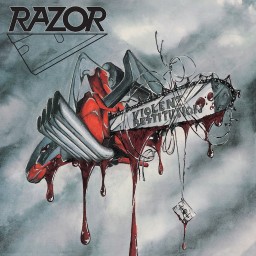
I've been very busy with metal today. And I am two albums away from completing my third List Challenge on Metal Academy: it all ends with Razor's Violent Restitution. Now the first two Razor albums (heard them both with a replay of The Years of Decay in between) were good thrash exercises with properly noisy production, but neither one was able to impress me on the technical side other than featuring the band being self-aware enough not to go into overdone six-to-eight-minute territory. So they were pretty good, but that's about it. This album's different. The three-minute intro makes a point of going the extra mile in aggression while giving us some much weirder solos and more unpredictability by going even faster than ever. When they pull the buzzsaw out, it might as well be replacing the guitarists and you'd barely notice. That kind of revelation gave me a similar feeling as Todd Rundgren's motorcycle-style guitar solo in Bat Out of Hell. That same song, named Taste the Floor, boasts a number of wild decisions and twists in its two-minute runtime. That's the album these guys made. Of course, since many of these songs are between 2 and 3 minutes, it's safe to assume that many of these songs have the same basic goal: be a buzzsaw, a hyperactive and indomitable exercise in the thrash energy and production that defined them. Rarely does the album take any time to slow down, with the best example being Edge of the Razor, the longest track on the album (4 minutes 15 seconds). But a dozen songs of the same formula can still get tiring, so by the end, it becomes obvious that this album should never even have been 40 minutes.
So this is easily the most fun Razor album out of the three I've heard, and like many other thrash albums, the reason for its status as an essential is because it manages to be so freakin' heavily and pull it off. But there's not a lot of originality among the excitement and riffs, so that's enough to knock off a full star from a perfect rating for me.
80
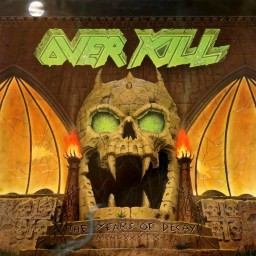
Overkill's always been a fun band before anything else, and back when I was first exploring the thrash scene many years ago as a total noob to metal, these guys were one of the major players. But I rarely return to their albums now because of so many other ventures and the fear that I was neglecting other genres for metal, just like when I neglected too many other movie genres for horror. So now that I'm back on metal for the time being, this is the perfect time to go over this.
Now once again, these guys are fun, a lot of fun. Because they focus so much on songwriting and twists and turns each song, it's easy to see why this album became a staple for the band and the thrash fans. The production is their clearest so far. They've earned it after an impressive catalogue beforehand. Of course, it started out with a couple of little problems, despite being a lot of fun. First of all, the album's all about shifting places, but song of these songs are sharing some of the same ideas and twists. It doesn't help that they share the same tempo as well. Nothing super-surprising happens until the guitar solo to Nothing to Die for. As well, despite perfectly clear production, this also makes the album feel a little empty in the background, like the album's missing another layer that should never have been neglected or removed. This also allows for some songs to become overlong. I mean, 56 minutes can easily be too much in a genre where one of the four leading icon albums of said scene is literally half that length. And I'm talking about Reign in Blood, with the others being Ride the Lightning, Master of Puppets and Rust in Peace (forget Anthrax for me, will ya?)
But the album has a good deal of creativity and shows much more effort in this vein than with previous works, even if I may call those previous works better for doing a much more impressive job with the elements they had than this album does. The Sabbathian rhythm to Playing With Spiders was totally unexpected but very much apprciated. Hell, the singer's iconic voice is just PERFECT for this. He's basically a thrash variant to Bon Scott, but a better singer overall, so pairing this with doom metal was a good move. On top of which, how often do we even get thrash bands that venture into doom metal? Can we just take a moment appreciate the fact that an iconic thrash band with an already good set of albums decided to take this turn and pull it off?
...
...
Thank you for enjoying that moment with me.
This might not be their most well-fleshed out album, but it's good to see that they were trying out some new tricks. Overkill rarely ever does a bad album because they always have spirit and the willingness to branch out behind them, and ironically, The Years of Decay seems to be the perfect album to fully describe their personality.
88
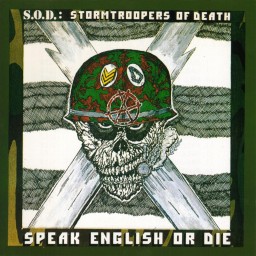
You'd think a leading influence in the world of crossover thrash would've lasted longere than 2 studio albums, especially considering how popular the combination of hardcore punk and thrash metal got in the thrash scene. Slayer and Voivod were both rocking the influence, even if they rarely ever reached the blatancy of S.O.D. Now this album is made up of nearly 20 similar songs, all going for the same basic goal: combine the two genres and complain about the things punk rockers complain about. This leaves little room for guitar solos and is mostly built for the explosion of quick songs built to cater to the youth growing tired of modern politics and authority. But there are a number of strengths that need to be considered here. First of all, for a thrash debut, the production is practically FLAWLESS. No demo-style noise which is extremely common for thrash debuts, not studio saturation of any kind. It's pure, simple punk, through and through. As well, these guys are excellent at the one thing they do: thrash punk traditions as hard as they can. And the lyrics might be to the point, but they embody the multiple facets of the punk spirit perfectly, even when they're going into the comedy of it all. This isn't a perfect album in terms of the art, but it's a perfectly punk album, so it's essential both punk and thrash.
86
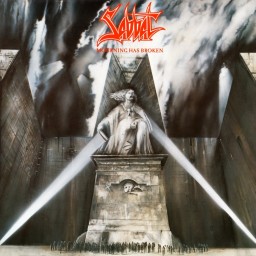
With the band having expanded their sound into more artistic territory on their second album, Dreamweaver, further emphasis on that was placed on their third, which was ironically the last thing they ever produced. Now there seems to be a kind of alienation that the fans felt, which would explain a collective of negative reviews on the internet. This alienation likely stems from the further forays into standard heavy metal, ballads and prog metal. As well, there's a new vocalist with a stronger melodic voice rather than the raspy thrash voice everyone who knows the band is familiar with. Personally, I don't think this is much of a problem. This new singer seems to fit the more dramatic side of the music that the band was going for. On top of that, the majority of this music is actually pretty good, sometimes flat out banging. These guys really pushed themselves in the creativity department, but never once make the album feel inconsistent or messy. But be prepared for a very different kind of album, this more melodic, focused and versatile album just doesn't sound like the original Sabbat at all. Having said that, they pushed that specific sound as far as it could go without breaking new territory, so an album like this was gonna happen eventually.
73
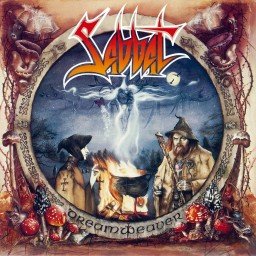
Afte having seen some pretty positive reviews for English ban Sabbat's debut album, I was quite disappointed with how monotone and one-track-minded it got overtime. I was wondering if the fans were largely just attributed to genre fans as opposed to more explorative music buffs. Now I may be a thrash fan, but I demand ART. There's a noteworthy amount of that in this album, at least in comparison to the debut. The Clerical Conspiracy, the track following the intro, boasts an almost blackened level of heaviness and production in the riffs. Next even comes a soft folk track which lasts two minutes. This is what I'm talking about when I want an album to be less monotone. There's a little more creativity in the lyrics as well, on top of some prog metal aspects, which help justify this album's two eight-minute tracks, making them feel shorter than they really were, which in itself is a major strength since the band couldn't even justify the one eight-minute epic on their debut. However, while the album is certainly wilder, most of it still sounds the same, though much more impressively so. In fact, I couldn't even consider the last song before the one-minute outro, Mythistory, a proper send-off, because it sounded too much like other tracks, proggy aspects and all. So this is obviously a good effort with some great moments, but while it's more creative, it carries a couple of the same basic flaws as the first.
81
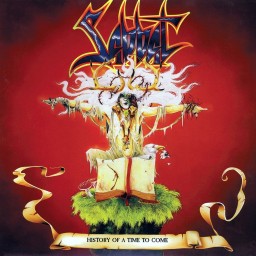
After checking out English thrash band Sabbat's two early demos, I went straight into the debut. I expected a fun but standard-sounding thrash band, as was the norm of the time, and for the most part. But I honestly have to say that I'm not terribly impressed with this overall. The writing quality, production quality and the overall atmosphere are a little better than the usual thrash debut album I came across for the thrash challenge on Metal Academy. Destruction was generic and underproduced for several albums, for example. This has PROPER production. Not perfect, but proper and largely clear with only a faint hint of noise factor. The album's overall vibe and essence is fun fodder for the thrash junkie. The technicality isn't that extreme, and largely done before, but it showcases all the skills that the demos showed off but were unfortunately tarnished by demo quality audio, and almost completely drowned by the first. The eight-minute epic, Horned Is the Hunter, pretty much drags through standard thrash behavior without any sense of branching out. Eventually it got so samey, monotone and standard that I was losing interest. I finished it, though. Overall, this debut is decent but passable.
67
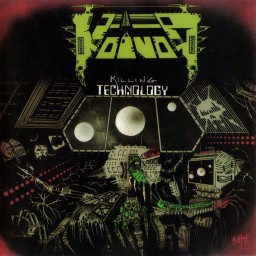
One can't deny that there's a punk factor in thrash, as much as some purist metalheads might want to. Voivod, however, celebrated that fact by pumping it up. In some ways this is practically a crossover thrash album, and a major step forward for metal inventiveness. Maybe this is largely neglected because the album is so complex? Either way, this is the personality the band has chosen, and it actually helps a lot. Now their technical abilities are quite impressive, but it's the inclusion of the punk factor that keeps the album from degenerating into guitar wankery. While a little samey, the crossover aspects allow the band to display an incredibly unique personality for the time, and just allows the band to have a lot of fun. Hell, the singer Denis Belanger knows it, and boasts his hardcore punk style vocals proudly and loudly. And that's not all: they found a way to include the sci-fi experience here, the whole mechanical, cyberpunk, anti-dystopia vibes both lyrically and musically. As well, the punk factor gives it quite a bit of replay value as well. Now personally, I'd say the sameyness keeps this from a total five stars. But if you said this was your favorite thrash album, I most certainly would never, ever, blame you.
92
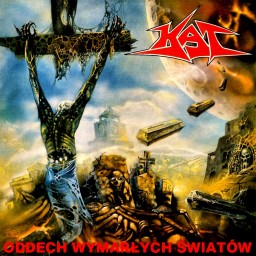
In comparison to KAT's debut album Metal and Hell, as well as their very slightly better live album 38 Minutes of Life, there are a number of notable improvements. While we still get some general bursts of tropes, such as the entire midsection of dziewczyna w cierniowej koronie, we see a number of more intriguing compositional chocies, such as the first and third acts of that same song. Tempos range out more, allowing the band to try to be artists. The band will even jump to some wonderfully weird, abrupt and unexpected surprises that never break the vibes. It also helps a lot that the voice of the singer, Roman Kostrzewski, has improved in a number of ways. He has a good high-pitched growl, a decent low growl and a decent actual singing voice. The practice he must've gone through, it's actually a bit inspiring. As well, the production is no longer the quality of a better demo or a cheap live album. This is totally clear on every level. BUt there is ONE downside to the stlyistic changes: the black metal aspects are severely neglected. Thnakfully, the album manages to keep a strong artistic flow, so I'm still quite satisfied with the direction they took.
91.5
There really isn't much I wanna say about this debut album except that it's pretty basic. Everything about this debut album is a product of its time. The production and melodic quality sound a bit like this one hair metal band that went nowhere: Nitro, which my stepfather told me about, considering them one of the worst bands ever. This album might have some genre appeal for metalheads because the sound is so nostalgic, but it's too easy to compare this fuzzy 150 BPM-central thrash album to so many better albums of its type. I would even go as far as to say those two crappy Nitro albums have a couple better guitar solos in them. Our singer isn't that great, either. He sounds like a bad, noisy knockoff of the singer from Metal Church. They pull off some decent tricks throughout the album, but overall this early speed metal release is too generic for my tastes. In fact, it can be so generic that I was even getting tired of it about halfway through.
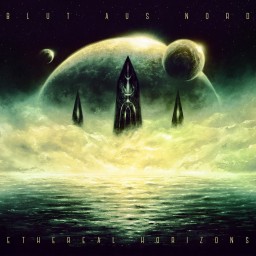
I've been eagerly awaiting the ability to review this, because I've got some things I wanna get off my chest. Now, I often play Hallucinogen to drown out noise when I need it. It's one of my go-to albums for that purpose, especially for its dense, mind-warping and just nearly Lynchian psychedelia. So I was pretty happy that Ethereal Horizons was a return to the Hallucinogen sound. But as fun as it was, as epic in its approach and as beautifully produced as one would expect from an atmo-black metal band with this much experience, the psychedelia felt a bit nerfed in comparison. There were some proggier elements scattered around as well, as I often note in reviews for good albums, and many of these were the better parts. But as epic as they kept things, melodies and vibes were also a little typical. It was dreadfully easy to compare this negatively to Hallucinogen, although I acknowledged the strengths of the album as well and believe this will satisfy those who like the more sci-fi-oriented sound of this beautifully multi-faceted band. Hell, it's decisions like that which makes Blut Aus Nord my second favorite black metal band.
77
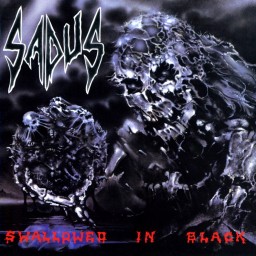
Well, I'm one demo and two albums in, and it's becoming quite apparent that Sadus is one of those bands that has to write the same album in order to stay noticed. And if I'm wrong, you certainly wouldn't know it from this sophomore effort, because Swallowed in Black sounds EXACTLY THE SAME as their debut, Illusions. Well, that's mostly true. I'm not sure, but something about the bass feels toned down, like it's slightly adjusted but managed to trigger no real effect. Because it sounds exactly the same, you may be pleased that the riffage and the heaviness are still on point. This is in fact, Sadus. But that can only justify so much. To me, rewriting the same album with very few new techniques is just being lazy. It's basically saying, "look at what we can STILL do because we're afraid to try anything new." And the few little things that are new, like the intro to Good Rid'nz, are typically so quickly disposed of that it actually kind of feels insulting. Thankfully, this doesn't always happen, with the midtro of Images being a good example of incorporating a somewhat slower tempo and a more intriguing yet monotone composition in the mix. But once again, it still finds its way back to the same generic thrashing. The album doesn't have a single song that shows the band focusing on a new direction until the six minute Arise which is the 10th out of 11 songs! As a result, I am much less excited by the riffs and whatnot that were done so well on the first album. They're fun for the thrash fan in the long run, but they feel mostly like empty shells, especially since the album's longer. That which I called "face-melting" when reviewing the debut seems less so. I know this is a thrash classic, is loved by thrash fans and is even bolded on Rateyourmusic, but I'm gonna be "bold" for a minute and say: I got more out of Kenny G's Duotones.
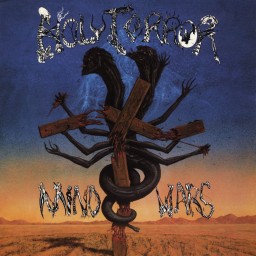
Even though Holy Terror remains an obscure band throughout most musical and even metal-based communities, the thrashers go crazy over their second and final album, and with excellent reason. There are a few noteworthy changes between the debut and the sophomore. First: the production is better. I find that a bit interesting, considering the lo-fi nature of the previous album's production aged well. However, it's not QUITE perfect, so it loses the acidic charm of lo-fi metal. Second: the album is much faster. The energy of the previous album was easily a saving grace considering that the songwriting didn't stand out, so this excess in energy helps this second piece to reach Kreator levels of energy. Thirdly, the songwriting is a bit more unpredictable, surprising and sometimes progressive or a little neoclassical. It seems that the group went through a major stylistic re-evaluation in order to make this album, and it worked out beautifully. The Immortal Wasteland has a more cinematic and storytelling presence to it than anything that came before, a bit like a power metal song or something by Manilla Road. In fact, that one song alone can symbolize how far they came since their enjoyable yet generic debut, but we get a three-part song immediately afterwards, almost a la Pink Floyd. The title track is an absolute pace-changer than challenges out idea of proper songwriting while boasting about the jam-packed nature of the intro while the last 2.5 minutes of manage an actual song that has some amazing riffs, but needs the vocalist's singing to raise the volume a bit. As well, it finally achieves a little sameyness by the end, which is unfortunate considering how surprising the album was.
So other than these three little gripes, this album would be flawless. This is one of the most fun, jamming and heavy thrash albums of the 80's, and I'll definitely check it out a second time.
97
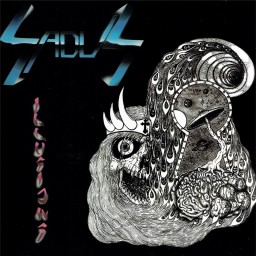
Yet another classic built on speed and aggression, once again there's not much in the stylistic department that separates this album from many classic thrashers of that day and age. With their debut album, Sadus makes a point of raw, untamable, face-melting riffs that walked right out of the radioactive waste bucket. Some of the songs from their Death to Posers demo make it onto this album with clearer production, which has little-to-no reverb and no noise in the background, being crystal clear without shoving effects in your face. Major riffage and vulture shrieking, end all be all. Now how does the composition stack up against the others? The album is extraordinarily fast-paced, even for thrash, so the band is able to switch tempos like a possessed pocket knife releasing and sheathing its many tools. But because many of these songs are between 1:40 and 3:00, this often comes at the expense of the songs feeling fully structured, like it's just plain missing verses that somehow got left out by accident. In other words, this album is a raw exercise in metal energy rather than writing, so it manages to be quite a bit of fun for the thrash band and has aspects that are superbly well put together, but still manages to feel incomplete.
82
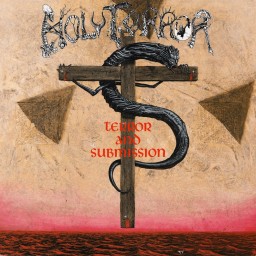
Holy Terror is a thrash band that largely goes unnoticed by the metal community because there are so many more classic bands in the scene, especially bands who did more than two albums. Those in the know may consider the band a thrash essential. With the debut that started a short-lived career, they already showed that they have some idea of what to do right. As is the case with most thrash albums of the time, the production is lo-fi in the vein of Ride the Lightning, which both helps and hinders, and aggression is almost purely the name of the game. There's an undeniable level of skill involved in the speed. These two elements have a sense of purity about them that makes it a perfect product of the time. Unfortunately, it also falls into the "generic" category as many bands of the time were trying to attempt these same basic thrash song structures, so the edge of this album can largely be attributed to... the edge. Most of these songs are basic yet energetic thrashers with an almost perfect noise and reverb factor. The first attempt at a slower balled happens five songs in, but because it's basically a two-parter, we go back to the typical stuff halfway through the song. So, while it's one of the thrashiest thrash metals you can find, it's also quite typically written and offers more energy than surprises.
77
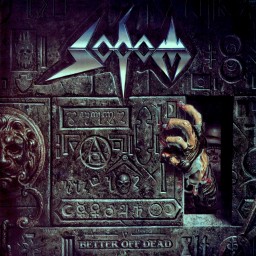
Prepared for a fun album rather than a great one, I think I ended up getting both. This has plenty of thrashing, but above anything else, it's multiple kinds of fun, the spirited kind that defines the album like a Zappa one, rather than the general kind that tries to justify the existence of an otherwise undercooked movie, like Kung Pow. Now one thing that disappointed me about Agent Orange was the glaring inferiority of the band's attempts at straightforward heavy metal in comparison to their thrash works. But here on Better Off Dead, songs like their cover of Thin Lizzy's Cold Sweat prove that they finally got a grip on this. They're making fun, catchy songs of various kinds, leaving room for some raw thrash material such as Shellfire Defense and Bloodtrails. Thing is, in place of the occasional blackened influence of previous efforts, they included some more obvious attempts at melody, and this helps differentiate the album from previous efforts while still managing the Sodom spirit. I mean, hell, Shellfire Defense is Agent Orange material, and if you're a classic fan then you'll definitely get a big kick out of the title track. I even went back and listened to Shellfish again. Might be my favorite Sodom track up to this point; it left me wide-eyed, something that even the best Sodom albums haven't achieved yet. It also takes time to be a little weird more often than not. Gotta say I'm kinda lovin' that two-part intro to Bloodtrails. Though I WOULD say Healing Wounds is basically speed metal filler.
Bro, treading some reviews in an effort to grasp an inkling of why this album gets any kind of slack, I found that Sodom fans consider this a disjointed work in comparison to the classics. And to that, I say, "Check out Thembi and call me in the morning." If you ask me, this whole albums feels the way I've been asking it to feel, a largely consistent vibe that shows the band trying to expand. I came into this expecting anything from 60-80 / 100, but I'm not gonna lie, I'm in the rare came again, the Prometheus / Tauhid / Fulfillingness' First Finale / no better EDM than FSoL camp: this is better than Agent Orange. They're doing what they can to put out another real Sodom album while trying to expand their horizons, and they largely succeed. This album has tricks up its sleeve that I wished Agent Orange would even simply try to attempt.
At the time of writing this, I've given this album its highest rating on Metal Academy: 92/100 = 4.5 stars.
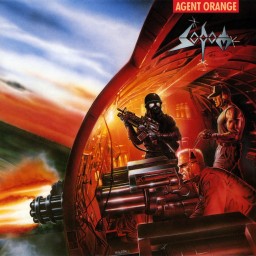
Having got through the EP's and albums before this one, including their first live album, I'm happy I'm finally checking this out. Their second album and second extended play showed a major upgrade in musical quality, both on a songwriting and heaviness factor, so I wasn't sure exactly what to expect except for a good time. The titular opener showcases a new ability to go from careful melodies to proper thrashing instantly while keeping the essence strong. Some may miss the fuzz factor that defined their blacker albums, but the clearer production gives them a chance to really show off their thrashing abilities, especially in regards to their guitarists. We also get some more excellent drumming from the always wonderful drummer, Chris Witchhunter, who's consistently been my favorite member. Hell, even Tired and Red is able to showcase just how far they're willing to take thrash by going from the blackened riffs to a softer ballad solo to some easier, chiller thrashing akin to Jump in the Fire. This is the most any Sodom song had done so far. If you're a fan of the really early Sodom stuff, then you might get a huge kick out of Incest (I want you to pay very close attention to the capital I). Its first half is entirely made up of the extra-strength muscle rub that slathered the earlier blackened stuff, heavier than anything on Agent Orange thus far. The second half is slower and a little more "epic" in that vein, before ending with a return to the first verse's form, as expected. This first side ends with Remember the Fallen, which starts as more of a heavy metal song than thrash. I'll be honest, they obviously didn't learn how to make a great heavy metal track yet. It was alright, palatable, but had nothing really amazing about it. At least they gave heavy metal a shot.
Side B kicks off with Magic Dragon (no relation to Gloryhammer or Puff). The heavy metal intro and first verse carry on the heavy metal sound of the last track with a slight improvement in quality, but it only made me want the thrash to come back because there's a difference between "pretty good" and "great." Thankfully, the second act kicked off just like that. Nothing new but it had much more personality and ability. But I certainly don't want the album RELYING on the thrash. I'm an "expand your horizons" guy, so I was a bit disappointed that Exhibition Bout started out the same thrashy way we've been getting for the previous few releases. Thankully the song took a softer thrash route after the first minute, and it really wasn't that bad. It was catchy and operable, but it only lasted for the middle section. The saving grace upon returning to typical form was one of their best solos overtaking the third act, a grand one that makes this one of the best songs on the album. Track 7, Ausgebombt, is practically a crossover thrash song that retools the Sodom sound, and adds a little something to the album that honestly should've been done ages ago (Slayer were doing it pretty often), so it's nice to hear that. And finally, yet another grand thrash, Baptism of Fire, shoves the black metal influence and the Teutonic majesty in your face as it should.
So this wasn't the most diversified album, as expected being a Sodom album, but it was another upgrade in quality, albiet a small one from their sophomore release. This is one of the harder thrashers in the Teutonic scene based on what I've heard so far, and I can get behind it being a thrash classic. Still, give me Metallica any day.
90
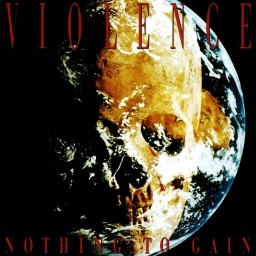
So after three albums where doing the same thing over and over again began to pan out less and less, Bay Area thrashers Vio+Lence seemed to have decided that change was for the better. Except, they obviously didn't know how to change. It's a real shame, considering that they had so much potential. This third and final studio album takes a more radio-friendly approach to the compositions, which probably means they were looking for money. But in this effort to produce something the alt-rock fans would like, they made a fatal mistake: see, when Metallica sold out, they didn't pretend The Black Album was a thrash album. These guys still tried to pass of thrash as a heavily-radio genre without really thinking about what that meant. They simply just nerfed the heaviness and assumed the genre would fill in the blank. They barely bothered to compose, just to thrash. Not really creativity there. As well, what's the singer doing trying to actually sing without more practice first? I mean, these guys have never been the best, but in their efforts to become even more relevant, they ended up at their personal worst. The production is shotty, the vocals are bad, the heaviness is a knockoff of the knockoff second album, and it all gets in the way of the identity of the band. Even if they had the right to try something new, this is not how one should go about trying new things.
53
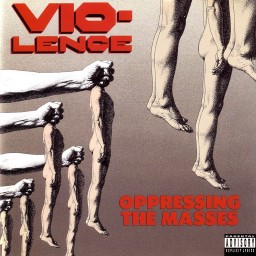
So the first one was a good one that had some great, if not almost perfect, things about it, but some major creative bumps. The most notable of these bumps was how most of these songs were pretty much doing the same thing, which meant creativity was at a low point. very little differentiation betweem tempo, vibe and emotion. Well, it still managed to be a highly spirited, thrashy and purely metallic experience. This album feels like a nerfed version of everything that made the debut so good. Everything's palatable. There's still a good chunk of the spirit there. Obviously, that hasn't left. But the riffs are only pretty good as opposed to the wonderfully wild astuff we got before. At first, the album's charm is cool, but it goes on that way for five of the eight tracks, tempo, vibe and everything, and the only thing that changes about track 6 is the tempo, and then we go RIGHT BACK TO THE SAME STUFF on track 7, and by that point it just gets old. It will appeal to thrash fans for its spirit, but otherwise, it's an insult to the majesty of what makes thrash so grandios, being nothing more than a Malt-O-Meal variant of a better cereal.
67
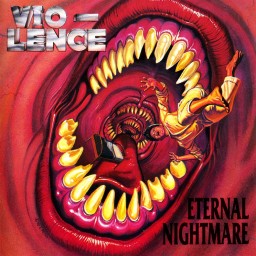
After hearing the band's two early demos, I still didn't have much of an inkling as to their true abilities because the recording quality, demo or not, was terrible for the first demo and slightly better for the second. With this one, they got a real producer to handle the sound quality, which maximizes everything they're capable of. Thing is, while these guys are still stylistically generic, not really standing out with a style of their own, theycan sure jam like fuck and play at Star Trek levels of warp speed. Much of the frontal work is done by later Machine Head guitarist Robb Flynn, who totally understand what thrash power and riffage needs to sound like. For the most part, the rest of the instrumentalists aren't really struggling to keep up with him at all. They match his power pretty easily, which is incredible considering that the single hiring of one different person would almost send this album toppling. Of course, that's as far as the instrumentation goes. Although this is a perfectly produced album with song great songwriting, I'm really not digging Sean Killian's vocals. Not only is he joining the chained-to-a-wall kink train of thinking shouting the same way through a whole album is somehow the coolest thing you can do, but it sounds like he's in the wrong genre. He sounds like he belongs in a power metal band or a Queensryche knockoff, like he's adjusting his voice for thrash to hide this and failing. As well, with half these songs sharing very similar tempos and practically all of them bearing the same vibe, they don't really push any boundaries beyond raw instrumentality. As well, some of the songs drag on much longer than they likely need to, largely because the album's mostly an exercize in showing off both instrumental and production techniques rather than an example of depth. So I think it's right that I give this a good rating for some incredible strengths, but from a broader perspective, it's not the most enlightening... just addictingly thrashy.
83
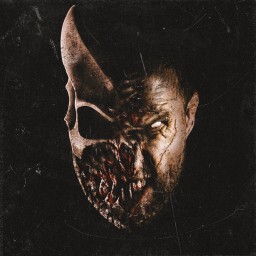
Not really a deathcore guy, not really a nu metal guy, so this "nu metalcore" that Wikipedia apparently has an article for doesn't really appeal to me beyond the fact that it's metal. I checked out Slaughter to Prevail for a coworker and I politely told him that it was better than most of the deathcore I've heard, which isn't really untrue. But it's only OK. I didn't really expect much of a change when I heard about the new album. But to be fair, each song had little tricks here and there that I appreciated. Good portions of each song were built on these little tricks basically being major focal points. Unfortunately, none of these aspects were really strong enough to differentiate this album from the vast majority of deathcore in the longrun. Basically, this album manages to be catchy and edgy enough to get by on its own, with little amounts of creativity making it better than all the other generic nu metal and deathcore albums, but not a groundbreaker by any definition.
61
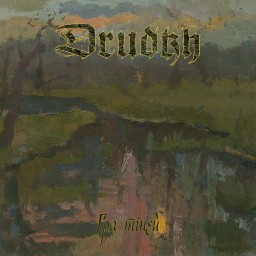
Now we all know that Drudkh had a leading say in the development of nature-themed black metal. They were basically THE band for the job. They had a bit of a rocky road after their 2009 album Microcosmos, as the people say, but there seemed to be, ahem, light in the forest, during recent years. So while I came into 2025's Shadow Play with some good expectations, I remained aware that those expectations wouldn't be met. So while the album's getting great reviews, I have to say that they've once again become a passable and generic black metal band. This whole album is all about relying on, and drawing out, half of the basics they had already mastered in the 2000's from Forgotten Legends to Blood in Our Wells. The album's going for finely-tuned production above everything else, so black metal riffs and melodies come off as unoriginal. As well, the production doesn't always balance out the ambient backgrounds and the riffs in the foreground, occasionally coming off as muddily-handled despite the ambiance. I mean, Drudkh influenced so many bands that have done this album so many times that it's not a joke. Did you know, if you just check the RYM charts and filter it by year and with only black metal, you'll get 25 pages of 40 black metal albums? And 25 is the maximum they show in custom charts. That means every year, we get over 1000 black metal albums. These days, thanks to other nature-themed atmo-black bands like Panopticon and Ashenspire, I can guarantee you a good portion of those albums is nature-themed. That means Drudkh has gone from influencing a classic form of metal to producing the same tripe that their own imitators make every year, just with better studio production that sometimes gets in the way. What an overrated disappointment. Production will keep it tolerable throughout, but otherwise this is kinda bogus.
52
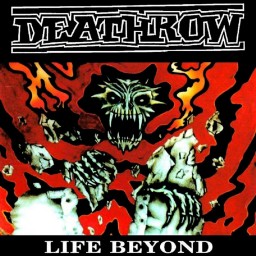
Seeing the RYM ratings between Deathrow's iconic Deception Ignored and their follow-up, Life Beyond, drop from 3.7 to 3.4, the latter of which is the same rating as their divisive debut, I was a little worried that the album would miss out on the key factors that made them such an icon in the thrash world in the first place. But I started to doubt those very doubts upon finishing that opening title track. If it proves anything, it's that Deathrow had not lost their sense of fun, or their ability to be technical. Of course, it should be said that this is a somewhat less technical album than Deception Ignored, and that's probably the reason it gets so much slack. But if they wanna have more fun and try to write a bunch of different types of songs again, then let them, because I was having a good deal of fun myself. This might not be a TECHNICAL album, but it sure is wild. The thing is, these tracks might share SOME similarities overtime, but they're really too different from each other to call it a monotonous album. Staying in the tech thrash constraints, it maximizes what the genre's capable of like South of Heaven did, even if the combination of rhythms, production and vocals doesn't meet that same greatness. Some tracks are edgy and a little groovy, some are wild and just plain fun, some are angry and even kinda evil, etc. Deathrow proves themselves to be artists three times in a row as far as I'm concerned.
91
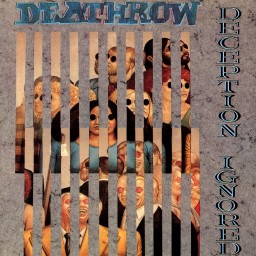
Deathrow made some major improvements to their general sound between the thrashy but fuzzy debut, Riders of Doom and their more epic and glossy Raging Steel, but they still had some improvements to make. This is where they decided, "Let's go crazy, let's get nuts," and turned into a freakin' prog band. And boy did they rock prog in ways most thrash bands couldn't at the time. I mean, some of these ideas sound like they were basically being Chuck Schuldiner before Chuck Schuldiner turned his band Death into a tech band. And sometimes they just get thrown in your face. That randomized piano playing at the beginning of Triocton kinda smacked my brown around like "What the hell just happened?" And they prove again that they're quite good at layering guitar riffs together. Of course, this also means there's a little less of the Teutonic side of things, being a bit more melodic and wild much like And Justice for All or Rust in Peace. Hell, you know they nailed it when a nine-minute song like Narcotic manages to flood you with a barrage of consistent riffs and progression that never gets too wild for its own good or overstays its welcome, AND THEN FOLLOW IT WITH A SEVEN-MINUTE EPIC. This was a major winner for the band, yet another improvement and a damn good reason to check out thrash. This is the kind of album where the band proves they know how to both have fun with their chosen artform and treat it as an artform to grow and learn from.
92
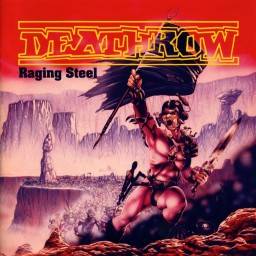
Immediately after the intro, it becomes apparent that Deathrow had fixed the production problems that got in the way of their debut album's ability to entertain (most of the time). This is the kind of album where a band is basically showing off how much they've improved without overdoing it. Although the stay comfortably within the thrash vein for the most part (such as having our first song, Raging Steel, stay within the vein everyone's familiar with), not only does the speed metal come back, but we even get some real instances that feel more like epic storytelling rather than general thrash. The track Dragon's Blood alone should tell you that. This was also the chance to show off their progressive side, allowing songs to switch tempos at rapid speed, even to the point of flipping through channels. And unlike much of the six minute stuff from the last band I binged, Destruction, songs like The Thing Within are able to keep going. However, while its riffage stays great and its production fine, it DOES tend to get a bit traditional and samey by the end. Nevertheless, I'm very happy that Deathrow grew up and rwwrote themselves so much soonere than Destruction did.
88
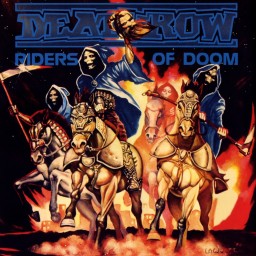
The album starts with the instrumental Winds of Death, which is simple, epic, heavy, but not the most original. At one point, the intro sounded a lot like For Whom the Bell Tolls, which came out two years earlier. After the intro, it takes no time at all for the band to head right into the powerful thrash that defined the genre, crossover undertones, King Diamond screams and all. But it's already much more powerful and effective than any of the early works by Destruction, so this was a bit easier to enjoy. In fact, the solos in Riders of Doom worked wonders. It was obvious that this album had a much better idea of what thrash sounded like, even if the production's a little fuzzy for my liking. Although, this helps the tremolo-picking heavily present on Hell's Ascent, basically adding black metal to the mix. The riffs on this one are absolutely crazy. But it doesn't take long for the album to get back to standardly powerful thrashing without much else on their minds. In fact, some of the actual verses are pretty lame when it comes to writing, and sometimes all I could think of was when they were going to get to the solo. No metal album should be like that. So while this is extraordinarily heavy for thrash, even for the time, the riffs and the incredible power are enough to enjoy most of the album throughout while acknowledging the lack of thought put into art and writing, even though the longer songs at the end have a stronger sense of creativity.
76
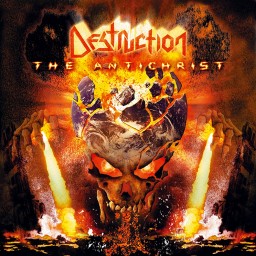
Here it is, the major comeback for Destruction and their last testament to talent, as well as the end of my Destruction marathon. I walked barefoot into this, expecting either one of their best and most creative albums, or another overrated display of thrash simplicity with production and energy as the headliners. Maybe a little of both. But it didn't really start out that way. The intro was just a variation on things they had already done before, and the first two tracks, while well-played, sound like basic Destruction in the end. Now the balance between energy and speed was perfect, but I'd once again be disappointed if they didn't even bother to try and write something new. SOMETHING new, Bullets from Hell, went the speed metal route, and managed to keep itself up for the five-minute runtime with a pretty strong sense of fun. But at the point of track 7, Meet Your Destiny, I realized after so long, I was getting bored with Destruction. This is because the minor improvements in melody, production and heaviness overtime don't really change the fact that it's just another Destruction album, even though I would say this is one of the better ones in this format. I suppose it's even better than the whole classic three, but not by a grand extent. So, this is and isn't ending on a high note.
71.5
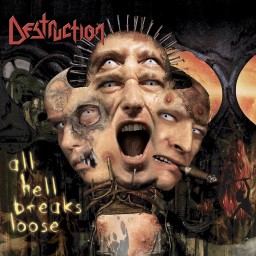
Well, it looks like longtime thrash act turned groove act Destruction learned their lesson. Two EP's and one album into the groove scene, and it was obvious to them that groove was just not what the classic Destruction fans wanted. They needed to get back to the pure Teutonic thrash that made them one of the big three in that scene. And this, the pure return to form named All Hell Breaks Loose was formed. Of course, I never thought the early sounds of Destruction were that clever, and thus, this return to form is just about as good as what we got before. In fact, it sounds so much the same that even the fans of this band's earlier works admit that, while the Destruction fanbase gave a big fat "thank you" to the group for doing so, it's not like this album was anything new either. This is largely due to the fact that the group got the classic members back together. It kind of reminds me of Metallica's shift from radio stuff back to thrash during the switch from alt-metal album St. Anger to Death Magnetic. I mean, yeah it sounds cool enough. In a way, the extra heaviness and better production values give it some form of an edge in this vein, but there's the originality department that needs to be considered. So while this is a much more fun album that what we've been getting before, and further proof of their ability to produce and mix well enough for their raw power, it's also pretty obvious that the raw power takes the helm while thick writing still needs some work. Thankfully, there are a COUPLE interesting tracks, like the more proggy World Domination of Pain, but that happens halfway through (again). But in the second half, the five-minute tracks tend to get overlong (again). So in other words, this is a Destruction album (again). So I'll put this in the same league as the first two albums.
68
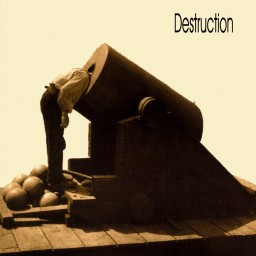
Despite being in the Pit for my love of Metallica, can't say I'm very in tune with groove metal. I give it chances on and off, but have little interest in a deep exploration at this time. This is partially because so many classic thrash bands made the switch to at as quickly as the European prog giants of the 70's switched to AOR and pop rock, and the results were about the same: middling and generic. Of course, I can't deny that a part of me absolutely loves the album Invisible Touch by Genesis more than my technical rating states (which is already sitting pretty at 93). But how can I complete my Destruction marathon without getting through an album so bad it might as well be Lulu? It's a key part of their history just like Risk is for Megadeth, and I plan on stopping at their comeback album, The Antichrist. So, here we go.
Aside from a half-cocked album cover that looks less like a thrash album and more like a screenshot of a Monty Python animation with a quickly placed cheap font for a logo because "money's tight," I found it easy not to hate the album, shall we put it. Now I encourage change and variety so that a band can prove they're capable of many other things, thus potentially improving greatness by virtue of multiple talents. But how does this groove album stack up against the others? Well, with the groove aspect and slower tempos maintaining SOME of the thrash genre that defined them, this newfound love of the 90's sound fails to stand out. Catchiness is spotty and riffs are pretty done before. On top of which, it's pretty obvious how much of their previous identity they forsook for this new route. I'm sure if they had bothered to diversify their earliest albums more so that stuff like this feels a little more natural, this wouldn't have happened. I mean, the vast majority of these groove songs do more or less the same thing, which in itself is hardly a surprise considering that it's a Destruction album. There's a rare exeption in Brother of Cain which goes into some major thrash power. Otherwise, it hardly gets interesting at all, and mostly just worries about getting on 90's radio. So this really doesn't do Destruction, or the groove world, any favors. Having said that, it's still a bit better than those two groove EP's they did in the eight years between this album and their last, Cracked Brain, so it's not terrible, just not promising.
57
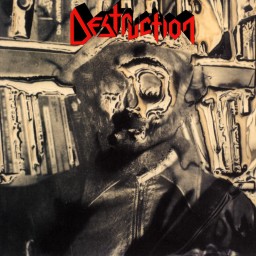
I guess I'll just have to give up on the idea of Teutonic thrash act Destruction going for the artistic route again for a few releases. I mean, this 1994 EPreally offers nothing new in anyway, shape or form save one tiny little insignificant detail: they decided to jump on the groove metal hype train, as if that would make their music any better. They were already devolving back into the generic thrash band that ironically made them a key figure of the small Teutonic thrash act before they started focusing on real songwriting with Mad Butcher. This groove metal album is a short little 21 minutes, so it doesn't have the disadvantage of overlength that even a 40 minute album like their previous venture, Cracked Brain, did. But now with the groove aspect so deeply implemented, they spend less time on rhythm and writing and more time on breakdowns and repetition just because they figured it to be the "cool thing." In other words, they sold out and lost their depth. The last track is the best one for being a bit weird and creepy, but it's still repetitive in this way even for three minutes. What an unbelievable disappointment...
48
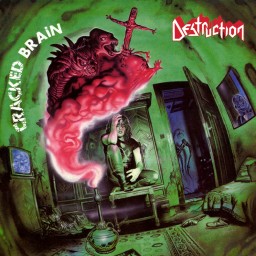
You'd think after such a grand venture into creativity (or at least grand for Destruction's standards) such as Release from Agony, they'd continue with this newfound love of writing and try something bolder and bigger next time. Instead, what we have is a degeneration back into primordial soup. And even though that sounds pretty metal, it's not a compliment. Cracked Brain, release #7 and studio album #4, shows them going back to the same repetitive writing and tempo that they spammed to freakin death on their first three releases and their live album. The only thing that can be said that's favoriable against the first three is that the production's better. We've been getting good production from them since Mad Butcher. But the problem here is that things are significantly less interesting. Nothing interesting happens until Rippin' You Off Blind, not only takes place after a standard cover of My Sharona of all songs, but goes back to the same old same old again while lessening the effect of the rhythm and atmosphere. And the most interesting song is the eighth of nine, No Need to Justify, which is only interesting because of a mellow intro and a different tempo. All of these songs are decent and aggressive alone, but put together it's an incredinly samey experience that I wouldn't be quick to recommend when so many better albums out there exist.
63
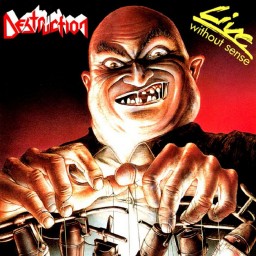
Right from the start, Destruction boasts of of their most well-produced and best sounding albums so far. If I had to rank them, I'd say this is second-best, with the first being Release from Agony, the one that got me thinking, "these guys CAN be a great band," especially after starting with so many samey and generic pieces. The production captures the full extent of the raw power in which they're able to ply. Not a single not is left to drown in the arena. I honestly didn't think Destruction would be even able to afford that. Thing is, even though the studio album right before that, the aforementioned Release from Agony, greatly impressed, I was a bit worried about them taking so many tracks from the samey era and lumping them together. And unfortunately, that's what I got. While the production adds a lot more power to each song, it's a pretty damn samey album. They likely only took the title track from my favorite of their albums because it was one of the closest to sounding like all the rest. They're largely all sharing the same BPM which really pisses me off. So while the energy and production are fantastic, they rely on their generic sound through and through, neglecting the improvements in writing that they so obviously intentionally made throughout the last couple releases.
73
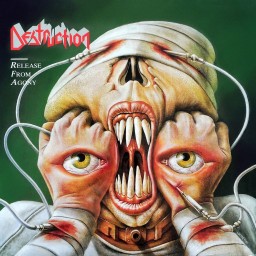
After three decently energetic but artistically disappointing albums and one big improvement on writing in a four-track EP called Mad Butcher, I was really hoping the next track in this major thrash venture, Destruction, would show some real class and sophistication. After a surprisingly moody and atmospheric intro, I'm assaulted with their heaviest thrash so far: Release from Agony. But there's more unpredictability and rhythm involved in all the speed. God was I hoping this would be a consistent thin, especially considering that this is the last of the classic Destruction era before the initial quality drop until four albums later with their comeback, The Antichrist (unless you count the live album, Live Without Sense). The next track goes more or less the same way, but still boasts the improvements with ease. But I found myself once again worried when track four, Sign of Fear, clocked in at nearly seven minutes. It starts off with some doom metal before going into some straightforward heavy metal incorporating some thrashiness, but a slow enough pace to completely differentiate itself from the bulk of the generic Destruction catalogue. This song gets dark and even creepy at times, so in a way it became my favorite Destruction track.
As I'd naturally expect, Unconscious Ruins goes right into the wild and insane hyperspeed thrash that we should come to expect from a band like Destruction. This ups the ante on their previous heaviness yet again. Being a fun-filled four-minute thrash track, it only really seems generic when compared to giants like later Kreator albums. Otherwise, it's pretty fun. Incriminated starts off with a slower, groovier approach before going into more hyperactivity, and like the previous track, remains fun. But it seems that breaking new ground wasn't a focus anymore. Still, it one again rocks all the improvements they made on their production, stylistic and rhythmic choices. The rest of the album plays out very similarly, and maintains both its newfound improvements and standard behavior at the same time.
Boy did these guys rock the concept of a largely single-genre album. Of course, this album's also a bit frontloaded because the second half doesn't really take any experimental directions like the first half did. Still, this was a wild album and a huge improvement, a final testament to their golden age and IMO the best they had to offer at that point.
87
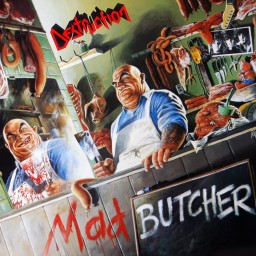
It was pretty obvious from the way Mad Butcher started out that I was in for a bit more of the same Destruction music I was getting since their debut EP. I mean, is Destruction really known for mixing things up a bit? Thankfully, and I mean thankfully, the titular opener took a few different directions that are all expected to be part of a Destruction song every now and then, but not necessarily all together. Quite unpredictable. That fake fadout and the Pink Panther ending were quite the surprise. Then the album goes into a little of a Gothic ballad vibe with The Damned... appropriately named. I'd have like a little more of that on the previous releases. Of course, it did go into an uptempo as I expected, but it kept up the vibes pretty well. It does this for about a minute and a half before completely changing the tempo while still carrying a sense of drama rather than demon-fueled anger, a little like a power metal track. Can;'t say I'm a fan of how singer Mike Sifringer kept trying to raise his pitch at the end of most of the sentences like he was King Diamond or something, which he's not. Now Reject Emotions is a seven-minute song, so I was a bit nervous about this at first, considering how many of these seven-minute Destruction songs were totally drawn out. But with a decent-sized mellow opening and some proggy thrash moments following, I once again got the idea that this song would be an example of total art. Thing is, when I start to get that vibe, it's usually betrayed. BUT, the first two albums showed some decency in that department, so I held onto the hope with only minimal expectations. And thankfully, I got quite a few interesting turns. It even became a prog track for a bit. The album ends with a decent three-minute piece going into speedy guitars and an epic metal vibe. This is the kind of way to end it. Honestly, this is exactly what I've been waiting for from Destruction. I'm not sure the next album will reflect this growth, but I'm largely happy with the way it went.
81
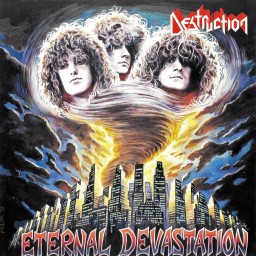
Big three of Teutonic thrash? I was starting to question such a decision made by 80's society with Destruction's debut EP and debut studio album failing to meet my standards for greatness. I was really hoping for something more artistic this time. judging from the way Curse the Gods put up a couple more tricks, making six minutes feel like four at the same time, I thought to myself I might finally get that are I was lookin6 for. I mean, sure, they fall in the same tempo and stylistic tropes for the most part, but it seemed like they were really trying to get something historical out there. Or so I thought at first. Unfortunately, there are still times where things feel too drawn out yet again. It's obvious that the five-to-six minute edge doesn't generally work for them.What really bothers me about this album is the way the percussion sounds. It's not heavy enough, being almost entirely drowned out by the lead and rhythm guitars. Now the unpredictable sense of art comes back for the shorter songs on Side B, making things interesting again. The drums can even be heard properly. The last track is even a much better example of the aggression and technique that the band's been largely relying on, being much heavier and more powerful than ever. So while this managed to be a slight improvement in writing, it also fixed its production problem in the first half.
71
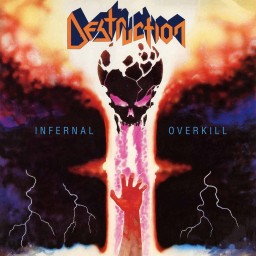
It's obvious that the band was trying a little harder in the art department to keep things a little more sophisticated, especially from such a progressive intro track. Much more interesting things are done with the hardcore-style riffs, finding clever ways to combine multiple repetitive riffs together for some grand new idea. A very goo example of that is the middle-section to The Ritual, which found ways to be unpredictable despite its lacking progression of, ahem, different notes. But this usually isn't the case. There's still the filler aspect in which production and speed are the major factors. For example, Death Trap just goes on for far too long. It's got some damn good riffs, but it's a bit easy for these guys to draw out five minutes when their biggest concerns are speed and atmosphere. And Tormentor sounds like a broken record until you get to the guitar solo. Hell, the eight-minute closer, Black Death, is basically switching between the same two riffs throughout the run, managing to do less imaginitive things than the four-minute opener. So in a way, it feels like they didn't really care about the fans enough to really write their own Stairway. There are noticeable improvements in the production and a few of the riffs, so there's that, but the fact that they went from the three-minute songs to five minuts with little change in most instances is a little of an insult.
69
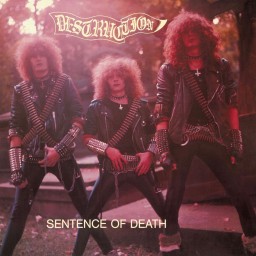
I never hear anyone talk about the band Destruction these days, but they still get really good reviews. I guess they're one of those bands you just check out if you like thrash history or have a soft spot for the Teutonic stuff. Since I need to review one of their albums for the list challenges on Metal Academy, I started with their debut extended play, Sentence of Death. The apocalyptic spoken intro was cheesy enough as I expect, but even though there's some pretty good riffage here, at this point, I've just heard so much thrash like this, even though this is the really early stuff. Having been released about four months after Metallica's game-changing Ride the Lightning, this sounds pretty generic in comparison and many other thrash albums, even better ones, would sound just like this. I suppose all the dark and thunderous sound effects are their attempt at a sense of art, which is fine, but I'd prefer if their riffs more greatly reflected that. Now for early thrash, this relies on darkened screams, general speed, and decent riffs. They go for a speed metal route that comes off a bit punkish, and can even be seen as a small factor in the early development of black metal. But other than that, there's nothing here that Metallica, or even Venom, didn't do better. It's obvious that writing was of least concern as long as they could be fast and edgy, and they kind of succeed at that. But since it's only a debut EP, it';s obviously not the most well-produced thing on Earth. These guys were obviously young and just wanted to rock the basics of a new world and grab a piece of that Metallica action. Decent, but only really necessary if you're a thrash history buff.
68
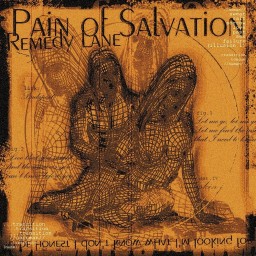
Here it is, the final of the four Pain of Salvation albums for my marathon, and the final album before I complete my Prog Metal Challenge List. To recap, my ratings for the first three albums fluctuated drastically from the general consensus. People say that Entropia was a great metal debut, but to me it was a bit imbalanced and not heavy enough. I almost adored Concrete Lake, and I thought the much-beloved Perfect Element was a good but somewhat overdrawn album with too much fixation on post-metal influence that seemed to take away from the identity of the first two albums. And now, here I am, at the general opus.
While I loved the instrumental direction the short opener took, the next track, ironically named Ending Theme, so was I in for more of the typical prog metal sound that I was so weary of when my marathon began with the debut's first couple tracks? Fandango seemed to answer my question: not entirely. Fandango's general sense of rhythm is totally xylophonic, not built in metal energy while the backing effects and percussion deliver a strong sense of surrealism. This is basically an experimental track, and I mean almost Residents level, even though it clearly uses the same instruments as previous efforts, so that was a damn good sign. But unfortunately, the next two tracks, while great and beautifully melodic, only provide faint ventures from the standard to other areas, so I'm not so sure what'll happen next. The eight minute Trace of Blood has some nice piano melodies scattered around, but remains high-level typical. The next track, This Heart of Mine, seems to have some Gabriel-era Genesis influence in the vibes, but not very strongly. Undertow was kinda lame in comparison. It just repeate the same slow melody over and over again and only differentiated itself by being more quiet.
Things got pretty proggy again on the more active track, Rope Ends, which knows how to put together a decent rhythm while maintaining the very reason I listen to prog in the first place. This one didn't stop being catchy, even when it was going wild. I get a nice follow-up with some Latin folk influence on Chain Sling, which showcases the best of the band's previously established strengths. Easily a winner of a song. Dryad of the woods continues the folk rock focus and is a nice and soft tune on its own, but even slow songs have more pizazz, and while this was nice and emotional, it was also missing that special something. After the title track, which is a largely prog electronic two-minute segue with a tamed but epic approach, the next track is immediately shamed as it falls into only decent melody and standard behavior for the band. Purely palatable, not remarkable. Same with the track after that, but then the ending, Beyond the Pale, gets back on track with a proper ending that takes the overall vibe of the band to a good strength, ending with one of their more emotional and rhythmically healthy takes of the modern prog sound.
Well, I didn't get the magnum opus everyone was bragging about, but it has plenty of strengths among the traditional sound. This was a very enjoyable album overall, but I'd say that instead of it being one of the greatest I've heard, it's more on the level of Dream Theater's underrated debut.
87
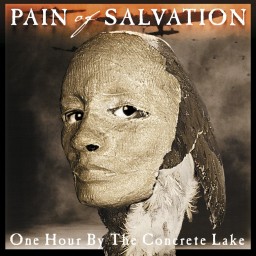
I don't feel like doing another track-by-track review today, so I'll just cover the most important stuff. Hearing the actual music kickstart with a beautiful piano metal intro already told me there was a Symphony X similarity that might end up going through the whole album. As a huge fan of Symphony X, I adored the neoclassical piano focus. While I can't say this was "groundbreaking," I was certainly impressed with the healthy upgrade in balance between melody and progression, as well as a totally new sound for the band. On top of which, metallic moments seem to be a bit heavier and more layered, which was an issue for the more metal-oriented songs of the debut. The occasional industrial backdrops also help with that, as well as with more robotic guitar tones and riffs. And of course, there's always a little room for a softer and more contemplative song with some violin attached. But these elements don't often overpower the standard dramatic prog metal aspects, but rather add light influences for the most part. In fact, it's enough to make sure most of these songs feel different enough from each other to almost be different subgenres of prog metal. Handful of Nothing, for example, is quite mechanical in its handling of hardcore punk influence, never really steering into "metalcore," though.
I gotta say, though. Only about half the time the melodies manage to really impress me. For example, a wonderful collective of rhythms takes up the bulk of Home, but in comparison, a track like Water feels a bit empty. Thankfully, the former happens a bit more often. A track like Home is followed by an incredibly proggy yet catchy track like Black Hills, making for an excellent pairing. Hell, I'd say Black Hills even astounded me, managing to be better than the already grand Home. On top of all that, the various sounds and feelings connect well with the emotional focus of the theme, centering around the dystopian devastation and pollution of the world due to man's lack of sympathy for the world around them. The theme isn't very story-based, but it does an excellent job sharing the lead character's feelings of despair. Of course, it goes without saying that it takes a while for that hidden track to really pick up, about four out of six minutes. But once it does, it really does, going into some beautiful avant-garde that perfectly covers what the album went through in a very quick time.
Major improvement over the last. This is considered the weakest of the first four Pain of Salvation albums? I might not agree with people's general consensus on the debut, but the improvement here seems like a very good sign for what's coming next.
93
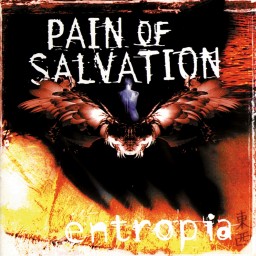
Today is the day I finally finish my second list challenge: the Prog Metal 2nd Decade Challenge, and it'll happen on my Pain of Salvation marathon. I'll be getting through at least the first four PaS albums, potentially ending at the album I need for the final review on this challenge list: Remedy Lane, the fourth album. I never really got interested in Pain of Salvation for some reason, but I'll gladly check them out for the challenge.
Entropia is a concept album about a struggling family in a fictional titular world, and the main characters are basically detailed in a pretty poetic collection of lyrics that are also standardly "prog concept album." I an't say there was anything here that made me feel too heavily. Now I'm not saying that I didn't have any good expectations for Pain of Salvation's debut, but with the genre-tagging on RYM simple saying Prog Metal for primary and Prog Rock for secondary, I had a pretty good idea of what this album would sound like: standard guitar tones for prog metal and catchy mid-level progression that's only proggy enough not to stay off the radio. The opener and the next song (not counting the pretty lame trip hop segue in between) are so standardly 1990's prog metal that it's not even funny. Dream Theater obviously ended up manifesting a lot of emulators, such as Shadow Gallery and Evergrey. Is it catchy? Yeah, but I've totally heard this before. In fact, I need it to be a little proggier. Save the radio prog for Rush, guys.
Now I was pretty thrown off by the funk aspects that kicked off the nine-minute People Passing By. That's considered to be one of their better songs on this album. The song has a tendency to switch between these and blackened riffs in the same percussion tone like they naturally go together. I wouldn't say that, but at least the prog improves here. But it just isn't catchy enough or even heavy enough to really support my prog metal needs until the end when it pretty much just goes back into the standard behavior of the album. After a totally standard ballad, the album takes a much catchier and outlandish turn with Stress, boasting instrumentation that even goes into Cardiacs territory with its hyper-melodic nature. Unfortunately, while the instrumentation's awesome, singer Daniel Gildenlow's melodies are just lame and don't pair well with the song much.
Things get largely standard again on Revival, which tries to capture the same spirit as Stress but only really succeeds in one aspect: matching the singer's melodies to the instrumentation. Now for the most part, To the End is the best the album had to offer. Everything was energetic, in perfect harmony, and catchy while maintaining that intriguing unpredictability of People Passing By, even though its style is standard. Next comes Nightmist, which is much less melodic and more built on maintaining an ever shifting atmosphere between fast and funky, slow and dramitic, and surprisingly hyperactive for a couple seconds, but I don't feel like banging my head to this one, even as the funk returns in small bits. It seems more like a display of how proggy they can be without setting up the experience as a "song." Plains of Dawn feels like it's going for more of a tonal balance as a slightly-symphonic prog rock song, and it kind of works, but also just tells me that they should've done some more about balance and behavior from previous songs on the album. And finally, there's that ending segue (the segues have been largely unremarkable, by the way), Leaving Entropia.
A lot of people were very impressed with this debut, but it seemed generic at times, proggy but imbalanced at times, and showed a lot of compositional strengths that weren't always lived up to.
73
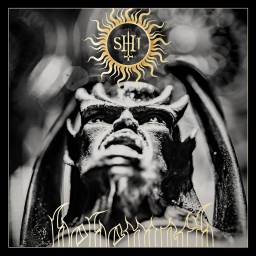
Even though I believe in God, I've made a point of forgiving people for sins that don't really affect me. Now matter how much I bitch and whine, there will be people who disagree with me on philosophy, so might as well accept it as a part of the natural world while acknowledging the difference in philosophy. So I've heard all the Slayer albums, a good deal of Bathory, and am of the opinion that the best death metal band is Septicflesh. But Behemoth really made their point of hatred towards religion a million times over, so do we really need it again?
Considering how familiar this album is, I'm going to have to say "not this time." Behemoth's "The Shit ov God" is obviously built specifically to get anti-religious people to buy the album, as if they're relying on edge factor. Newsflash: that's how people LOSE interest. Hell, Wes Craven used to think being edgy was what mattered most, and his early career was pretty downhill once he hated and disowned his own porn flick, and switched right to THEMES, which made his movies much better overtime. But Behemoth took the opposite route.
Now the two good things that can be said about this album are that the production is absolutely perfect. The crystal clarity is some of the finest in metal, but that's to be expected from veterans. As well, half the riffs are quite catchy, which really does help. I found myself really enjoying the bits that got quite proggy, like the midtro of O Venvs, Come. So there's a strong metal energy here that can help everything be at least fairly enjoyable to some, but this is also an extremely typical album for them. I said half the riffs were catchy, but the other half are so standard that you can pull them off of any obscure crap lost in the RYM charts. So only half the time does the production justify these performances. As well, taking a look at the lyrics, they feel thrown together and basic. The overabundance of old-timey / medieval phrasing seems to distract from that aggressive, angry nature that they're trying to promote so brutally, so the ancient vibes and the religious anger kind of contradict each other like matter and antimatter.
So this most recent entry in the Behemoth catalogue was an attempt at bringing back the vibes of their most beloved work, The Satanist, but the quality steers a bit closer to their middling debut, Sventevith. Fun moments and boring moments are heald together with a strong metallic presence and pure diamond production, so while it's perfectly listenable, it has its problems.