
The Atmospheric Black Metal Thread

I'm a big fan of "Dead as Dreams" although I do find it to be a touch overrated by the Americans as I don't think it's quite as classic as it's often made out to be. It's certainly a very solid & highly enjoyable black metal record though. I've not too sure it should qualify as ABM. It's always seemed closer to conventional black metal to my ears. 4/5



I'm a big fan of "Dead as Dreams" although I do find it to be a touch overrated by the Americans as I don't think it's quite as classic as it's often made out to be. It's certainly a very solid & highly enjoyable black metal record though. I've not too sure it should qualify as ABM. It's always seemed closer to conventional black metal to my ears. 4/5
Coulda been the headphones I had. Sounded pretty atmo with the Onn gaming set. Not amazingly atmo, so I get you on this one.
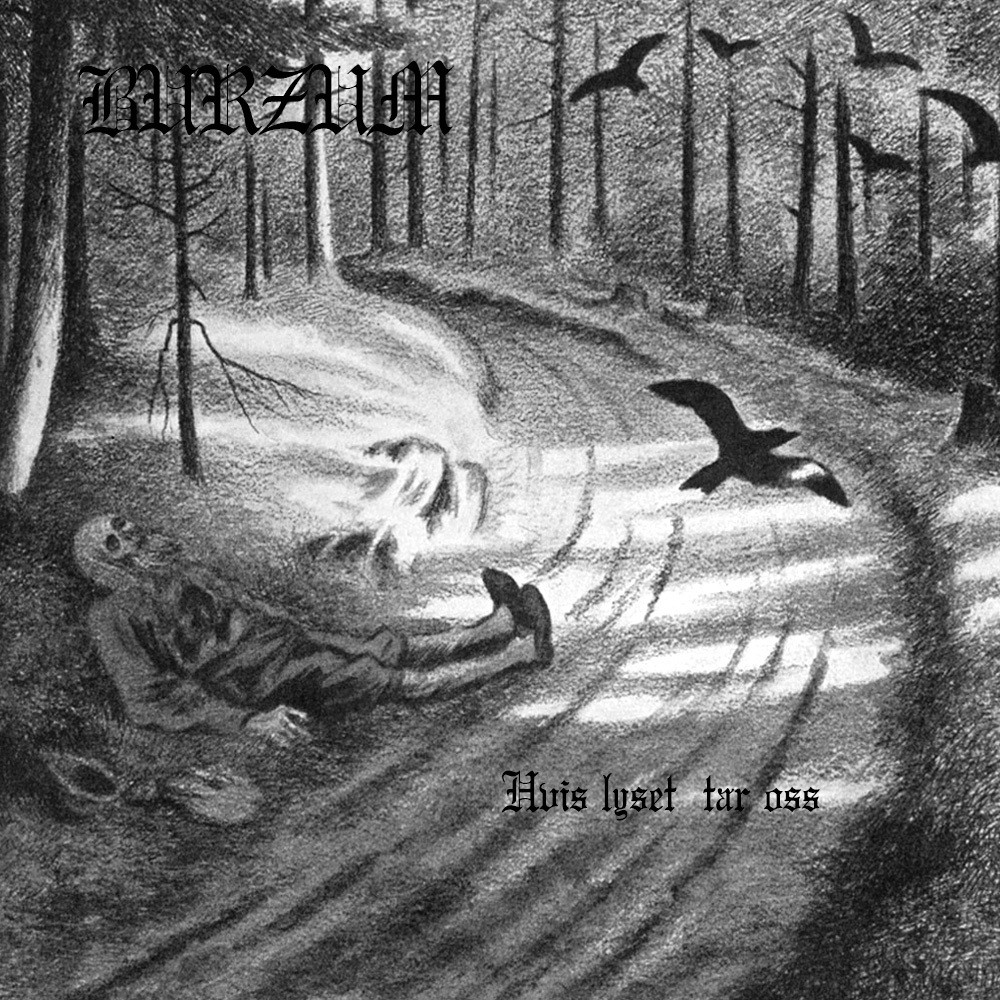
Burzum - Hvis lyset tar oss (1994)
Genres: Atmo-Black Metal
Looking at old reviews for albums is a good way to see just how much you've changed. In this instance, it's one of Burzum's crowning gems, the one he wrote right before his legendary (tho overrated IMO) Filosofem. The name is Hvis lyset tar oss, which is Norwegian for "If the Light Takes Us." At this point in time, much like Filosofem, I can't say I like this one as much as I used to. I even knocked off a whole star from my Filosofem rating when I heard it. But I don't think I'll go quite that far. Back then, I liked Filosofem more, by a 2/100 edge (92 vs. 90). This time, I'd say I like this much more than Filosofem, which only had a 93.
In my old review, I mentioned that Burzum expressed his anger perfectly. I really don't think so anymore. Hearing so many professional and even frightening shrikes and growls in my time as a metal fan, now Burzum's voice sounds unpolished and even a little dorky, like he's trying either too hard or not hard enough. Otherwise, the music itself is pretty good. I got it right in my older review when I said that Burzum delivers on the basics of atmo-black well enough. This album is cold and treacherous, much like an actual blizzard. There are synths in the back but they're typically faint and not forced, working just well enough to add a little spice to these four epics. But the thing about these epics is that they largely have a one-track mind, so once again, it's more about the atmosphere than the music. Still, it's a careful, though not too experimental, blend of atmo, depressive and traditional black metal with a little dungeon synth on the side.
So I would say in my current state as a music buff that Burzum's album right before Filosofem has the edge. I didn't really expect to like it more than Filosofem at first, but I'd say that this one feels more like an actual music album, and it doesn't have an overdone 25-minute ambient track at the end, but rather a synth track which feels like something out of a Tangerine Dream album (it has a 14-minute one, which is still overdone but easier on more melodic ears and actually showing clever shifts in gear).
76

Wolves in the Throne Room - "Diadem of 12 Stars" (2006)
It's easy to overlook the debut full-length from these highly regarded Cascadian black metallers from Washington in the wake of their much more classic sophomore record "Two Hunters" but "Diadem of 12 Stars" is still a very solid effort with a lot of high-quality ideas. I particularly enjoy the vocals & the more brutal blast beat sections. Unfortunately, the clean female vocals that appear sporadically across the album are pretty ordinary & the tracklisting starts off a little slowly, not really hitting its stride until the back third of the second of the four lengthy tracks. The B side is where all of the action is though &, even though each song contains its weaker sections, there's just enough premium black metal on offer to make "Diadem of 12 Stars" a minor treat for our The North members. While the rumours of "Diadem of 12 Stars" being a genuine classic may be misguided, I wouldn't suggest that it's overrated either.
For fans of Altar of Plagues, Panopticon & Weakling.
4/5

Summoning - "Stronghold" (1999)
Is this the best release from Austrian epic/atmospheric black metal duo Summoning? It's certainly up there. Does that mean that it doesn't suck? Nup. Still cheesy as fuck. There are a couple of decent tracks here though, namely "Long Lost to Where No Pathway Goes" & closer "A Distant Flame Before the Sun" (my personal favourite). That leaves "Stronghold" feeling like a step up from some of Summoning's other popular releases like 2001's "Let Mortal Heroes Sing Your Fame".
For fans of Caladan Brood, Emyn Muil & Elffor.
3/5
I think it's a good step forward for the dungeon sound, but I've fallen a little out of favor with them after having so much black metal under my belt now. One of the first symphonic black metal albums I ever heard.

Negură Bunget - "OM" (2006)
I first encountered Romanian black metallers Negură Bunget through the tape trading scene back in the mid-1990's with their 1996 "Zîrnindu-să" debut release not doing very much for me to tell you the truth. I wouldn't encounter them again until Ben introduced me to their fourth full-length "OM" upon my return to metal from a decade-long hiatus in 2009 & I have to admit that I initially found it to be a challenge for a few reasons. Time saw me warming to it though & I now find myself returning to "OM" semi-regularly, if not claiming it to be the masterpiece that many punters would have you believe it is.
"OM" possesses a very clear personality that's all its own with its array of different sounds & influences being presented in a fairly coherent way throughout & the main attraction being the full, lush synthesizer sounds of front man Hupogrammos (Dordeduh/Sunset in the 12th House) & fellow guitarist Sol Faur (Dordeduh/Sunset in the 12th House). Hupogrammos' vocal performance is passionate & authentic too which fits the requirement nicely. Unfortunately, all is not roses though with the thin rhythm guitar tone & weak snare sound leaving a little to be desired & not doing a very good job at masking the instrumentalist's obvious technical limitations. The six-string performances of both men are fairly sloppy at times while drummer Negru's blast beats are an absolute rabble that should never have been attempted on the evidence presented here. Thankfully though, the atmospherics on display throughout "OM" are generally quite stunning which allows the album to overcome those deficiencies reasonably comfortably. It certainly helps that the opening three tracks are nothing short of marvelous & it's a little disappointing that the quality dial never quite reaches those heights again for the remainder of this lengthy 67-minute release. Progressive folk metal number "Hora soarelui" is the only genuine disappointment included though with its bouncy folk melodies being a little too much for this battle-hardened extreme metalhead to cope with.
For all its failings, I find "OM" to be an endearing listen these days, as well as being the clear career high-point of Negură Bunget's inconsistent recording career overall.
For fans of Dordeduh, Marțolea & Darkestrah.
4/5

Summoning - "Minas Morgul" (1995)
After revisiting the 1995 sophomore album from these Austrians this week, I've discovered that I slightly favour "Minas Morgul" over the ever popular "Stronghold" & "Old Mornings Dawn" as Summoning's best release these days. I still can't get on with it though as this consciously epic, dungeon synth infused stuff really grinds my gears at times. I definitely find myself enjoying the parts where a more traditional black metal atmosphere is on display but I can't profess to accept the more folky melodies that Summoning attempt at times as I perennially find myself craving a darker version of black metal.
For fans of Caladan Brood, Emyn Muil & Elffor.
3/5

Paysage d'Hiver - "Steineiche" (1998)
Steineiche is the 1998 debut album / demo (delete as necessary) by a young Wintherr (Tobias Möckl) and his fledgeling Paysage d'Hiver black metal project. In its most widely available version it consists of three lengthy tracks, each quite distinct, and has a runtime around an hour. The original, limited edition, CD-R version had a fourth track, Déjà Vu, which doesn't appear on subsequent versions and which I haven't heard.
Even at this early stage it was evident that Wintherr had an uncanny knack of wringing an enormous amount of atmosphere from the most basic of palettes. The length of the tracks inevitably leads to a degree of repetitiveness, but Wintherr's genius is in never allowing such to become monotonous or boring, but continuously evolving each track so that listener engagement is maintained, whilst not straying too far from the original premise and enveloping and immersing said listener in the atmospherics. The production values are exceedingly lo-fi as anyone familiar with the project would already guess, yet Wintherr works this in the music's favour, using sparse, lo-fi recording techniques to infuse his work with an inherent iciness that feels sharp and brittle like winter frost and is eminently suited to the atmosphere of this album in particular and the wider concept of "The Wanderer" that makes up the entire discography of the project, thus laying out his manifesto very early on.
As I mentioned at the outset, the three tracks are each very distinct, yet they complement each other inordinately well. The opener "Die Baumfrau" ("The Tree Woman"), begins with an ambient intro complete with that staple of Pd'H releases, samples of a winter wind blowing frostily from the speakers, before erupting in a shivering blast of black metal iciness that is probably nearest to what most would expect from the project, but which is no less effective for that, it essentially being the acorn from which that particular black metal oak germinated. The riffing and blasting is of a pummelling intensity and the high-pitched shrieks are searingly harsh and sound like someone taking a power sander to an orc's balls, but the track feels even more sinister when these give way to a deep, spoken-word section where the vocals hover around on the edge of audibility before the frantic shrieking reasserts control. Subtle little details like this, along with the insertion of a gothick-y guitar melody over the main riff in the middle section and another near the track's end that sounds like bluegrass banjo-picking, prevent the track from becoming stale whilst still maintaining the direction of travel, a skill with which Wintherr has proven to be admirably proficient over the years. By track's end, such is the impressiveness of his nascent songwriting ability, you don't even realise that twenty minutes have elapsed.
For the second epic, very different, track we get to hear from The Tree Woman's spouse "Der Baummann" (The Tree Man). This is a much more moody-sounding piece that has a doomier ethic with a guitar sounding at times very similar to Celtic Frost, or more accurately Triptykon. Overlaid with thin keys and a picked guitar melody and featuring guttural croaking vocals mixed quite low, this has a sinister, ominous edge to it, contrasting superbly with the savagery of the opener, as if the threat of "Der Baummann" is deeper and more profound than the mere physical violence of "Die Baumfrau". Ending with a tortured (possibly synthesised) violin scraping at your mind, the track seems to threaten the annihilation of soul as well as body.
The closer is a twenty-five minute ambient piece with a haunting, ritualistic atmosphere. Now I am not known for my patience with long ambient tracks. My dislike of "Rundgang um die transzendentale Säule der Singularität" on Burzum's "Filosofem" seemingly flying in the face of popular opinion, for example, but Wintherr here shows Varg how to construct a lengthy epic with quite simple building blocks that never threatens to become tedious. From ritualistic and almost martial-sounding beginnings it reaches for the stars and becomes more cosmic and occult. With barely audible spoken vocals that feel like the probings of a Cthulhian titan seeking to escape its cosmic prison, it hints at secrets of the universe that a mere man's mind could not possibly comprehend, nor soul withstand. Ending with a female operatic aria, "Der Baum" leaves a quite stunning impression.
I must confess that, for some inexplicable reason, I had never checked out this debut until now, but now I have I would probably list it as one of Paysage d'Hiver's most interesting releases. The songwriting is extraordinarily accomplished and as he was responsible for everything on the record, Wintherr's technical competence cannot be sniffed at either. Whilst I accept that some may struggle with the sparse production, I find that the lack of high production values removes a layer of artifice from between artist and listener and allows an unvarnished reopresentation of Wintherr's intent to be heard, to everyone's benefit.
83/100

Panopticon - "Autumn Eternal" (2015)
I haven't returned to Panopticon's highly praised sixth full-length since the time of release when I recall finding it to be fairly decent, without ever really fully captivating me. The same can said of this week's experience too which is similar to how I feel about a record like 2012's "Kentucky". I tend to favour Panopticon's more recent work like "...And Again Into the Light" & "The Rime of Memory" over this era to be honest. This material is simply a little two light-weight for my taste. It feels more like Sigur Ros than Mayhem with the pretty, melodic post-metal guitar lines & unintrusive production job making it a noticeably easy-listening release for the black metal scene. In fact, I find a fair few blackgaze records to be more in line with my musical comfort zone than I do "Autumn Eternal" if I'm being completely honest. It's certainly not a bad listen. It just doesn't really float my boat either. I would admittedly place it slightly ahead of the previously mentioned "Kentucky" in the Panopticon pecking order though.
For fans of Saor, Wolves in the Throne Room & Falls of Rauros.
3.5/5

Drudkh - "Відлига [Thaw] EP" (2026)
This latest release from the ukrainian atmospheric black metallers is a three-track, twenty-minute EP and it exudes an air of melancholic reflectiveness that is reminiscent of the opening instrumental from previous album, 2025's "Shadow Play". This may well be all-new material, but I wouldn't be at all surprised if it turned out to be leftover tracks from that album because it fits in so well as a companion piece. This turn in tone from Drudkh is unsurprising given the situation in Ukraine over the last four years, particularly around the band's hometown of Kharkiv which has seen some of the war's most intense fighting. Who wouldn't become pensive in such a situation? Although they don't address the war directly in their lyrics I think lines like "Only their silhouettes, Touched once by an indifferent hand, Take up faded places, In memory" (from "Memory") are fairly unambiguous in their sentiment.
The opener is indeed a reflective piece that, whilst still sitting comfortably under atmospheric black metal has such a melancholy air to it, emphasised beautifully by some subtly applied keys, that it also feels like it has one foot in the post-metal camp. The second track, "Somewhere, Sometime" is an instrumental that possibly feels even more wistful than the opener with its main melodic theme having a reflective, folky air, as if looking back fondly on simpler times now lost. Add in some picked guitar lines and, again, those subtle, melancholy-sounding synths and you have a fairly simple, melodic and exceedingly effective instrumental break at the heart of the EP.
The closer, "A Moment in Eternity" is probably the track most recognisable to long-standing Drudkh fans, being a more conventional slice of atmospheric black metal. Even here, though, the vicious bite that used to hone the edge of Drudkh's sound feels muted, as if the sorrow being felt by the musicians is so great as to infuse their very being and leave them changed as a result. Once more, even though the track is of a higher tempo and has a traditional black metal structure, the air of wistful reflection still permeates it and rather than being a celebration of ukrainian culture and history as a lot of Drudkh's past work seemed to be, this is more like a eulogy to something that has been lost, possibly for ever.
I understand if some long-time fans were to be unsure of this direction the band have taken as it is quite different to their best-loved releases but, as someone who is often drawn to the more downbeat and melancholy in metal, I have to say that I actually really like this, even though, unfortunately, its sentiments may well be rooted in real world tragedy which i am sure we all wish had never happened.
4/5

Drudkh - "Forgotten Legends" (2003)
This highly regarded Ukrainian duo first crossed my path back in 2009 through their excellent 2004 sophomore album "Autumn Aurora" which triggered me to explore the rest of Drudkh's back catalogue (well, at least the metal releases from it) over the next couple of months. Their 2003 debut album "Forgotten Legends" would be positioned quite early in that journey & didn't disappoint either, gradually becoming my drug of choice when it came to Drudkh. "Forgotten Legends" is a surprisingly accomplished atmospheric black metal effort for a first-up release & very quickly shows the duo of vocalist Thurios (Rattenfänger/Astrofaes/Blood of Kingu/Hate Forest/Old Silver Key) & guitarist/bassist Roman Saenko (Hate Forest/Precambrian/Rattenfänger/Windswept/Blood of Kingu/Dark Ages/Necrom/Old Silver Key) to possess a very strong understanding of the elements that make the subgenre engaging. Session drummer Yury Sinitsky (Lutomysl/Blood of Kingu) keeps things very simple in a similar way to that of Varg Vikernes on the classic Burzum records which allows Saenko's trance-inducing & repetitive riffs to slowly envelope the listener. I wouldn't say that these riffs are taken from the top shelf of the black metal spectrum but they are unanimously enjoyable nonetheless, keeping the tempo around mid-pace throughout & never being tempted into frenetic blast-beat territory. It's only when those riffs are combined with Thurios' blackened shrieks that we see the atmosphere reaching its full potential though & I'm subsequently gonna suggest that it's Thurios' contribution that is the most important component of the early Drudkh sound. His keyboard work is surprisingly scarce which leaves "Forgotten Legends" sounding quite traditional. The listener will no doubt pickup on the nature themes even if they can't interpret the lyrics because this record simply "feels" earthy, without ever fully crosses the line into the pagan black metal territory.
The tracklisting on "Forgotten Legends" is extremely consistent with the three lengthy metal tracks & the rain-soaked atmospheric outro piece all being very strong but never tempting me to claim any of them as genuine classics. All three of the proper songs have their moments & harness a pretty dirty guitar tone that always maintains a bit of bass to good effect. If pushed, I'd probably suggest that the sixteen-minute opener "False Dawn" is my pick of them as it slowly draws you in & maintains your interest for the full duration of the piece. It was a bold move to open their first full-length with such an epic undertaking but it has paid off in my opinion. One probably needs to remember that both of Drudkh's band members had paid their dues by this point though given that they'd both been a part of Hate Forest for seven years when they recorded "Forgotten Legends".
As with Drudkh's other popular releases, I've really enjoyed this revisit & feel that "Forgotten Legends" is a solid black metal record that will satisfy most punters who maintain a penchant for the more restrained, measured & atmospheric side of black metal. While 2006's "Blood in Our Wells" is often referred to as Drudkh's pièce de résistance these days (along with the previously mentioned "Autumn Aurora"), I tend to favour this record just slightly over both of Drudkh's other early masterpieces. I really enjoy its epic feel as the two musicians show a clear enjoyment & an undeniable talent for their chosen craft.
For fans of Burzum, Hate Forest & Walknut.
4/5

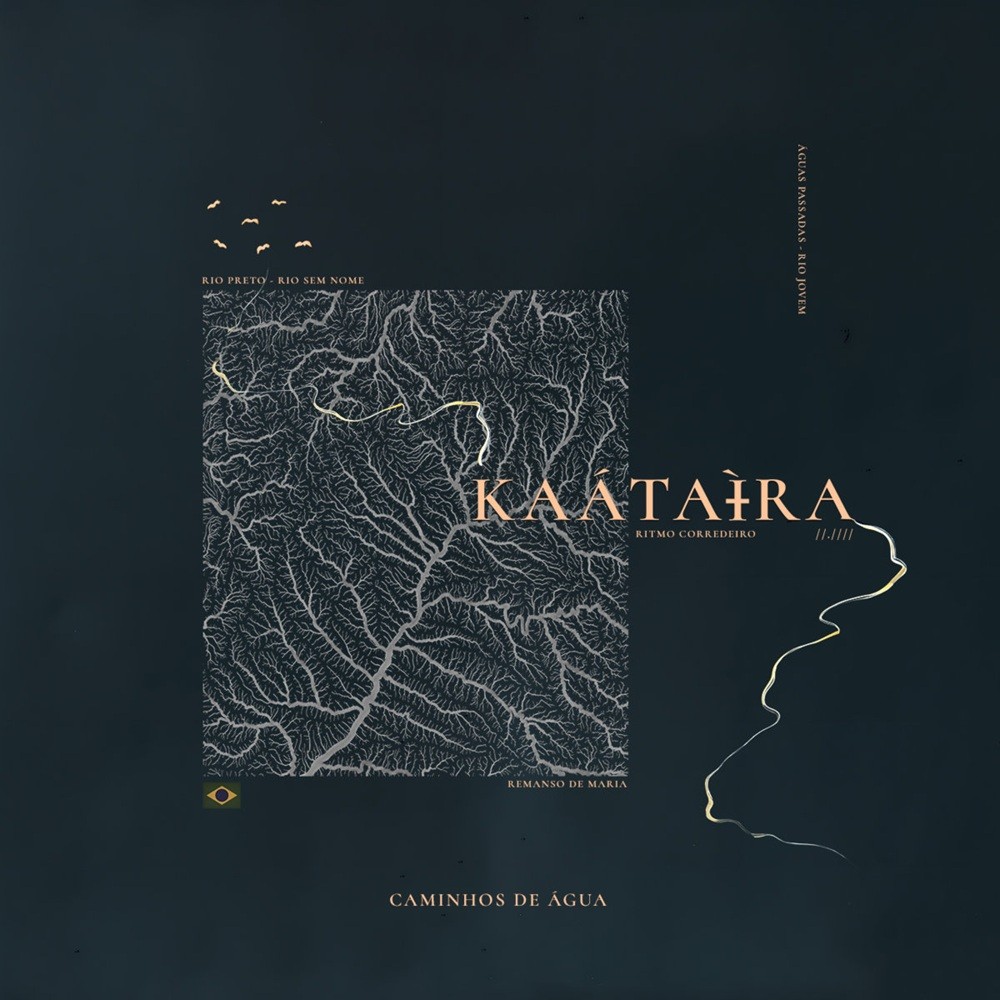
Kaátaìra - Caminhos de água (2026)
Now that I'm settled into my new position at work, I've got some serious catching up to do on newly released albums. This week, that means getting a ton of heavy hitters that I missed out of the way. One of those is Kaatayra, (non-phonetically changed to Kaátaìra) possibly my favorite Black Metal act currently, and it's going to be an AOTY contender for sure. Back in 2021 Kaátaìra changed the game for me with Inpariquipê, a triumph of an album that toes the line on what Black Metal can be, or possibly not be depending on your opinion, and how it can evolve in different cultures and geographical locations. While Caminhos de água doesn't have the same shock factor since it's very much a continuation of the ideas presented on Inpariquipê, Caio Lemos continues to, in fact, never miss and presents another intensely reflective piece of music that remains emotional and genuine sounding. This one is going take me longer to unpack than Inpariquipê did, but I have a feeling this album will solidify Kaátaìra as one of my favorite Metal acts of all time. The consistent theming, more complex and winding songwriting, and more confident use of a wider variety of instruments and sounds leaves me in awe, but not necessarily floored yet. Going to be coming back to this one many, many times this year.
4.5/5

Blut aus Nord - "Ultima Thulée" (1995)
It's interesting that many of our members rate the debut album from French black metallers Blut aus Nord extremely highly but it's never impressed me as much to be honest. "Ultima Thulée" was recorded when band leader vocal, guitarist & main musical mastermind Vindsval (Ershetu/Forhist/Yerûšelem/Children of Mäani/Eitrin/Karras/The Eye/Vlad) was just 15 or 16 years old so it's not surprising that its approach is a little less original than Blut aus Nord would later become known for but it still represents a more than decent example of the atmospheric black metal sound with Vindsal's tortured screams being a highlight & reminding me of Varg Vikernes performances on the classic Burzum records. The youngster's riffs are shrouded in frostbitten, lo-fi noise & often rely upon the basslines of session musician Ogat (Antaeus) & keyboards of W.D. Feld (Yerûšelem) to become fully intelligible. Like most of Blut aus Nord's releases, the drums are entirely programmed & I do feel that this is a slight weakness as I would have preferred a more organic feel to them.
The atmospheres presented on "Ultima Thulée" are suitably icy & most of the tracklisting is fairly engaging with songs like opener "The Son of Hoarfrost", my personal favourite "From Hlidskjalf" & the excellent "On the Way to Vigrid" being the clear standouts of the eight tracks included. I must admit that I find "Till' I Perceive Bifrost" to be fairly lackluster & the only genuine disappointment with the others all managing to maintain my interest in some capacity. Some of the transitions in these pieces are pretty jarring & disjointed which is perhaps understandable given the age of the main composer while the keyboard-driven interlude sections aren't anything terribly special but are certainly passable.
I've gone on to become a big fan of Blut aus Nord over the years as they always manage to create fresh & original yet still inherently dark soundscapes for me to get lost in. "Ultima Thulée" doesn't achieve the same sort of otherworldly majesty but it's still a passable black metal release that perhaps suffered from the time it arrived on the scene as 1995 sits towards the back end of a five-year period that represents the peak for the genre with loads of important releases appearing either side of it. Still... "Ultima Thulée" is certainly worth a listen & should satisfy most punters who enjoy the wintery European atmospheres of the time.
For fans of Burzum, early Emperor & the first couple of Enslaved albums.
3.5/5
I typically have so much trouble getting into the works of Damián Antón Ojeda, who operates under a number of popular or even iconic shoegaze and atmo-black names: Sadness, Amazingland, Home Is In Your Arms, etc. I quite like his Letterstoyou projects, but everything else is kinda meh, despite being HUGE for Sadness. But there's one name of his I haven't checked out yet: Trha. I can't believe how many albums this guy puts out. Having said that, maybe that's why I can't get into his stuff, because with so many albums working around the same genres and influences, it gets to the point where he's basically rewriting the same stuff with slight variations on the theme depending on which alias he uses.
Now I just found out that this dude writes conlangs for his Trha music... bro. I fucking love it when people do that. As a guy who wrote my own language for Nialoca, I have mad respect for musical artists who take that step. Magma fan here asking for a world where we can major in Kobaian.
So I'll check out a couple of his Trha albums today. Some of them seem very short so that'll be easy, but based on comments and genre tagging, seems like another act in the style of Paysage, so will it be too drawn out for me, even the half-hour albums???
I went through the Trha phase back in 2021 and 2022 starting with Endlhëtonëg, which I still highly recommend, but it became way too much to keep up with for me after 2022. The output started to become a bit insurmountable even back then because their style remained generally the same, like you mentioned, even if each album was high quality and had its own ideas. I sadly couldn't be bothered anymore, which is a bit of a shame because I still see the albums pop up everywhere as highlights for others. It's genuinely impressive, but unless things have changed, you're right that Trha can get pretty repetitive just due to it following the Atmo Black style. Just have to try and get engrossed in it and see if it does anything for you.
I'd be interested to see if you find anything cool in the newer releases, since I doubt I'll have to motivation to wade through them anytime soon.

Darkspace - "Dark Space III" (2008)
The highly celebrated third album from Swiss atmospheric black metal trio Darkspace has become a long-time favourite of mine ever since Ben introduced me to the band (that includes Paysage d'Hiver mastermind Wintherr, Sun of the Blind creator Zhaaral & Apokryphon protagonist Zorgh) back in 2009. I took in all three of Darkspace's albums in quick succession at the time with their 2003 debut "Dark Space I" not really connecting with me. 2005's "Dark Space II" was really solid though & saw me hopping onboard the Darkspace train for the long haul but it was at the very next stop that things started to really heat up. "Darkspace III" is an incredibly dark, intense & relentless excursion through icy realms that appear to be my true home when it comes to black metal. The drum programming is possibly the only reason I didn't award this record the full five stars back when I first encountered it but, over the course of many revisits since, I've learnt to accept the artificiality so that these days the album sits amongst the most elite of the elite in my atmospheric black metal world. Devastating & essential.
For fans of Paysage d'Hiver, Alrakis & Sun of the Blind.
5/5
Here's my revised Top Ten Atmospheric Black Metal Releases of All Time now that I've finally rated this long-time favourite:
01. Burzum - "Filosofem" (1996)
02. Akhlys - "The Dreaming I" (2015)
03. Darkspace - "Dark Space III" (2008)
04. Burzum - "Hvis lyset tar oss" (1994)
05. Wolves in the Throne Room - "Two Hunters" (2007)
06. Scarcity - "Aveilut" (2022)
07. Paysage d'Hiver - "Im Wald" (2020)
08. Progenie Terrestre Pura - "U.M.A." (2013)
09. Paysage d'Hiver - "Die Berge" (2024)
10. Paysage d'Hiver - "Winterkaelte" (2001)
https://metal.academy/lists/single/160