
Pan.Thy.Monium - Khaooohs & Kon-Fus-Ion (1996)Release ID: 7646
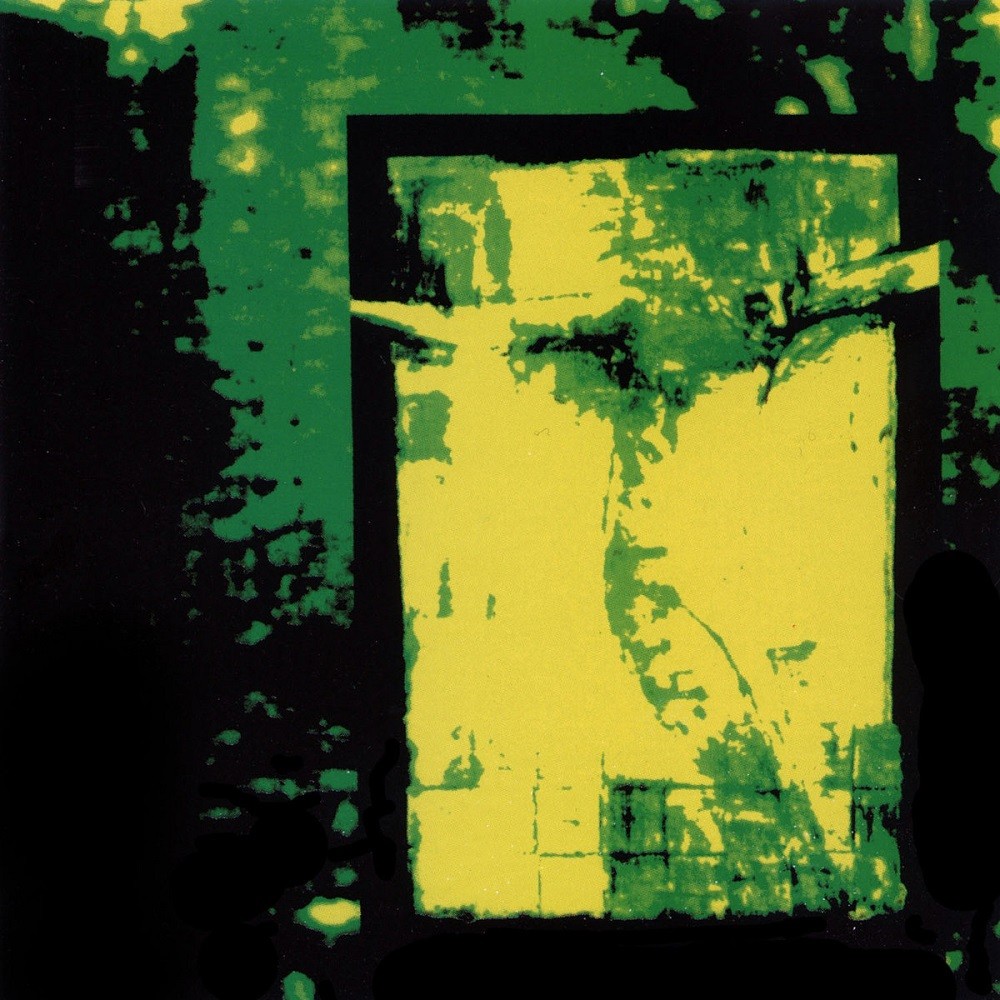
An album filled with creativity and wonder, and a fitting finale for the unique Pan.Thy.Monium.
Today, the 11th of November, is Remembrance Day. It’s a day to commemorate the sacrifices made by so many soldiers and civilians during the First World War. Exactly (to the day) 91 years after the war ended, countries within the Commonwealth remember those that lost their lives by upholding a minute silence. As worthy as this token of respect is (and I don’t wish to downplay it), it is certainly not the only minute of silence we should spend pondering the departed. After all, it has now been 13 years since Pan.Thy.Monium left us behind (with a very fitting minute silence to end their existence) and their exodus is still mourned by multitudes of fans around the universe.
This Swedish death metal band isn’t particularly easy to describe. If I manage to portray their material as anything other than completely insane, then I’ve failed in my task. For starters, the band is made up of members Derelict, Winter, Day DiSyraah, Mourning and Aag. Thematically their albums follow the battle between the fictional (is there any other type?) Gods named Raagoonshinnaah (the God of Darkness, Rain and Emptiness) and Amaraah (the God of Light). This third and final full-length release appears to be both a celebration of Amaraah’s victory and a token of respect for the now vanquished Raagoonshinnaah. In reality, Pan.Thy.Monium was formed by the Swanö brothers (Day is Dag, DiSyraah is Dan) during a particularly confusing and difficult time for Dan. He decided to explore and release his feelings, no matter how strange or puzzling they were, into musical form. The outlet is both baffling and extraordinary and Khaooohs & Konfusion is undoubtedly the band’s masterpiece.
Khaooohs and Konfusion is a cocktail of exquisite melodies, brutal death metal, bizarre saxophone outbursts, extreme guttural vocals and abstract keyboards. Yet what should result in a chaotic jumble of strange ideas makes for one of the most captivating and unique experiences available to metal fans. The listener originally never really knows what’s going to come next and the tracks rarely return to previously travelled ground, preferring to tangent off in new directions without ever losing the outlandish tone. I’m certain most first-time listeners (I know I did) would find the whole thing a bit bewildering, yet strangely compelling. With each subsequent spin you’ll pick up new treasures, whether it’s great drumming time changes, a beautiful lead, or one of numerous awesome riffs. I don’t believe vocalist Derelict is saying anything, instead spewing out indecipherable vomits at regular intervals, but as with most extreme metal releases, it’s all about the atmosphere. Thankfully, Pan.Thy.Monium has atmosphere in spades and they certainly produced something very special indeed with this album.
Dan would release his magnum opus (one track Edge of Sanity album Crimson) literally 12 days after Khaooohs and Konfusion. One can assume that the demons he battled and defeated during the recording of the Pan.Thy.Monium material needed to be exorcised before he could produce such an important and monumental epic. While I’d certainly give Crimson the full marks it deserves, I can’t quite hand out the same rating for this album. For starters, it only actually has two real tracks, being the 11-minute opener The Battle of Geeheeb and the 14 minute Thee-Pherenth. Both are astounding and make this album essential on their own, but these 25 minutes are not quite enough to warrant full marks. The third track Behrial is an entirely keyboard driven ambient instrumental that’s quite rousing and uplifting yet doesn’t have the impact of the first two behemoths. Still, Khaooohs and Konfusion is a thoroughly enjoyable release that warrants multiple listens to really appreciate the creativity and talent involved. I feel a bit sad every time the final minute silence (suitably titled In Remembrance) brings the bands existence to a close. Lest we forget indeed!

Pan.Thy.Monium is a pretty batshit band, right?
I think I judge all these batshit experimental albums by how justified the batshitness is to the music itself, and especially in the context of the whole record. What kind of statement is made here?
For the most part, Pan.Thy.Monium, on the third album, seems to be content with structuring the record with one weird moment after another. There's a moment where it abruptly transitions to honking sound effects for like two seconds, which is pretty novel, but that's just it: it's novel. Consider how many times you're going to relisten to this record, and how many times that specific moment will move you. My point is that when the album begins, there doesn't seem to be a unifying theme to the weirdness, and it sits firmly in the realm of novelty. Or does it? More on that later...
Another layer is the general musicality of it. Sure, the weirdness may just be done for the sake of it, but can you bop your head to it? Sure, you can. It's a perfectly competent album in composition, with catchy and effective parts. If anything, the weirdness makes those parts memorable so, at the end of the day, it is still more than a listenable album. You can enjoy it every time, but, of course, you're looking for something far deeper than just that when it comes to anything labelled "avant-garde", right?
The thing about this album is that while the weirdness is generally just done for the sake of it, as I said, there is division between tracks. Why not just have one long track? Instead, we have four songs, which have atypical lengths. This points to the fact that they're more akin to movements and, consequently, have distinct purposes from one another, which justifies the splitting of length. Because of that, we can deduce that there really is a unifying theme to this album, which is composed of those presumably different parts.
In order to figure that out, though, we must first identify how these tracks are different from one another. Before that, it helps to consider the actual theme we may see before we even listen to the album. According to metal archives, the music of this band in general is centered around a chaos god known as Raagoonshinnaah. A little bird once told me that this album in particular is about that same god in a power struggle against a god of light known as Amaraah. From here, we can attempt to analyze if the music itself correlates to that information.
So, the first track is called "The Battle of Geeheeb" and, already, we see confirmation of the power struggle theme. Now, the track itself is random in experimentation, although that description probably does it injustice. It's more like an explosion of creativity, where the intention is to produce some absurdism to throw the listener off balance. That seems obvious, doesn't it? Consider, however, that the music itself isn't played cheaply at all. If I was a band whose goal is to just shock the listener with weirdness, I wouldn't care about the structure of the music at all and just focus on the novelty. That tells us that there's something deeper about this than we may first assume. One different sound leads to another. An exchange of blows between the two entities, perhaps?
Do you remember "The Devil Went Down to Georgia"? You know where the Devil's piece begins, and you know where Johnny's piece begins as well. That's where i'm getting at with this. What if... the parts of this whole album is a sequence of responses between the two opposing forces? The weirdness, then, isn't just random. Well, not really. I mean, it's not JUST random. It's random, yet, but random with a purpose. It represents an altercation between two transcendent beings. In that sense, the music begins to take a form akin to abstract art. You may suppose that the more sinister-sounding parts are from Raagoonshinnaah, whereas the sick blues-y and prog-like guitar solos are Amaraah pushing back.
"Thee-Pherenth" begins with a continuation of this battle. The near beginning of this track is actually where the part I criticized earlier comes from, where it abruptly cuts to brief honking sounds. Ironically, though, I would say that the subsequent parts of this track are a bit more structured in terms of narrative. Immediately after is a death metal part, a suffocating darkness that can be interpreted as a retaliation from Raagoonshinnaah. It leads to a tense, ascending synth section, building up more and more until it climaxes into an ambient-like section. This is Raagoonshinnaah's track, alright, as the consecutive parts contain some darkness to them. Compared to the previous track, this one uses more atmospheric sections, with ambient and doom as well. Around 19 minutes into the album, though, another solo plays in the midst of one of those ambient sections, culminating in a jingling synth sound. I interpret that as Amaraah persevering even as Raagoonshinnaah constricts him with the latter's previous successful advances. In general, though, it seems that the latter has the upper hand so far, as I feel more oppression in this part rather than light, even with the occasional moments of Amaraah probably pushing back.
That's the thing with abstract art in general. We must accept a certain amount of open-endedness inherent to the piece. However, that also means that my interpretation could be way off to yours. I suppose I hardly need to say that, so let's continue, yeah?
You'll notice also that both of these tracks end in some kind of non-musical soundscape. In "The Battle of Geeheeb", it ends in a slightly optimistic synth ambient with a loud, creaking noise, which I have always attributed to a crying baby. Maybe it symbolizes Amaraah winning temporarily in that moment. It fills me with a nostalgic feeling, one that almost seems hopeful. It's the noise of life and all its potential. "Thee-Pherenth", meanwhile, ends in a more distressing sound, and you hear the creaking once more. This time, however, it's recontextualized by the new background. Now it sounds painful. It's the same motiff, but now different, as it's clear that Raagoonshinnaah is the one that's won here, which is consistent with my theory that "Thee-Pherenth" is about him gaining the upper hand in this struggle.
Interestingly, "Behrial" is entirely a synth section. It's hopeful, and definitely sounds like light. You may even call it breathtaking, after all that has transpired in the narrative. I'd like to point out that Pan.Thy.Monium also has a motiff of dreams and, sure enough, there is the sound of a ticking clock in this section in particular. But I don't see this as dreaming but, rather, waking up. To a new beginning, perhaps? A burial marks the end of one's life, yet maybe an ending is just another form of beginning.
"In Remembrance' is a minute-long silence.
...
So who won in the end, Raagoonshinnaah or Amaraah? Well, usually, I like to leave it up to interpretation. However, here's my theory... I think it's Raagoonshinnaah who won. I think an honorific remembrance leans more towards the death of light and order, as opposed to chaos. Sure, chaos and order aren't really opposed, but we usually grieve the loss of stability way more than the loss of danger and uncertainty, even when change is found in the latter. Now, the reason why there is "Behrial" in the end is because this isn't a straightforward struggle of a good guy against a bad guy. The ending suggests that while order isn't a constant in life, light persists anyways. So maybe the struggle didn't end at all. Maybe it happens in every day of existence and, even after all that, there is always light in darkness, or chaos in order, what you will... all the things that make life. That sure is something, isn't it?

Ever busy and always experimenting with different musical avenues, Dan Swano’s most avant-garde group Pan.Thy.Monium finally released their magnum opus and swansong in Khaooohs & Kon-Fus-Ion. At around half an hour, this is quite short for a Progressive Avant-Garde Metal epic, and even then, the run time is padded with quite a bit of fluff. The last two tracks aren’t metal at all, and while one offers some nice atmosphere, the other is just silence.
Thankfully, the main tracks on this album make up for the short amount of good material by offering – quite plainly – VERY GOOD Avant-Garde Metal. As someone who is simply not into most of the genre, I can say with total confidence the music on display here is simply so good it transcends genres. Hell, this album makes Avant-Garde Jazz sound listenable… it’s incredible. It’s got a good amount a melody – bordering on melodeath riffage at times – some great atmospheres, and of course classic Death Metal riffing. The vocals are useless gibberish unfortunately, and there’s no real meaning to any of the music here aside from “let’s experiment and create some batshit crazy extreme metal.”
If this were a more straightforward delivery of music found on the main tracks, and had real vocals/lyrics, it would be a monstrous masterpiece. But it’s not and it doesn’t. It loses a lot of points on the many glaring weaknesses.
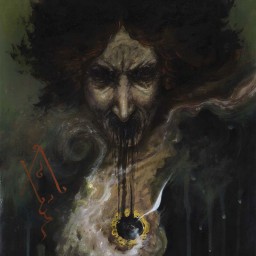
There's a knack to the avant-garde in terms of how measured you want to be with the more experimental aspects of your sound. Swanö and co. here have the tap on full and are just letting the innovation pour out. It does get to the point of nearly overflowing on more than one occasion but never quite becomes a flood.
The death metal parts are great and create all the necessary walls of noise you could ever want to hear on any death metal record. The effects/saxophone/whatever else is going on here do often sit in complete juxtaposition to the rest of the music, which is sort of the point of course. Whilst this is necessary for the overall direction of the album, I find it hard to believe that all of it is needed. There are times when it just sounds experimental for experiments sake and it doesn't really bring anything to the record.
My favourite track on the album is not even a death metal one. Behrial is a kind of ambient piece, using keys to great effect to create an almost Jean Michel Jarre esque soundscape. It is the most settled and assured piece of music on here by a long chalk. It sounds like it perhaps was recorded by a different artist or was mean't for another record altogether though, despite my enjoyment of it.
The album is well named and not many fans would pick this up and expect a familiar structure of death metal like you would on a Cannibal Corpse record. It does however come off as being a tad too chaotic and confusing for me.

Versatile Swedish metal mastermind Dan Swanö at his most eclectic and creative.
Ominous, cryptic, fantastical, ritualistic, avant-garde, complex, atonal, scary, mysterious, surreal. Yes, definitely surreal. This record is bizarre. Alien. But inspired by very real faults and trappings of the human mind.
Pan.Thy.Monium came out of nowhere and grabbed me by the horns in the summer of 2016. I chanced upon "The Battle of Geeheeb" while skipping around a Relapse Records Anniversary Sampler that I had downloaded forever ago and forgotten about. At first, it simply struck me as a curiosity. Its 12 minutes of mazy, bipolar death metal stuck out like a sore thumb from the heapings of conventional Goregrind and Sludge Metal in the sampler. I didn't even know the band was a side-project of Edge of Sanity mastermind Dan Swanö. That is, until occasional scattered listens over the next few weeks finally allowed me to wrap my head around the brilliance of the song, pushing me to research Pan.Thy.Monium further.
Turns out Swanö anonymously created Pan.Thy.Monium to work through a personal identity crisis. This album, Khaooohs & Kon-Fus-Ion, sets to music the final saga of a dreamworld-war between dark god Raagoonshinnaah and light god Amaraah (representing conflicting parts of Swanö's mind). But there are no lyrics. The growls are completely gibberish, probably intended to convey the same fictional language as the god names and song titles. I found all this completely fascinating and immediately sought out the rest.
After about a week of nonstop listening to this masterwork, I think it might just be my second-favorite thing the Swanö brothers ever did after only Crimson (sorry, Purgatory Afterglow). As a longtime admirer of the aforementioned 40-minute opus, I'm surprised I never heard about Khaooohs & Kon-Fus-Ion sooner. It's a concept album of similar scope, split into just two main tracks. It's significantly shorter than Crimson, but without any of the recycling of certain passages, structure or dramaticism. Pan.Thy.Monium bounce freely and haphazardly from one idea to the next, alternating between crushing Swedish Death Metal (the centerpiece), abstract Zeuhl-esque breaks, hard rock melodic guitar leads, doomy passages, xylophones, saxophones, squeaks, squeals, screams and other assorted madness. Sometimes at the same time. Yet, as much as there is going on, it all works and feels like a cohesive composition. And it all rocks. Given all that I just said, the album is surprisingly accessible. The riffs are super engaging and groovy. Each one, though they don't stick around too long, makes a huge impact.
Khaooohs & Kon-Fus-Ion really does personify the chaos of an internal war, with all the schizophrenia, triumphs, confusion and mood-swings it entails represented in the music. "The Battle of Geeheeb" is still my preferred of the two main parts by a slight margin ("Behrial" is a mellow instrumental epilogue in the aftermath after good-guy Amaraah wins the war and "In Remembrance" is silence). But the both are absolutely must-listens for anyone who loves the highly avant-garde, progressive and unorthodox in Extreme Metal. And even if that's not usually your thing, the riffs and melodies are strong enough here to reel in most metalheads. These are the same guys that brought us Edge of Sanity, after all. Just give it a few listens to wrap your head around all that's on offer.
Release info
Clans
Genres
| Avant-Garde Metal |
| Death Metal |
Sub-Genres
|
Death Metal (conventional) Voted For: 0 | Against: 0 |
|
|
Avant-Garde Metal (conventional) Voted For: 0 | Against: 0 |