
Latest Reviews

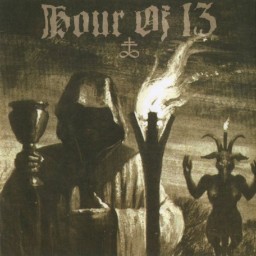
Formed in 2003 by multi-instrumentalist Chad Davis, Hour of 13 also featured veteran doom metal vocalist Phil Swanson on the first three albums, although he seemed to be in and out of the lineup fairly regularly. This debut full-length sees Davis taking on nearly all the instrumental duties, although the album's recording engineer Corey Leonard contributes leads on a couple of tracks, whilst Swanson handles vocal duties. Musically, Hour of 13 is pretty conservative, its traditional doom metal very much stressing the traditional with fuzzed-up, Sabbathian riffs and Swanson having a fairly high pitch and rough edge to his vocals in the vein of Ozzy with a similar intonation and delivery that suggests Phil very much modelled his vocal style on Birmingham's Prince of Darkness.
The production very much emphasises the riffs with the bass and, in particular, the drums sitting low in the mix and taking a back seat to the guitars and vocals. Obviously guitar and vocals are most often the focus but, especially in doom metal, the rhythm section usually has a deeper and more foundational feel than is present here and it would have been nice to hear a bit more depth and richness of tone in the backing track. There isn't a lot of focus on solos here either with Davis only really letting rip on "Grim Reality" and Leonard handling the solos on "Submissive to Evil" and "Allowance of Sin". I don't know whether Davis' reluctance to take on the leads is down to a lack of confidence on his part or it just being something he was less interested in than riffing his balls off. All that aside, those riffs are generally pretty damn good and although there isn't anything new or challenging, they deliver exactly what you would expect from a fundamentalist trad doom act and should satisfy any adherent of the style looking for a new fix. Phil Swanson's vocals suit the instrumentation exceedingly well and his doom metal credentials would have given the band a leg up in the doom scene that Davis would not have reasonably expected with a less well-known vocalist. Lyrically, once more the duo stick to the well-trodden occult path that is a feature / plague of trad doom lyricists since Ozzy intoned his words of doom on their eponymous opener, oh so many years ago.
Overall, I would have to admit that "Hour of 13" is unlikely to garner much attention outside of hardcore trad doom fanatics, but, despite a couple of reservations, I actually think this is a quite endearing example of the genre that is worthy of your time if trad doom is your bag and you just can't get enough Pentagram, Saint Vitus or Trouble. If you constantly need to be challenged or seek musical innovation, however, you should probably move along as there is nothing for you here.
 Sonny
Sonny
Croydon's The River formed in 1999 and released several demos before this, their debut album, came out in June of 2006. They have since undergone an evolution into an alternative slowcore / post-metal act, but this was unmistakeably, female-fronted doom metal and a pretty good example of it at that. Built upon highly distorted, rumbling riffs that present a huge wall of sound, even back then they had a degree of a shoegaze influence, an example of what would be called doomgaze, albeit with a bit more bite than I usually associate with the term. Deep basslines that follow the riffs and fairly sparse and wholly functional drumming (with guitarist Christian Leitch doubling up behind the kit) underpin the lethargic riffing and provide a deep and formidable foundation. Over this wave of distorted rumbling, singer Vicky Walters' clear, clean, but oh so melancholy, vocals describe heartbreakingly of a life trapped in a cold, abusive relationship and the hopelessness and despair such a life means for the victim. It is well worth the time to read and get to know the lyrics because it really does twist the experience of the album into a whole new dimension and is as affecting and, frankly, upsetting as any doom metal I have ever listened to. It is heavy stuff, but doom metal shouldn't be afraid to face real-world suffering if it is serious about exploring melancholy and loss, not just loss of others, but of self also. You cannot fail to have empathy for someone who has been stripped of any identity of their own and who are left feeling empty and invisible.
As I said at the start, the band eventually went in another direction, with Vicky Walters leaving around 2010, but with this debut they released one of the most profound doom metal albums it has been my privelege to hear and it still stands as one of my favourite female-fronted doom releases.
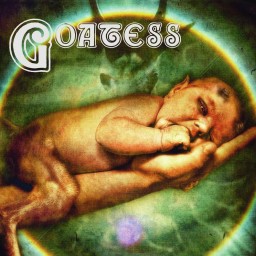
Goatess were formed in 2009 as Weekend Beast by guitarist Niklas Jones and Chritus (Christian Linderson), veteran vocalist of Count Raven and Lord Vicar. They changed their name to Goatess in 2012 and released this debut album the following year. If you are famiiar with Chritus' previous bands then you will be on pretty firm ground here as Goatess have one foot firmly planted in the traditional doom camp of those bands, although the other is very much rooted in the stoner tradition of acts like Sleep and Kyuss. Chritus said after the album's release that the songwriting was done by jamming in the rehearsal room and I think you can feel that approach manifested particularly in Jones' trippy guitar leads which feel a lot like the more jam-oriented stoner grooves of those acts. The tracks are quite lengthy, generally from seven to eleven minutes, so there is ample scope for the laid-back six-string flights of fancy to weave their spells.
The riffs are still mostly derived from the trad doom template, although a track like "Full Moon at Noon" is much groovier and more rooted in stoner metal and even desert rock than actual doom metal. Meanwhile the two-part "The Oracle" begins with its first section sounding like latter-day, psychedelia-obsessed Cathedral, although the second part is one of the heaviest and doomiest tracks on the album with the forceful drumming of Kenta Karlbom playing a significant role. Closing track "Tentacles of Zen" even features an extended eastern-flavoured instrumental breakdown that wouldn't sound out of place on "Sgt. Pepper". The result of this trade-off between heavy riffs and trippy guitar leads brings to mind 90s Electric Wizard, albeit without the dark edge I associate with Jus Osborne's crew and with Chritus sounding so unlike Osborne the comparison doesn't entirely hold up successfully, although I still feel it is valid. Overall I like how this dynamic between the heavy and the trippy works and it has produced an album that comes across as a little bit different and a band that has a definite and particular vision for how they want to sound.
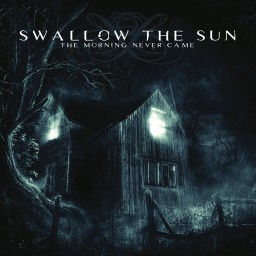
Melodic Death Doom, perfected. The Morning Never Came is the debut album of the Finnish lords of gloom, beauty and despair. While I adore all of Swallow the Sun’s albums, I must confess that their debut is my favorite of all. The band simply crafted the absolute peak of the genre on their first try.
The Morning Never Came is, like most Doom, dark, very melancholic, atmospheric, and somber. But it’s also passionate, lush, melodic, equal parts beautiful and crushing. Undercurrents of depressive hopelessness and apocalypse are lit up by moonbeams of longing and twinkling starlight of love from long ago. Riffs and leads on this album are phenomenal; every single song has multiple that could go down as some of the most iconic of the genre. The bass is amazing, smooth and melodic, which is rare for Doom; the mix does it wonders so you can hear the attention to composition in the basswork. Similarly, the drumming is nice and active, intelligent, swapping between funereal and punchy to serve the songs. The keys are that extra layer that bring this from S tier to SS tier; so beautifully lush, simple but very, very memorable, backing the chords and leads in a way that solidifies each song as extremely memorable. They never compete with the guitar leads, instead adding another layer of backing chords that also avoid competing with rhythm guitar by sticking to higher registers. Just genius compositional work. Last but certainly not least, fantastic vocals that can range from death growls to black shrieks, even some cleans here and there, and morose yet captivating lyricism.
The Morning Never Came is not only one of my favorite albums ever, but one of the most consistent and flawless. There isn’t a single thing about this album I could point out that I don’t love. Even the production and mixing are perfect. The reverb is wonderfully atmospheric but doesn’t sacrifice detail. The layering is just enough to make the album sound lush, but perfectly restrained to ensure every instrument is audible and serving a specific purpose. The craftsmanship here, on all levels, is masterful.
The thing about albums like this is, beyond all the technical aspects, the compositional aspects, the musicianship, the production, it still has one more thing going for it: the emotional value. These songs are deeply affecting, on every front. The melodies are heart-wrenching, the vocals are powerful, the keys provide that plastic synthetic beauty that contrasts so well with the crushing devastation of the rhythm section. The mood here is so damn gloomy. The gloomiest album I’ve ever heard. Every song sounds like finding that which is most important to you broken and buried in the snow. Some songs instill the wrath that follows, and others the grief, but there’s always loss, there’s always melancholy, and there’s always cold, bitter snow, with no sign of the morning in sight.
 SilentScream213
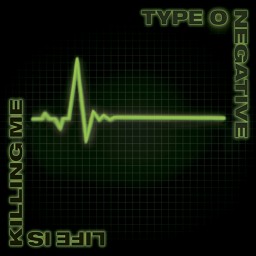
After the doomy intro “Thi13teen,” I was met with the first Type O Negative song I’d ever heard that sounded really, truly great. “I Don’t Wanna Be Me,” as simple as it is, is carried by a guitar lead that is, in essence, the perfect upbeat Gothic Metal riff. Drumming is bouncy, chorus is catchy, it’s full of melancholic energy, almost emo honestly.
Now, I also realized immediately that I’d heard this somewhere before, in fact I was quite certain Anathema did this song, and I was quite certain it was on Alternative 4… That’s right, it was track 3, “Empty.”
No, the songs are not identical, but it’s a very, very clear influence.
However, that’s not a bad thing. Type O Negative were one of the first Gothic Metal bands around, and one of the most influential. But “Life is Killing Me” is the first album that really sees them going from influencer to influenced, taking inspiration from the plethora of Gothic Metal that had arisen since their inception.
Since I think a good 95% of Gothic Metal bands that came after are way better than Type O Negative who influenced them, that’s a big plus for me.
Unfortunately though, “I Don’t Wanna Be Me” is far and away better than almost all the following material. Most of the other tracks fall victim to Peter Steele’s atrocious lyricism and goofy antics. There’s some nicely dense compositions going on here, and the band has all the right ingredients to make fantastic songs. Unfortunately, the band members work against one another. Peter Steele is constantly sabotaging any good songs with his embarrassing shenanigans. The keys/synths occasionally add in sounds that sound way too playful or just contrast the otherwise dark atmosphere. The guitar leads are great sometimes… but pretty much everytime the drums switch to doomy plodding, which is when a GOOD RIFF is most necessary, the guitars decide to be as boring as possible.
Thankfully, “Anesthesia” towards the end of the album showcases the band putting all their potential songwriting prowess to good use a delivering a genuinely melancholic masterpiece of gloomy, doomy, Gothic Metal. The density of this track is fantastic, and all the layers contribute to a hazy, moody atmosphere. Even Peter’s lyrics and delivery on this song are good!
“The Dream is Dead” is a good closer as well, resulting in this album being a plethora of eclectic, dense, but ultimately mediocre Gothic Metal bookended by genuine quality and highlights among the genre.
Of course, if you like frat boy humor and less conventional songwriting in your Gothic Metal, I suppose you will probably just enjoy all of it. But I don’t.
Still, it is easily my favorite Type O release so far.
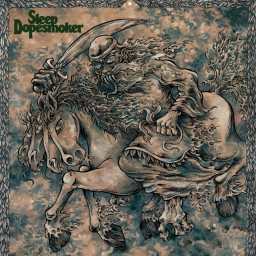
Doom Metal is a mood-driven genre of Metal that focuses on moody atmospheres and negative emotions like melancholy, mourning, or even misanthropic hatred. At its brightest, bittersweet and longing. It uses slow, plodding tempos to help emphasize the funereal atmosphere, evoking the lethargy of depression, a funeral march, or a dying villain’s last hurrah. The heaviness embodies the crushing weight of despair, solitude and alienation. Every aspect of the genre is an ingredient in emphasizing the darkest of human emotion.
Drone Metal is a texture-driven genre of Metal that focuses on building atmosphere using extremely slow, drawn out, and usually repetitive guitars, with special emphasis on the textural aspects that can be achieved with the guitars . Rather than evoking mood or theme, the style typically opts to home in on creating a droning wall of fuzzy, hazy, bassy guitars that provide a sort of “white noise” with their textural assault. Drone Metal styles commonly employ simple instrumentation and repeat patterns for extended lengths of time, compositionally sharing similarities with traditional Drone and Noise music.
If one can understand this, one can come to the sensible conclusion that Dopesmoker, despite being labeled with the disastrous misnomer “Stoner Doom,” is NOT at all a Doom Metal record, but hybrid Stoner and Drone Metal record.
I’m a massive Doom Metal fan. This album lacks every single quality I find enjoyable in Doom Metal. So it’s either A) the worst Doom Metal record ever (incorrect) or B) not Doom Metal (correct).
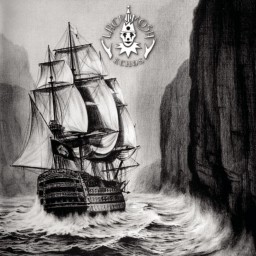
A nearly 13-minute orchestral darkwave overture is not how I’d prefer to start my METAL album, but the more one listens to this album in full, the more it becomes apparent that this is just barely a Metal album at all. Most, though not all, of the songs have electric guitars, but they are mostly just a supporting instrument, playing simple chords and not even featuring very prominently in the mix. The drums are similarly simple and never a focal point.
What IS a focal point are the orchestral compositions and vocal performances. And they are… good, mostly. Good. But not great. The compositions on this album are closer in style to the classical era of music. And I don’t mean this as a drag against the great masters like Mozart and Beethoven, but the classical era is a lot of sticking notes together that are in the same key, harmonize well, and evoke absolutely nothing.
The last thing I want from a Gothic Symphonic Metal record is a lack of emotion. But that’s really what this is – a few overblown songs with lush compositions and a bunch of notes that sound good together, but don’t really evoke anything. I want Gothic music to be sadder, more melancholic. But this leans more into the operatic side of the genre. The songs and soundscapes are epic, but again, the guitars and drums are usually quite boring, which makes it difficult to enjoy as a Metal album.
What about as a Classical album? Maybe it works? I dunno. I’m beginning to sound like a broken record, but I like my classical music to focus on mood and atmosphere, to highlight melodies that evoke something within me. Just not feeling that with this album.
It’s lush, and there’s a lot going on. Even the quieter moments are layered with soundscapes and melodies. I appreciate the compositions. With better drums and guitars, I may have really liked this. But the album is held back by the simplicity of the METAL aspect of it, despite the deep layering and complexity of the Classical elements.

According to The Infallible Denizens of RateYourMusic Dot Com, as of writing this review in the early winter of January 2026, “Boris at Last -Feedbacker-” is the *checking charts* 13th greatest Metal album of all time, and if recent years are anything to judge by, still rising.
Here’s what I can tell you. Is this album one of the top 13 Boris albums of all time? Yeah, probably. Out of the ones I’ve heard, it’s easily one of their better albums, but they have like 69 albums so I can’t say for sure yet. Is it one of the top 13 Drone Metal albums of all time? Well, again, this album is labeled as a Drone Metal album by The Infallible Denizens of RateYourMusic Dot Com despite not having a single Drone Metal song on it, so, no, but if it counts, then it would possibly have a fair shot.
Boris at Last -Feedbacker- is inoffensive. It’s decent background noise. It does feature one guitar solo that is actually quite good. It features zero good riffs. It features zero interesting drumming, but the hypnotic, repetitive drumming on “Untitled” (2) works in the song’s favor. It features some vocals, but they aren’t special in any way, and most of the time they aren’t there. It probably features bass, but it didn’t do anything interesting. Sometimes the fuzzy, noisy textures are decent, often they are boring and entirely unevocative. “Untitled” (2) has a little bit of nice build up and progression in it, every other song goes absolutely nowhere, but “Untitled” (3) makes up for it a little by being the only song with a modicum of energy.
Instead of “Boris at Last -Feedbacker-” being in the top 13 Metal albums of all time, here are 13 Metal albums that I prefer to “Boris at Last -Feedbacker-” :
St. Anger – Metallica
Metal Magic – Pantera
Octagon – Bathory
Evolution – Disturbed
Cold Lake – Celtic Frost
Battles – In Flames (5-star album by the way)
Forbidden – Black Sabbath
Demolition – Judas Priest
Supercharger – Machine Head
Nation – Sepultura
Sounding the Seventh Trumpet – Avenged Sevenfold
Virtual XI – Iron Maiden
Volume 8 - The Threat Is Real - Anthrax

“Why did the bear sing to the rattlesnake?”
“I dunno, why?”
“Because it was Thursday!”
The two start to laugh heartily. And then, one by one, everyone around them begins laughing. The laughing evolves into hysteric hollering and cheering, and everyone in the room seems to concede that this was the funniest and best joke they’ve ever heard.
But I’m not laughing. I don’t get the joke. And it’s not because I missed some crucial detail, some hidden setup. No, it’s just because the joke doesn’t make sense to me. Really, I can’t fathom how it makes sense to ANYONE. But everyone else loves it. Is it just the bandwagon effect? Herd mentality? Did people start laughing just because they saw others laughing, or did they really think the joke was THAT funny?
And that’s how I feel about Akuma no Uta. Well, Boris in general, basically, but especially Akuma no Uta. Akuma no Uta is Stoner Metal with really bad production that is played decently enough. It’s pretty empty, with none of the psychedelic synths that can make Stoner music interesting. Only three people perform and it doesn’t sound like they overlay any extra layers, so the music is minimal and shallow sounding. They jam on a few tracks, and they’re okay at it, nothing transcendental. It doesn’t have any good riffs. The drumming is pretty fun, I guess. The lyrics are cryptic and the vocals are nothing special. It literally sounds like a group of friends started jamming in their garage and recorded it the same day. Not an exceptionally talented group of friends, just an average group of friends.
But in the eyes of the world, this is a top 5 Stoner Metal album of all time. I have a sneaking suspicion that if this album were not released by Boris but instead by a band no one’s heard of from a country that isn’t cool (like the USA or England) no one would care about this. But I live in a world that worships Boris, so I guess this is the peak of Stoner Metal.
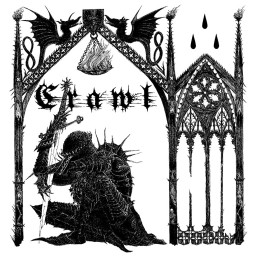
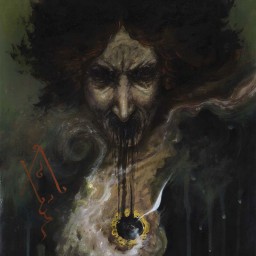
Woah!! Come to halt there and apply the handbrake, taking the car out of gear please. Did you just say, “drone metal”? I mean, I know what that is, and usually I don’t like it, but I have been nodding along appreciatively for the past few spins of this one. Maybe we should hit play again and go around the block a few more times to make sure one of us isn’t wrong? That, or I could just admit that my tastes are broader than I thought and we can all just get on with our lives. Either way, as it turns out, Damned is a great record, whatever it is.
Before I had even picked up on the details for this one I had picked up on the Hell comparison and was therefore delighted to see that MSW was involved in the record. Crawl certainly inhabits that same claustrophobic, smothering space that Hell revels in yet at the same time I get a lot of Primitive Man in Crawl’s sound, which is equally high praise also. Considering I had never heard of Michael Engle until this release, it was surprising that his output musically was limited to this solo project and him also being the one-time drummer of a progressive sludge band called The Grasshopper Lies Heavy. I can see that he also toured with Boris in 2022 on their US tour, so this is a man with some serious heavy credentials.
This combination of rattling bass and oppressive atmospheres that dredge their way through various elements of noise, doom and drone creates a unique sense of discomfort, of solid things being displaced. The opening track is little more than heavy atmosphere, but it works so well as an introduction to the rest of the album that it is in its own way, perfect. I don’t know that any of these tracks work particularly well in isolation, with my thinking being that they are best consumed as part of a whole album sitting. There are no finger buffet style pickings here, Damned is an experience to be immersed in. Herein could lie potential weaknesses for some listeners seeking a more immediate listening experience. It took me a few goes to understand exactly how to listen to Damned before its true majesty became obvious. Glad I got there though.
 Vinny
Vinny
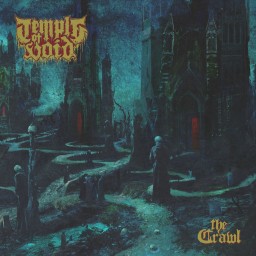
I have been all over Temple of Void for about a decade now. Their doomy and cavernous version of death metal has produced some of my favourite death metal albums of recent years, peaking with 2020's "The World That Was". What sets Temple of Void apart is their willingness to tweak and tinker with a well-established style of death metal and in so doing produce records that aren't entirely predictable, but which still contain plenty of what is recognisable of the old-school death and death doom metal philosophy. Needless to say I had high hopes for "The Crawl" and although I had sat on it for a few months following its release in March, it has certainly grabbed my attention now that I have finally got round to checking it out.
Opening track "Poison Icon" kicks off, straight out of the gate, in formidable style with a driving riff overlaid with a searing solo, ensuring that the listener's attention is grabbed from the very start. This isn't the whole story with "Poison Icon" though as it soon takes on a gothic flavour with a marked Paradise Lost influence, although it still remains firmly ensconced on the OSDM side of the fence. Further intense soloing leads the track out and it is apparent, even by the end of track one, that Temple of Void have stepped things up both in songwriting terms and in intensity of delivery. "Godless Cynic" features a more dissonant style of guitar lead laid over a mid-paced, chugging rhythm track that feels ominously hulking and portentious and in direct contrast to the opener, leaving us in no doubt that the band really mean business this time round and intend to stretch themselves more than ever. The title track is up next and is a slower, doomier affair with a riff that is almost as much rooted in traditional doom metal as it is death metal, weirdly like I would imagine Black Sabbath sounding if they played death metal! "A Dead Issue" is another slower-paced affair that begins with a spacey synth intro before launching into its melodic main riff and which features jangling, weirdly discordant leads that morph into soaring solos.
"Thy Mountain Eternal" is a somewhat bombastic, progressive-sounding affair with several musical twists and turns, occasionally feeling reminiscent of late metal-era Opeth only with more Dave Gilmour-ish soloing, although for me this is the album's weakest offering. Penultimate track "Soulburn" is one of the band's most melodic and features riffs and verses that are almost catchy, especially with the synth overlay, once more reminding me of Paradise Lost and providing one of the band's more memorable offerings. Closing with longest track, "The Twin Strangers", the band go out in style with a track that kicks off with a brooding, rampaging death metal riff before hitting the brakes on a hulking end-section which builds with interweaving twin leads before fading into the cosmos in a haze of ambient synths.
Now, all this may make "The Crawl" sound like an eclectic and varied affair and, to a certain extent, it is but, to be clear, this is still an album that has its roots firmly dug into the OSDM ethos, no better illustrated than by Mike Erdody's vocals which never shift from their growling, gutteral death metal roar. I think the album actually strikes a nice balance between innovation and tradition, each track very much fitting together and complementing each other, making for a very rewarding listening experience that presents variation whilst still giving the OSDM fan plenty of their favourite poison to savour. The songwriting and technical prowess of the band is continuing to blossom, the production is crystal clear throughout, bass and drums getting every bit as much attention as the guitar and vocals and I think with repeated listens this may well establish itself as my favourite Temple of Void album, ultimately dethroning "The World That Was".
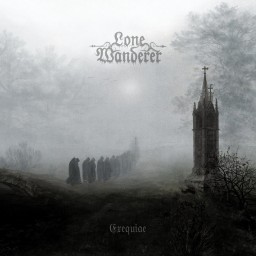
Despite having formed in 2014, only now have Lone Wanderer attracted my doom-hungry gaze. To date the german four-piece have released an album-length EP and three official full-lengths, with "Exequiae" being their latest and, at 72 minutes, longest. Kicking off with the almost twenty-five minute, "To Rest Eternally", Lone Wanderer set out their stall from the outset. The opener displays a quite clean version of funeral doom metal that, at times, almost feels like it strays into post-metal territiory. It doesn't always possess the sheer crushing immensity of an Esoteric or Ahab, but rather it utilises melodic guitar leads to provide some lightness to contrast with the churning morass of sluggish riffs and plodding percussion in order to present a more emotionally charged atmosphere. This doesn't mean that this is lightweight stuff, by any means, it is still fundamentally funeral doom after all, but it does feel like the band want to tug at your heartstrings whilst they smother and envelop you in their wall of sound. The foundation from which the guitar leads soar is further bolstered by the impressive rumble issuing from the throat of vocalist/guitarist Bruno Schotten who has got the archetypal funeral doom abyssal growl down pat. The songwriting is also of a high standard and, despite its length, "To Rest Eternally", doesn't get stuck in any particular rut and manages to keep itself sounding interesting and engaging with nuanced changes in melody and tempo, even calming to a gentle, spoken word section at one point from which it builds to its apotheosis.
This mighty opener is followed by the albums two shortest tracks, "Existence Nullified" and "Life's Lost Vanity" both of which sound quantifiably heavier and while their leads are still fairrly melodic in nature, they aren't as light or as airy as those on "To Rest Eternally", consequently reinforcing the depth of darkness of both tracks' tone rather than providing contrast to it. "Anhedonie" marks a return to the slightly lighter tone of the opener, but it doesn't quite hold together as well for me and does feel like it gets bogged down a little in the middle. It isn't a bad track by any means, but it doesn't resonate with me as much as the first couple of tracks, Closer "Epistemology of the Passed" is another lengthy affair, clocking in at over 16 minutes and is once more a trade-off between both light and dark musical motifs, the interplay and contrast between the two opposing forces ultimately being the core of the album and the engine which drives it pretty much from start to finish.
Overall I am an enthusiastic convert and whilst I do love me some really heavy and crushingly dark funeral doom, Lone Wanderer have managed to captivate me with their more contrasted style, chiefly because it is written and performed so damn well. I am certainly going to have to have a dig into the band's earlier releases, but for now this is destined to find its way onto my favourite funeral doom metal list and is sure to feature in my year end list too.
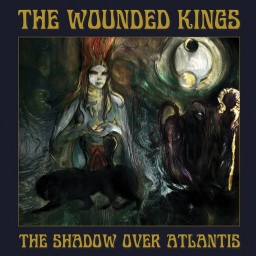
The Wounded Kings were a traditional doom metal band from Dartmoor in Devon who never really gained much traction outside of hardcore doom metal enthusiasts, which is a great shame because they were really great exponents of the doom metal ethos and were superior to many better known acts. They formed in 2004 and released five consistently strong full-lengths and a great split with Cough before calling it a day in August of 2016. Released in 2010, "The Shadow Over Atlantis" was the band's sophomore release, following 2008's very solid "Embrace of the Narrow House" and, for me, is the band's best release. They had a lineup which underwent several membership changes, with the first two albums being produced by the duo of the band's only ever-present member Steve Mills (guitar, bass, drums, keyboards, vocals) and George Birch (guitar, vocals). Mills was actually the original drummer with Lords of Putrefaction, the death doom precursor to Electric Wizard that featured Jus Osborne on guitar and vocals and so has a certain degree of doom metal underground cred too.
"The Shadow Over Atlantis" is essentially a concept album that is a lament to the passing and destruction of ancient civilizations with Atlantis being the metaphor for the eventual passing of all societies, although there is a suggestion in final track "Invocation of the Ancients" that, through the deployment of dark arts, these ancients can be exhorted to return. The band strives for an epic scope as befits the span of the concept, with the album featuring four fairly lengthy, huge-sounding tracks to drive the narrative while a couple of gentle interludes provide some contrast and respite from the lumbering rumble of the meat of the album. Even though the riffing is pretty much relentlessly huge and slothful it does have an inherent melodicism which is also mirrored in the vocals which are entirely of the clean variety and have a really nice, washed-out gothicness to them. Generally the tracks start off with the riff and vocals dominating the early part and then the guitar leads taking over the latter part and it is at these points that the material is given an epic twist. The leads take flight, soaring with mesmerising fluidity in psych-filled flights of fancy that seem to carry the listener above the doom and destruction that is being wreaked on the unfortunate world below, often feeling quite jam-like, although from the sheer professionalism of the sound I guess they are perfectly composed to sound that way.
Production-wise, the sound is quite crisp and clean and even the distortion on the riffs comes through surprisingly clearly. One criticism, if I were to go that far, would be that the bottom end and the rhythm section in particular doesn't sound as deep and foundational as maybe we have come to expect from this style of doom metal. That, however, is nitpicking a little because the material here is so strong and well-performed that it feels curmudgeonly to try to pick too much fault here. Essentially, for me, "The Shadow Over Atlantis" is a top drawer doom metal release and wouldn't be out of place alongside the best albums from the likes of Pallbearer or Monolord, so if you enjoy either of those two I would strongly urge you to check this out. Unfortunately it is impossible to find on streaming, so YouTube may be the only source available outside of physical media.
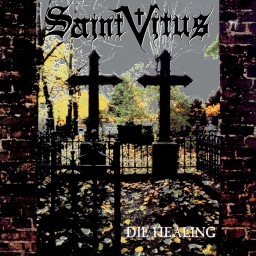
In my review of Saint Vitus’ self-titled debut album, I called out my enjoyment of Scott Reager’s vocals, highlighting their deranged style being a perfect fit for Chandler’s guitar sound. Just as with the debut album, Reager’s performance is front and centre on Die Healing also, yet this is never at the detriment of anything else on the record. For a guy who had straight up gone to ground for a decade, he appears to have just walked back into the studio like he had just nipped out for ten minutes to get a packet of cigarettes and some bourbon. There is no scenario in any parallel universe whereby Saint Vitus records this album with any other vocalist, and it works at all. He’s creepy to the point of having a skin-crawling effect. Tracks like ‘Dark World’, ‘Let the End Begin’ and ‘In the Asylum’ are perhaps unrivalled within my doom listening experience to date in terms of that true force being formed by this perfect marriage of the vocals and guitar.
Listen to the psychedelic musings on ‘Trail of Pestilence’ and just try and keep your jaw off the floor. Die Healing is a real all round band record though. For all the waxing lyrical I am doing about the vocals and guitar the album would not be anywhere near as successful without the drums of the late Armando Acosta and the bass of the also sadly departed Mark Adams. ‘Sloth’ might be one of the most appropriately named doom tracks in the history of the genre, it is so oppressively heavy it reaches the point of suffocation. It is albums like this that are the reason why I switched from The Guardians into The Fallen clan. The atmospheres here are so wonderfully threatening in such an effective yet completely inoffensive way; they are a genuine by product of the instrumentation, just so unforced sounding and organic in nature.
My only real criticism of the album is the lacklustre closing track. They should have closed the album with ‘In the Asylum’ in all honesty as anything trying to follow that was going to be struggling. ‘Just Another Notch’ is primetime filler unfortunately which even Reager’s vocals can’t save. Oddly, he sounds the tamest of all on this track in comparison to the others. Final track aside, there is much to be celebrated on Die Healing even if it marks the end of the band for at least a decade.

Draconian return with album number eight in hopes of maintaining the momentum from their last two triumphant albums: Sovran and Under a Godless Veil. Draconian have been one of the most consistent and one of the best death doom metal bands of the 21st century and In Somnolent Ruin is no exception.
One thing that this band are remarkable at is creating tension. Some of that can be attributed to the unbearably slow grooves on "The Face of God" and "Misanthrope River", but some of that can be attributed to harmonic dissonance as well. Tracks like "The Monochrome Blade" have an eerie chord progression to them and they immediately stand out amongst the more romantic/passionate yearning throughout most of the albums promotional singles, including "Anima".
Despite the early returns, I actually did not mind the return of Lisa Johansson on vocals. In Somnolent Ruin is an album that is trying to follow in the footsteps of Under a Godless Veil, while at the same time bring in a nostalgic sound that also harkens back to the classic LP's like Arcane Rain Fell. Other reviews for this album suggest that they wanted more of a nostalgia trip with a return of the conceptual album, with even more of the quasi funeral doom that was present before. But in reality, Lisa is just returning to a band that has been in pristine form for just over a decade. I see no need for this band to just pack it up and start playing their old stuff again. And besides, Lisa has done a phenomenal job on In Somnolent Ruin anyway! The opening line of "I Welcome Thy Arrow" is such a harrowing moment for Lisa and the rest of the band, before Anders enters the fray with his iconic harsh scream that feels both contemplative and resolute at the same time.
This album is at its best when its playing into the classic death doom sound. The production is superb; produced almost all in house. The rhythm guitar and bass play with authority and power, while the lead guitar on "Lethe" and "Cold Heavens" is stunning. The percussion work is doing lots of heavy lifting as well; even though it might not seem like the drums are doing very much, the mixing allows those limited hits of the snare or kicks of the bass drum to resonate and drive the music forward. When the dreamy interludes happen ("Asteria Beneath the Tranquil Sea"), they sound good just as they did on Under a Godless Veil and give the album a sense of purpose. Unlike the Genghis Tron album I reviewed yesterday, these interludes and just that; they come in and bring down the intensity and volume of the record for only a moment, before the rhythm guitar, bass and drums return while Anders howls once again in the tried and true Draconian form.
While the album is really good and an easy recommendation for those who like Draconian or death doom in general, I wouldn't call it a masterpiece. Draconian fans know that this discography is titanic in quality, so a record that has aspects that feel very predictable may be a bit concerning.
Best Songs: The Face of God, The Monochrome Blade, Misanthrope River
For Fans Of: Trees of Eternity, My Dying Bride, early Katatonia
 Saxy S
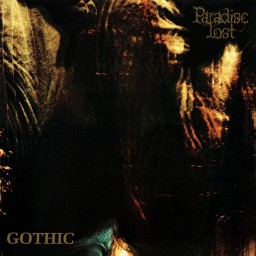
Released in 1991, ‘Gothic’ is the second studio album by British gothic metal legends, Paradise Lost. I didn’t like the bands’ first album, finding it too gothic, growly, doom and gloomy, but perhaps things have developed on from there with this follow-up album?
Nope. Not really.
There’s no doubting the impact Paradise Lost had on the British death/doom metal scene in the early 90’s. But this music just isn’t for me. I find it too dreary. Too depressing. Too boring. The endless, guttural growling ruins everything for me. The guitar work has improved since their previous album, but not enough for me to really dig any of the tunes.
It’s listenable, in the background, and mainly because it’s only 40 minutes long! But overall, this isn’t for me. Their later stuff, which incorporates keyboards and more melodic vocals are more my thing. I’ll stick to those instead.
 MartinDavey87
1995 saw the release of Saint Vitus' seventh full-length album, "Die Healing" and marked the return of original vocalist Scott Reagers to the fold. It followed what is widely considered the band's weakest album, 1992's "C.O.D." which, following the departure of Wino, had featured Count Raven's Chritus on vocals. Now, as much as I love Wino's grizzled vocals, I think Reager's more eccentric style actually better captures the soul of Saint Vitus, so his return was well-timed and he is on fine form here. "Die Healing" was intended to be the band's swansong (although that notion has consequently been proven premature) and it seemed apt for them to end as they began with Reagers behind the mic.
Kicking off with one of the band's best tracks, "Dark World", Die Healing immediately exorcises the ghost of "C.O.D.'s" mediocrity and points towards a band intent on going out in style. Dave Chandler has an ear for simple but effective doom metal riffs and he sounds unlike anyone else with an instantly recognisable and unmistakeable guitar tone that many have tried and failed to adequately reproduce. There is a certain rawness to the best Saint Vitus material, derived from their early days touring with hardcore punk bands, that makes them sound like the sort of band who have just rolled up in a rattling old Transit van, unloaded their own battered gear, plugged it in and just started playing. Now while I am certain that is far from the truth, it doesn't alter the fact that when they are at their best that is exactly how they sound and personally I love that about them.
The tempo here is generally pretty slow, although they sometimes switch it up a little to provide contrast. "Let the End Begin", for example, is one of the album's most sluggish tracks, but contains an uptempo mid-section where Chandler lets rip with a much more energetic riff and guitar solo before reverting back to the creeping grind of the opening section. In fact the guitar solos are generally pretty shred-like with DC going fret-crazy and teetering on the edge of feedback, almost Hendrix-like at times, as on "Trail of Pestilence" for example. The band are also unafraid to lampoon themselves and the wider doom ethos a little bit, with "The Sloth" telling an apocalyptic tale of a marauding Kaiju-like sloth creature slowly laying waste to all around it like a slow-motion Godzilla.
Saint Vitus are unquestionably my favourite of the very early doom metal bands and whilst Trouble, Pentagram et al have their moments for sure, I think SV are the most consistent, C.O.D. aside. Whether it is Reagers or Wino on vocals they just encapsulate that filthy, grizzled aesthetic that so typifies the earliest trad doom scene and which lends them an air of authenticity that feels like they could turn up to play at your local pub on any given night. Great band, great album check it out if you haven't already.
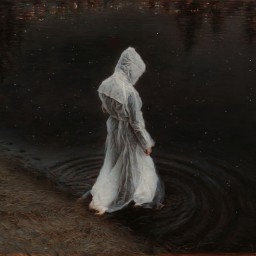
"Vaenir" is this Gothenburg doom trio's 2015 sophomore full-length, following relatively hot on the heels of the debut, "Empress Rising" from the previous year. They play lengthy distorted doom metal dirges with towering chords, sloth-like pacing and a 'washed-out' vocal style that feels like it is coming to you across huge cosmic distances. Despite the thunderously robust foundation laid down by bassist Mika Häkki and drummer Esben Willems and the undoubted weight of the riffs, the vocals impart a certain ephemeral quality to the atmosphere and act as a spiritual counterpoint to the immensity of the bottom end.
Monolord have a distinct blueprint for how they want to sound and pretty much stick to it throughout. There is very little variation in pacing within tracks, no sudden changes of gear to spice things up, these Swedes being pretty much fundamentalists when it comes to doom metal. If you are impatient for variety and innovation in your listening diet then chances are that Monolord will hold very little appeal for you and you may be better served moving on elsewhere. More recently I feel they evolved a slightly more lightweight sound with hints of psychedelia thrown in, but back in the heady days of 2015 they were all-in on the crushing repetitiousness of 'true' doom metal and were unrelenting in its delivery.
And that, not wishing to sound in any way dismissive, is pretty much everything there is to know about "Vaenir". How you feel about that depends on what you want from your metal. Me, I am more than happy with an album of heavy and uncomplicated doom metal done well and with an unpretentiousness that speaks to a band fully committed to shaking the cosmic walls.
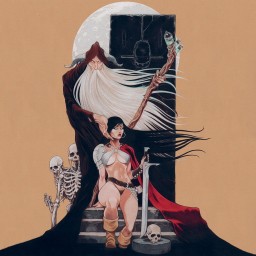
I have been a casual fan of Khemmis since first coming across their sophomore "Hunted" back in 2016 shortly after its release. Consequently I checked out the debut and, at that time, I wasn't particularly knocked-out by it I must admit. So, a decade later and with a new album on the shelves, I figured time was ripe for a revisit.
Firstly it must be mentioned that this is much more doom metal oriented than their later material, with Pallbearer most often being justifiably cited as a touchstone. "Absolution" maintains a significant percentage of traditional heavy metal in its doom metal DNA, pushing it into epic doom metal territiory. The production and guitar sound is very much in the doom metal milieu however, with a deep and resonant fuzziness that is typical of traditional doom metal and with a certain bluesy feeling to the riffs. The guitar solos sound cleaner and clearer than the riffs and are enthusiastically deployed with an exuberant relish that hints that this is where the guitarists Ben Hutcherson and Phil Pendergast really get their kicks, giving off a Brian Robertson / Scott Gorham, Thin Lizzy vibe. The two also share vocal duties and this is probably the album's weakest point as they alternate between reasonable cleans and frankly unconvincing deathly growling bellows. The rhythm section of bassist Daniel Beiers and drummer Zach Coleman are solid enough, although they seem to be playing well within themselves and keeping it pretty simple.
I must admit that I found myself enjoying this better this time around than I did back then, although I still have reservations. Sometimes the soloing sounds divorced from the meat of the track itself and too often feels shoehorned in whilst I feel the clean vocals are strong enough to carry the material without resorting to the unnecessary and unconvincing death growls. The riffs are generally pretty cool though and when the guitarists do hit a sweet spot between riffs and solos, such as on "Burden of Sin" it is pretty engaging stuff. They saved the best until last and close the album out with the longest and best track, "The Bereaved", which is where the previously mentioned Pallbearer comparison is most apparent. Ukltimately this is a solid but flawed debut, but the band would get better next time around.
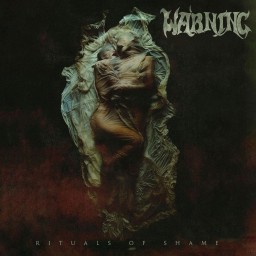
I have never made any secret of the fact that Warning's masterpiece, "Watching From A Distance" is my all-time favourite album, so I can probably be forgiven for going into "Rituals of Shame" with inflated expectations, although I must add that those expectations were tempered by equal parts trepidation that the band may drop the ball and turn in an album that sees them just going through the motions like so many acts returning after a long period away and so sullying their legacy. So now I have the beautiful oxblood red vinyl platter on my turntable the obvious first question must be, "do I think it is as good as WFAD?" Well, the answer to that is not so simple because it is impossible to compare an album that has been so meaningful to me for two decades with one that has been out mere days. So am I at all disappointed with this third Warning full-length then? Absolutely not and while it hasn't initially hit me on as deeply an emotional and personal level as its predecessor this is still an amazing piece of doom metal melancholy. Patrick Walker just 'gets' doom metal in a way that few others are able to. It isn't just about leaden pacing and towering riffs, Walker doesn't merely write songs that are sad and sorrowful, but also dig deeply into his emotional vulnerability, laying bare his soul in a way which will either resonate with the listener or it won't. If it does then a connection with the material is possible that transcends mere grooves on a plastic disc and if it doesn't it may be dismissed as overly sentimental.
The most striking thing about "Rituals of Shame" is that it doesn't at all feel like an album released two decades after its illustrious predecessor by a band that had been on hiatus for most of the intervening years whilst Patrick Walker concentrated on his 40 Watt Sun project. There is such a remarkable consistency of material between the two albums that you would be forgiven for thinking that it had been recorded in 2010 and only just seen the light of day. In fact the debut "Strength To Dream" is further removed artistically from "Watching From A Distance" than "Rituals of Shame" is, despite there only being a third as much time between the two. The really great thing, though, is that the latest isn't merely a lazy rehash of the former. Despite the similarities, "Rituals of Shame" isn't merely WFAD part two, it has its own character and feeling. Inevitably such a monumental album will cast a long shadow over its younger sibling, but I am convinced that in time it will emerge from that shadow and stand tall in its own right.
WFAD had an indefinably wistful quality despite the huge, doom-laden chords and foundational stolidity of the rhythm section, whereas RoS feels a little less ethereally affecting. This is partly down to the heavier-handed production and increased compression, but it is also due to the inclusion of second guitarist Wayne Taylor who has played live shows with the band since 2016, appearing on the 2021 Roadburn Live album, whose second guitar adds depth and rounds out the sound, making it feel more down-to-earth. Of course, the absolute core of Warning is Patrick Walker's vocal performances and this is where "Rituals of Shame" may even outdo its predecessor because, as I alluded to when reviewing the "WFAD Live at Roadburn" album, Patrick's voice seems to have got even better with time. His vocals sound more varied and expressive now in middle-age than they did as a young twenty-something and his ability to wring genuine emotion from the receptive listener with a mere twist of his voice is undiminished.
I have to say that I am more than happy with this new offering and it has rarely been off my turntable since it arrived. Whilst it is consistent with its predecessor it is undeniably an evolution rather than a rehash and in time I think it may take on a life of its own maybe being a new generation of doomheads' introduction to the band and becoming as significant to them as WFAD has been to me. So whilst "Rituals of Shame" has not deposed "Watching From A Distance" at the pinnacle of my top albums of all-time list, it has certainly pushed a large number of worthy contenders down another slot and has livened up a year that wasn't appearing too great on the doom metal front prior to its release.
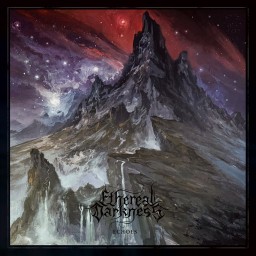
The sophomore album from the Belgium death doom outlet, Ethereal Darkness, comes with a smattering of high praise from those who have heard it. I found this a little surprising, considering I believed that the bands debut record, Smoke and Shadows, was a fairly pedestrian and overall uninteresting piece of death doom metal. So after almost seven years, Ethereal Darkness have put in some effort to make Echoes sound much more thoughtful. The music within is not cookie cutter and even attempts to branch out from its roots; I particularly liked the shaded black metal influence that appeared on songs like "The Cycle" or "On the Edge of the Cliff". The number of tracks has been considerably reduced from the debut, but have been replaced with extended runtimes. And on some level, these longer songs can work. The closer, and longest song on the album, "Realization", has a sense of wonder as it recounts all of the influences and styles that Ethereal Darkness took to get to this point. However, those points of reference aren't always the best. Those tracks that have that hint of black metal foundation are really the only high points on Echoes. The rest still sounds like run-of-the-mill death doom that I've heard and forgotten about many times. This is all coming off the back of the most recent Fires in the Distance album, Circadian Promise, that exceeded my expectations and then some. I mean, it is an improvement from the debut, but after seven years of smoldering and bubbling, the eruption should have been a lot more noteworthy.
Best Songs: The Cycle, On the Edge of the Cliff, IV
For Fans Of: Fires in the Distance, Sun of the Dying, Jord
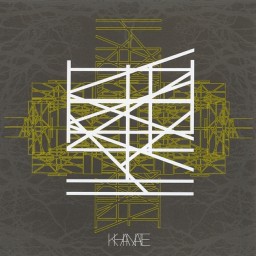
Stephen O'Malley is a name that is written large over the history of drone metal. Making a name for himself with legendary extreme doom outfit, Burning Witch and short-lived death doom project Thorr's Hammer, he also formed Sunn O))) alongside long-time collaborator Greg Anderson. Khanate was formed in 2000 after O'Malley met avant-garde musician and member of O.L.D. James Plotkin at an Isis gig. Plotkin recruited O.L.D. bandmate Alan Dubin to perform vocals for the new project with the four-piece being completed by drummer Tim Wyskida.
Well, when you dive down this rabbit hole, you'd better not be expecting Wonderland because here be monsters. From the off Khanate set out their stall to be a genuinely disturbing listen, taking the blueprint of Burning Witch's psychotic doom metal and stretching it further with increased repetition, glacially slow tempos, seismic rumblings and squeals of feedback that act as the backdrop to the outpourings of Durbin's troubled and troubling vocal protagonist whose screeching screams worm their way into your brain and sit there eating away at your sanity. Instrumentally quiet and gentle sections where his vocals are mere creepy-sounding whispers, are akin to the murmured secret exhortations to violence I imagine schizophrenic killers hear from the imaginary voices in their heads. A couple of lines from "No Joy", for example, read "No joy precious joy no joy, Eat that smile right off a face, your face, No joy only only eat stuff that grin down, down your neck no more eat no more, Breathe breathe don’t breathe please don’t breathe". I mean, what the fuck? This truly is a trip to the dark side of the human psyche and a disconcerting listen that leaves you with the impression that you have been witness to the outpourings of a genuinely troubled mind, like the innumerable notebooks that Mills and Somerset find in the room of the psycho in Se7en. Sure, Khanate aren't the only band that deal in disturbing lyrical imagery, but here there is no release with a catchy riff or a shredding guitar solo, all there is is the grindingly slow, dissonant throb of bleak inevitability unrelieved by any kind of positivity or hope.
I hate real world violence and horror, but there is a deeply primal and subliminal part of the human mind that is attracted to darkness in art, hence the enduring popularity of horror movies and true crime series. Obviously, drone metal is very much a niche sub-genre in the wider metal world, certainly when it is as disquieting as Khanate, so it obviously isn't for everyone, especially the impatient listener, but if you have a penchant for the darker and more uncomfortable reaches of extreme metal then Khanate are absolutely a required listen.
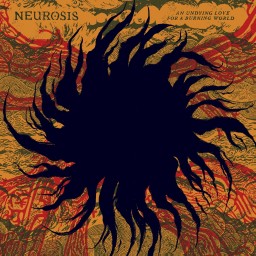
Having taken many years to come around to the lurching sludge and ethereal post-metal of Neurosis, it is testimony to how far up in my esteem they have come that I bought An Undying Love for A Burning World as soon as the pre-order was on offer. Having struggled for years with Scott Kelly’s vocals, only to see that, having finally come to terms with them he was an abusive piece of shit, the change to Aaron Turner feels natural. Not that I would ever class any Neurosis album as necessarily a safe space, to see an important (yet intolerable) member replaced could have been quite a disruptive event overall, yet AULfABW sits right in that challenging atmospheric-sludge space as if the line up has been together, making records for years.
This tension and relief in their sound (as described on their Bandcamp page) has never been more obvious. Haunting dissonance and crushing heaviness seesaw throughout the album like the most familiar of bedfellows. There is a constant sense of fraught drama lurking in the wings of most tracks, but it is hard to say anything comes off as being undesirable in the end. Whilst always vocally adversarial, Neurosis still delivers their musings with such authenticity that is hard to not find resonance with them. It is stark music that rebels against every possible wrong of the world simultaneously, yet no threat is needed when such brevity is in use. This is expression on a human level, riding on a virulent strain of futility whilst being chased by the spectre of hope. As such you could be forgiven for finding this a bleak album. To my ears it rinses the beauty out of the most unobvious spaces, acknowledging that suffering and salvation perhaps come from the same base source and are inextricably entwined as a result. Both are in effect, natural outcomes.
Having a ten-year gap between releases has seemingly reinvigorated the group as they have managed to make a record that will not only rank highly in any lists I get around to making this year, but in the scheme of their discography, this is a triumphant continuation of their already well-established legacy. Notwithstanding that there are clearly some tough times captured on the record, AULfABW is not necessarily pessimistic to my ears. It is blunt and to the point yet gloriously expansive in its scope. Far from being a kaleidoscope of styles though, the album is no deviation away from what Neurosis fans have come to expect. Records with real depth such as this one should be celebrated.
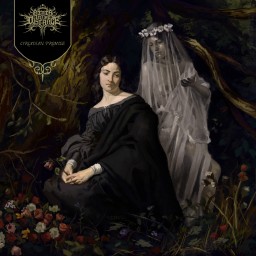
Fires in the Distance is an American band from Connecticut that has joined in with October Tide and Hinayana to bring forth melodic death-doom in the past 10 years. They've released 3 albums, the third of which marked the entrance of a new vocalist. This is their new album Circadian Promise!
Their new vocalist Brendan Hayter gives the bleak instrumentation great flavor and holds everything in place. Although the music, especially the guitars, sounds dark and heavy, it actually sounds brighter than other bands of the genre, and suprisingly it fits so nicely. Many of the different moments here sound so grand, whether the vocals are clean or harsh. And the piano and guitars stand out amongst the rest of the melodic death-doom scene.
Opener "Of Radiance and Levitation" sounds so crystal clear in the music. Guitar harmonies and deathly vocals guide you through this dark waltz. It's a true bridge between the melodeath of Dark Tranquillity/early In Flames and the doom-gloom of My Dying Bride/early Katatonia. The soft dreamy guitar/keyboard bridge passes by without ever being forgotten. Beautiful! "To You, Author of My Fade" takes a break from the slowness for some speed to add to the guitar/keyboard atmosphere. Those drums and riffs hit hard, and of course we have those searing screams and sweet cleans. So excellent!
Another track worth hearing is "Lightless Days of a Songless Bird". Even the title sounds so poetic! I love the chorus, though I wish the clean singing could've accompanied it. Also sounding great is the 5-minute "By This Time Tomorrow". The buildup and soloing are way too majestic to miss out on.
"Once the Silence Takes Your Place" has more of that slow power. Everything sounds so straight throughout these 9 minutes, still sounding dark and tight in the music and vocals. Later on in the track is some wild screaming that leads to amazing soloing and more of that clean singing. I would say this would make an amazing ending, but then comes the epilogue... "Agonal Dreaming" unleashes melancholic melody and rhythm from the keys, guitar, bass, and drums. And that's how to end this album smoothly.
I can easily say that Circadian Promise has reminded me about what's so great about a dark depressive style like melodic death-doom. I can enjoy this album more as listening progresses. This shall strike hard and keep you on the edge of your seat for their next album in the future, and that's a promise!
Favorites: "To You, Author of My Fade", "By This Time Tomorrow", "Once the Silence Takes Your Place"
 Shadowdoom9 (Andi)
When I heard about the new Fires in the Distance album, I immediately shot it to the top of my most anticipated albums list. The bands sophomore album, Air Not Meant For Us came as a total surprise as it beautifully worked its way around a faulty production for some of the coolest new death doom I've heard this side of the 2020's with its triple counterpoint of vocals, guitar and piano. I was very excited to see how this band would develop their sound further.
Initial impressions weren't the best, but continued listens helped Circadian Promise skyrocket up the 2026 rankings as one of the best albums of the year. My main concern was the piano, which instead of being played plainly, has been given a drowning filter, taking away some of its melodic dominance. Upon repeated listens, I could quickly tell that this stylistic change was for the better, as the main vocal work has become even more diverse than ever before. The new vocals of Brendan Hayter adds a new, more explicit, gothic texture to an already very dark album. Meanwhile the percussion has gotten a massive glow up and the added strings give the album some well deserved drama.
The songwriting has taken some significant steps forward. I remember that Air Not Meant For Us certainly had its epic moments, but Circadian Promise takes that and puts it on overdrive for almost the whole record. I love the song structure of this album, even if it can get a little tiring after a while. Thankfully, Fires in the Distance are fully aware of this which is why songs don't lazily stay in one place for too long. The bass is noticeable and carries the album forward through its different endeavours. The percussion plays a huge role as well and the occasional spurts of blast beats or drum fills give the whole song a feeling of growth. Take a look at the closing track "Agonal Dreaming". Even though I don't like how Fires in the Distance end the track with a return to a slower groove, the first two-thirds of the song shows an amazing display of maturity and restraint and not allowing the climax moment to take over.
All in all, this was a most welcome surprise in a year that has been hurting for good music. Fires in the Distance found a balance of epic doom and gothic metal that is also extremely tuneful and heavy.
Best Songs: Of Radiance and Levitation, Lightless Days of a Songless Bird, By This Time Tomorrow, Once the Silence Takes Your Place
For Fans Of: Swallow the Sun, Dark Tranquility, Insomnium
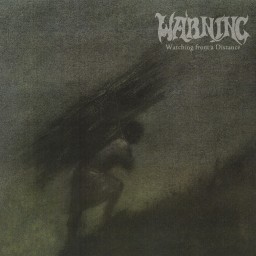
Holy shit this is a beautifully bleak collection of music!
How would I describe this album?... It's on the level of movies like "Hamburger Hill", "Grave of the Fireflies", and "Requiem for a Dream" where you know that you have witnessed a masterpiece, but instead of coming away with "I can't wait to see that again", you come away with "I never want to see that again." The emotional toll is just too heavy.
The album Title "Watching From a Distance" alludes to the narrator deeply desiring a relationship with someone he can not obtain. It's a break up album about someone that you can still see, smell, and hear, but will never again taste or feel. There is an illusion of hope that the relationship could be rebuilt-but you know it's a mirage. Unrepairable damage has been done, and maybe it was your fault.
Now, this type of longing is nothing novel to the realm of doom metal, it's well-trodden subject matter. The difference here is that there is no wall of distorted guitars and muddy production to hide behind. There are no extravagant figures of speech in the lyrics that cheapen or soften the subject. There is no deep indecipherable growl that allows you to evade paying attention. No, this is very thick production, but it's also crystal clear, as are the vocals. It's as emotionally raw as it gets. You are going to hear this man's pain, and you are going to feel it.
"I want to be master of my own emotions with a fire that fills me
But I don't understand myself and I don't know
I don't know what my heart is anymore"
I have heard a masterpiece, and I don't ever want to hear it again. It's too perfect and it's too real.
 Gator
Gator
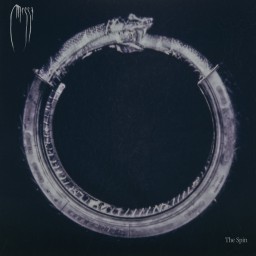
When you are guilty of the unpunishable crime of producing one of the most moving and memorable albums of a particular year, an artist must mine the very depths of their creativity to provide a follow up of any worthy repute. When Messa dropped Close in 2022, they were already two records into their career - two records which I have not heard to date incidentally – and produced an album that topped many AOTY polls and lists, my own included. Unafraid of boundaries and unwilling to accept much in the way of limitations on their sound, the Italians showed us all just how extensive their range was. Making it all sound so damn cool whilst putting this authentic exploration of their musical palate was just the icing on the cake really. Inadvertently, this set up the challenge of one day having to follow Close up and upon my first few listens to The Spin my opinion was that they had hit the exact wall that I feared they would.
The gothic tropes of the bands 2025 record were the first hurdle for me. Musically such a style does not sit all that well with me and, initially at least, this more sombre edge to proceedings seemed to rob the record of the same level of passion that its predecessor was awash with. It felt like between records, some alignment process had been undertaken in Messa’s life meaning that they were now drifting away from the wonderful connection we had once shared. I could hear the lead work of Piccolo clearly enough, but the feeling that had emanated from them so plentifully on Close seemed numbed somehow. After a few listens, I stepped away from The Spin altogether, resolute that my enjoyment of Messa was going to be limited, for now at least, to that one record.
Curiosity may have allegedly killed the cat but it sure as hell is the saviour of many album reviewers, I am sure when it comes to giving records a second chance. And so, I came back to The Spin recently. Reviews I had caught elsewhere still talked about the merit of the record. It did take a couple of super-critical listens, but this time it finally clicked. It is not as good as Close, I doubt they will ever top that record if I am totally honest. Yet those shades of grey that are applied this time around do not hinder the expression of the record anywhere near as much as I initially thought. It feels eclectic enough still, despite their being a more accessible if not all that mainstream vibe to it. Emotions are never quite at the point of being super-charged like they were on the previous album, yet they are not lost by any means. If anything, Messa are just showing that bit of maturity I mentioned earlier, losing some child like view of the wonder of their own soul in the process perhaps.
It is still well written, far too well written in fact for anyone to be unimpressed I would say. The musicianship is top-notch and the vocal delivery of Sara is perhaps the only element in here that I sense is dialled back a little from last time. If you look at The Spin as a standalone record, then it is no doubt going to hit the higher end of the scoresheet and in some ways, it is criminal to drop points off my final number based on a comparison of a previous record. Talented individuals when brought together in the right environment make great records and that’s what Messa have managed here, regardless.
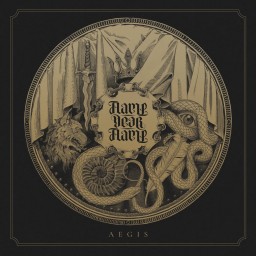
Flame, Dear Flame get advertised as “epic doom”, going as far as to describe themselves on their Bandcamp page as “monumental, crushing epic doom”. I don’t agree, for the record, but that is not me dismissing FDF as not being a good band. Their repertoire is varied enough to make Aegis interesting and at times unexpectedly gentle in fact. This gentleness is not just by virtue of the classical female vocals alone. Aegis is a very well-tempered musical experience. I will go as far as to say that whilst I acknowledge the impact of the vocals, I could cope without there being as much of them as there is. Their central position in the proceedings is certainly a solid enough anchor to weight your focus from, yet the guitars and percussion are subtly nuanced with heavy metal, traditional doom and an almost black metal shroud on at least one occasion.
It is clear to see why FDF have toured with the likes of Smoulder. However, I feel FDF are niche in terms of those vocals, which I am sure would have provided a great contrast to the more aggressive style of Sarah in the live setting. However, I am more a fan of the energy behind the vocals of say Sara Bianchin of Messa, a woman who has range and variety alongside an obvious yet never imposing presence. Like Messa, the guitar work in FDF is worth writing home about. David Kuri embraces the doom aesthetic probably best out of the band, stirring genuine melancholy in his melodies whilst equally able to assert weight in his riffs. Drummer, Jan Franzen puts in one of those performances whereby you do not necessarily notice him all the time, yet his spacing in the instrumentation is always perfect. Again, referring to the band’s bio on BC, they describe the drumming as “restrained” which is a great description.
Overall, for me at least, Aegis just potters around in the same space for too much of the album. Not that I want it in bucket loads, but there is no sense of dynamics. Just as my ears get pricked up by a suitably heavy riff, the album drifts away to a far too clean and eventually ordinary sounding place. I can’t deny the beauty of Maren Lemke’s voice but I just feel that it guides the direction of the album into an altogether too soft a space.
Anonymous Massachusetts four-piece Chained to the Bottom of the Ocean are back with a 28 minute EP of their trademark, noise-drenched, sludge metal that, characteristically slams into you like a sledgehammer to the forehead. I don't know if I was in the wrong frame of mind for it during my initial listen-through because it just kind of washed over me and felt draining to listen to the first time, with a really heavy noise influence that gave it a cloying uniformity I really wasn't in the mood for. Subsequent listens have left me feeling more positive although, in truth, it seldom approaches the level of awesomeness I attributed to their 2023 "Obsession Destruction" LP. Things kick off in fine style with the longest and, for my money, best of the four tracks, the 9-minute "An Abundance of Mercy". This is a hulking slab of reverb-drenched sludge metal with a memorable and doomy main riff that crushes like a runaway steamroller and caustic vocals that could double as paint stripper. A couple of noise and feedback-soaked breakdowns fill out the track and provide a counterpoint to that comparatively melodic main riff.
"Upheaval" is the EP's shortest and most vitriolic-sounding track with a fairly quick tempo and a marked noise component that pushed a bit too far in that direction for my particular taste and may well have been the source of my initial reticence towards the EP as a whole. I am on much more comfortable ground with the remaining two tracks, "An Adornment of Light" and "Execution" with their doomier and resultingly more crushing atmospheres. I must make mention of the drumming as it is of particular note, driving and pummelling, even on the slower, doomier sections with the nameless skinsman's performance on "Execution" being an especial standout.
Chained to the Bottom of the Ocean are evidently emerging from under the shadow of their main influence, Louisisana's Thou, and are forging their own identity with an even more abrasive and noisy style of sludge designed not so much to get under the listener's skin, but rather to strip that skin away completely.
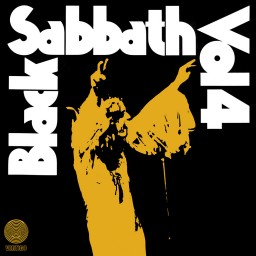
Black Sabbath’s aptly titled ‘Vol. 4’ is the British metal pioneers’ fourth studio album, and once again, it’s another release that I struggle to really get into.
I don’t dislike Black Sabbath, I enjoy most genres of music and most bands, from any era. But for whatever reason, the stars just do not align because I just don’t “get” the first few Black Sabbath albums. I’m sure there’s a point, perhaps later in their career, where the band just clicks with me, but their first few records, often revered as metal masterpieces by fans, just do nothing for me.
It’s not all gloom and doom though (well, it kind of is!), as there are a couple of highlights. ‘Snowblind’ is a fantastic song, probably ranking up there as one of my Sabbath favourites, cheesy ballad ‘Changes’ has some great vocal and lyrics, and ‘St. Vitus Dance’ has some interesting guitar work. But overall, I find the rest of the tracks just seem to plod along, similarly to how I felt about their previous releases.
I’ve tried and tried, and have had this one on my playlist for a while, but it’s just not working for me. Perhaps I’ll have more luck with their next album…
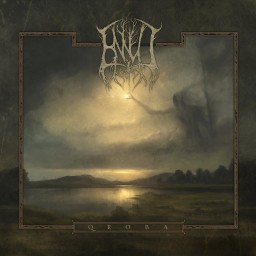
Ennui were formed in Tbilisi, Georgia in 2012 by guitarists David Unsaved and Sergi Shengelia with the former also contributing vocals and keys and Sergi playing drums and bass in addition to their six-stringed day job. In 2015, for their third album, "Falsvs Anno Domini" the duo added Daniel Neagoe (Shape of Despair, Pantheist amongst many others) on bass and drums. However, he departed before the next album, "End of the Circle" and they reverted to a duo with John Devos (Pantheist, Comatose Vigil A.K.) showing up as guest drummer. Onto Qroba then and they have now expanded into a five-piece with no less than four guirarists, the original duo being joined by Andrey Azatyan and Kakhi Kiknadze with the drum stool being filled by Alexandr Gongliashvili. Unsaved also covered vocals and bass duties as well as panduri, which is a three-stringed traditional georgian folk instrument.
Qroba is not the most monolithic or repetitive example of funeral doom that you will ever hear and at times it is even quite melodic and atmospheric. This does not translate as "not heavy" by any means because it assuredly is, but there is a bit more to the songwriting than merely trying to write the slowest, heaviest-sounding doom metal on the planet. I would compare it to the early albums from France's Monolithe, but without the extreme track lengths. The hour here presented consists of five tracks, from ten to fourteen minutes in length, giving each plenty of time to establish its rhythmic tides and atmosphere without ever outstaying its welcome. Thematically it is fairly typical funeral doom fodder. According to the band themselves it is concerned with "coming to terms with the inevitable, told through melancholy and contemplation" and although this traversal from light to darkness is common subject matter in doom circles it is addressed so effectively both atmospherically and lyrically that it transcends the feelings of triteness that these overused tropes sometimes elicit in the ardent funeral doom listener. The track "Down, To The Stars" is based upon and uses the words of the poem of the same name from highly respected 20th century georgian poet Terenti Graneli and is a beautiful expression of the album's concept, but this is no anomaly and the band's own lyrics are also some of the most thought-provoking I have heard for a good while.
The songwriting is excellent and it is obvious that these guys have been round the doom metal block a few times because they are able to explore and stretch the funeral doom genre without ever threatening to dilute what makes it so appealing to its adherents in the first place. This is not some Frankenstein's monster genre hybrid, but genuine, lovingly-crafted, purely refined funeral doom metal with a breadth and scope deserving of respect. Alongside expert song and lyric writing these guys are evidently talented musicians and, to my uneducated ears, Qroba sounds technically perfect with some gorgeous guitar lines, yet it never feels staid or stilted, but oozes with feeling and passion, each track developing in an organic and natural manner so that nothing ever feels forced. Unsaved's vocals are the deep, abyssal growls expected from a funeral doom vocalist, yet he seems to wring an expressiveness and emotional resonance from them that I have very rarely encountered from an extreme doom metal singer.
In summary this must be one of the most affecting and haunting funeral doom albums I have heard and, despite its often melodic approach to the sub-genre, it is so skillfully executed that there is no compromise made as regards to sheer heaviness. In the extreme doom world, where sludge and noise-based releases seem to be the only kids on the block anymore, it makes my heart soar to know that there are still acts out there who can fire my soul in a genre that seemed like it had passed its peak some time back. Each play sees me falling in love with this more than the previous one.
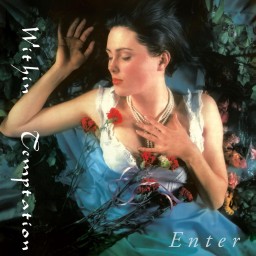
Much more gothic metal than the symphonic sound they’d become more familiar for, ‘Enter’, the 1997 debut album by Dutch band Within Temptation, is a far cry from the sound the band would be more widely recognised with upon later releases.
Not that it’s a terrible album, but if, like me, your introduction to the band was via later hits such as the epic ‘Ice Queen’ and the majestic ‘Mother Earth’ (yeah, that’s right, I said majestic!) then this record just doesn’t quite compare.
The music is alright, but overall the songs just all seem to plod along. Maybe it’s the production, or the fact there seems to be more emphasis on death metal growling. I don’t know, but this album just doesn’t really do much for me.
Songs like ‘Restless’ and ‘Enter’ have potential, but more often than not I just find myself losing interest halfway through. But whatever, there’s far worse debut albums out there, and the band would more than make up for it with their next release.
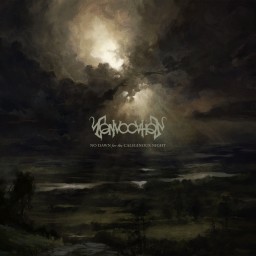
Finland’s Convocation are not exactly new to me, nor are they an artist that I have invested a lot of time with either. I recall trying them once and quickly finding myself distracted and off elsewhere on my to do list soon enough. Not that they necessarily did anything wrong, I usually find that aside from mood as an obvious influence over my enjoyment of a record, some music simply must be listened to from a critical perspective. No Dawn for Caliginous Night Is not background music and nor does it impose itself on the listener intentionally. Simply put, it is so well written, performed and arranged that to attempt to listen to it casually is very near to being an insult to Convocation.
I am a fan of both funeral and death/doom and to date, I do not recall that I have encountered an album that successfully combines the two sub-genres so eloquently. It is rare for the chug of the guitar that we get treated to around the six-minute and forty-second mark of album opener, ‘Graveless yet Dead’ to be present amongst such desolate sadness. Likewise, the poignancy of the melancholy of instrumental track ‘Between Aether and Land’ is uncharted territory across such a blended style of extreme metal.
If I recall correctly, one of the guys involved in Convocation was (maybe still is) in Desolate Shrine, and I get snippets of their sound throughout this record. The definitively gloomy sound of Finnish funeral and death/doom permeates the record as you would expect. Finland has a proud heritage already in this field and No Dawn for Caliginous Night carries on that fine lineage. With such a well-produced album it is great to hear the rumble of the low end with just as much clarity as the slow-picked guitar notes, with even the harsh vocals receiving a great airing. Listen closely to ‘Lepers and Derelicts’ and appreciate the busy nature of the track as the guitars appear to chime a tune within the track. I have already lost track of how many times I have listened to this album now. Each time I do, I discover or notice something new. As if I needed any excuse to keep coming back, constant discovery is an added boon.
"Harbinger of Metal" was released in 2003 as an EP between the trio's first two albums and in the midst of a spate of split releases with the likes of Minotauri and Orodruin. I say it was released as an EP because it has a runtime of over 73 minutes, more than most full-length albums, but was still steadfastly labelled an EP by the band themselves. I am not sure why this would be because most of the material is consistent with that on the three main full-lengths, but then again Albert Witchfinder tended to do things his own way and for his own reasons so who am I to question the decision.
Anyway, there is some great stuff on here, with Strange Horizons and its awesome doom-laden riff (one of the band's best) being my pick. Of the seven tracks available three are quite short with "Harbinger" being a kind of introductory scene-setter and "The Ambassador" and "Into the Realms of Magickal Entertainment" being little more than interludes, so the bulk of the hour and a quarter is taken up by just four tracks, which is pretty much par for the course with the Reverend. To say that Reverend Bizarre know their shit when it comes to traditional doom metal is an understatement. During the mid-2000's they pretty much wrote the book on producing epic-length trad doom sagas and are still very much the yardstick against which I personally measure any other trad doom act of the last 25 years. The simple fact is that if a band are going to produce tracks that rely so heavily on the lengthy repetition of riffs then those riffs need to be pretty damn good and in this regard Rev Biz have very few equals. It is very hard to think of any other doom metal band that manage to do so much with so little but the sheer ponderous momentum they achieve with Witchfinder's prominently mixed bass boosting the crushing weight of Peter Vicar's riffing is a marvel to behold. That said, if you are of a more impatient mindset then maybe RB aren't the band for you because they really do like to draw things out and sometimes go to extremes on this front, repeating a riff over and over, well past the point of comfort, a charge which could certainly be levelled at the first part of "From the Void", at least until it turns into an Earl of Void drum solo! I am not the biggest fan of drum solos, so the five minutes in the middle of the track here is a bit of a challenge even for me I must admit. Things are certainly redeemed though with "The Wandering Jew" being another classic slab of doom metal goodness with yet another top RB riff. For this track and "Strange Horizons" alone the EP is well worth the entry fee, but throw in Rev Biz's hulking, doom-laden interpretation of Burzum's "Dunkelheit" that adds crushing weight to the icy, frigid melancholy of the original and we have another doom metal winner on our hands.
Reverend Bizarre truly were one of the finest traditional doom metal bands ever with a distinctive and authentic sound (and sometimes a wicked sense of humour) that pushed trad doom to its extremes whilst still remaining exceedingly listenable. Whilst this EP may not be their best release with, admittedly, a couple of weaker moments, which the band may have realised themselves hence the reason why it was separated from the main full-lengths by the EP designation, when it is good it is absolutely top drawer and as such is definitely worth the time of any discerning doom head.
I have been making more of a conscious effort to follow up on some of the tracks from the site playlists that jump out at me each month and that is how I ended up in front of the latest release from Georgian (as in the country not the period of English history) funeral doomsters, Ennui. The word Qroba is a Georgian word meaning “vanishment” or a “fading of presence”, representing the moment light withdraws to leave space for something colder and final. Symbolic of the temporary dissolution of the band themselves, the album explores the inevitability of the end. In short, classic funeral doom fare. With song titles such as ‘Mokvda Mze.’ (which translates to ‘The Sun Has Died’) and ‘Becoming A Void’, Ennui leaves the listener in no doubt that if they are seeking positivity, they are in the wrong place.
The band name itself is the French word for “boredom”, which I find to be particularly ironic given there is no element of that emotional state present throughout my experience of Qroba. I am starting to realise that funeral doom may well be my second favourite sub-genre of The Fallen, pushing sludge for that top spot as time goes on. In fact, I heard this record on the same day as the new EP from Chained to the Bottom of the Ocean, and I prefer Qroba in a comparison of the two releases. Everything I want to hear on a funeral doom album is present on this album. Well, apart from the panduri, a traditional three-stringed Georgian instrument that I have never heard of until today. Otherwise, there are dense keys and suitably desolate atmospheres being created around them, alongside punishing riffs and the deep rumble of bass and guttural vocals too boot. All the while the drums functionally add percussive markers in the background. You could forget they are there at all on some occasions, which is more testimony to the quality of everything that’s going on around them as opposed to any fault with the performance or mix even.
I do get the occasional flourish of hope in the music, which is not something I want to hear too often in my funeral doom. Here, I think it stays just the right side of providing balance, just like the prog-reminiscent guitars around the halfway point of ‘Becoming Void’ also add a touch of the unexpected. The melancholic lead work here, which is delivered via long, drawn-out notes, almost tells its own story outside of the vocals themselves. When you factor in those keys, you soon find yourself in some cosmic death trance. If I close my eyes to this track, I just see endless space, with the odd burst of light, or the odd colour of gases that I am floating through. Listening to Qroba soon becomes a very immersive experience for me.
With over an hour of music to listen to here, I do think that Qroba is a record that has a certain place and time to be properly experienced. This is not background music. For me, if you are not sat still with this record playing, you are doing it, and yourself an injustice. It is a record that demands to be experienced as opposed to simply being listened to. From an arrangement perspective, it sounds to me like this has been very carefully put together. Tracks develop as opposed to just progressing. Given the theme of the album, it is quite easy to see this album as a soundtrack to the slow destruction of life as we know it. When that day comes, I will have this on my headphones.
Slow is a funeral doom project of prodigious belgian Déhà, who is perhaps better known for his black metal and blackgaze work, but who is also a proficient doomster with acts like Yhdarl and Wolvennest. He has released seven albums under the Slow banner, with "V-Oceans" unsurprisingly being number five and, probably, my favourite. This is the last of the Slow albums that were produced as a solo project, Déhà since having been joined by lyricist Lore Boeykens who also contributes bass and backing vocals.
Anyone even remotely familiar with Déhà's other projects will be unsurprised to hear a significant post-metal and -gazey element to Slow's funereal dirges, but make no mistake this is still ponderously heavy stuff. The vocals are of the gravel-throated, abyssal demon bellowing kind that are the cornerstone of so many fantastic funeral doom albums and are more than ably delivered here by the main man himself. As he intones at the beginning of "Ténèbres", "This is not meant to bring you joy, this is not meant to give you any solace," and it surely doesn't if you take its message literally yet, ironically, if you are a lover of the melancholy and desperate atmospherics of funeral doom then it may well bring you great joy indeed (it certainly does for me).
With tempos that are measured by a calendar rather than a metronome, the five, 10-minute plus tracks here crawl under your skin and sit there draining your optimism like a vampiric parasite feasting on the mind's positive energy, leaving its host bereft and borne down by the weight of existence. The riffs are monumental chords that swell like tsunamis, given additional heft and gravitas by layered synths and choral effects which thankfully don't swamp the guitar and drums, but which add their weight to the crushing mass subtlely enough so as not to be distracting. "Oceans" covers a theme that has served funeral doom very well over the years with its huge swells of sound being an exceedingly effective artistic interpreter of oceanic environs and deep sea tectonics, here being used as a metaphor for the unalterable inevitability of death, in other words, all the best sentiments of funeral doom.
The number of ratings for Slow albums on RYM is paltry with this being the most-rated with a touch over 300, yet this is funeral doom of the highest order that deserves to be considered up there with giants of the genre like Bell Witch and Esoteric. OK, maybe not Esoteric, but everybody else anyway! Criminally overlooked, for me this is a top drawer entry into the funeral doom pantheon.
I have been a fan of London's Morag Tong for a good decade now, since the release of this debut. four-track EP back in 2016. They are named for the fictional guild of assassins featured in The Elder Scrolls game Morrowind and their reverb-drenched doom metal is as influenced as much by stoner metal as you would expect from a band of RPG-ing nerds. My original one-line review for this went "stoner doom that's nice 'n' slow and as heavy as an anchor strapped to an anvil that's tied to a millstone" and you know what, that remains true, but there is actually a bit more to it than just sheer weight so I thought I had better elaborate.
The riffs have an in-built bluesiness that reaches back as far as Sabbath's debut but which are delivered with such heft and distortion that they sound mountainously and crushingly heavy. The soloing, such as it is, has a psychedelic, spacey tinge that is fed from the band's stoner roots and which is aided by some Hawkwind-ish electronics buried quite deeply in the mix. I hesitate to call it trippy, though, because the tempo is so lethargic and the riffs just so fucking heavy that I am unsure if anything with this amount of heft can ever be labelled as such, although the title track "Through Clouded Time" does feature some quieter, more trippy moments, such as the introductory couple of minutes or so which almost sounds like a very heavy version of Fleetwood Mac's "Albatross" and a quite funky bass breakdown just after the halfway point. The two tracks either side, "Godhead" and "The Eyes of Men" are a bit more straight forward but deliver such devastatingly heavy doom riffs that they are still worthy of attention in their own rights.
Drummer Adam Asquith also handles vocals which are perfectly functional for this style of stonerised doom, whereas his drumming is really good within the confines of the genre and he and bassist Sam Lewis both featuring prominently enough in the mix to lay down a super-solid foundation upon which dual guitarists Alex Clarke and Lewis Crane can lay down the towering monoliths of the riffs. The four are obviously deeply steeped in the world of stoner doom and they sound like solid technical musicians perfectly able to translate their intentions into music, so there is a definite authenticity about what they delivered here.
In summary, this is a very impressive twenty-three minutes that handed out an attention-grabbing calling card to the UK's doom metal afficianados. Unfortunately I felt 2018's full-length "Last Knell of Om" failed to live up to this promise and I have yet to hear 2023's Grieve, so this stands as the band's high water mark for me so far. Truth is though, even if they never bettered this, it would still stand as a worthy testament. I was then and remain still, mightily impressed.
I have followed spanish doom crew Hela since their earliest days and have found them to be consistent deliverers of understated female-fronted doom metal. They are one of those bands that don't push the boat out too far from familiar shores and are quite unlikely to be anyone's favourites doom metal band, but keep plugging away, refining their sound and carving out a niche for themselves.
"A Reign to Conquer" features half a dozen 7-8 minute tracks that follow a similar pattern. Taking their cues from post-metal, they generally begin softly and serenely and build in intensity as the track progresses. The intensity level never really rises above a mildly elevated pulse rate, though, and the band don't really seem to be ploughing the old atmospheric sludge furrow of catharsis through ferocity, but are content to merely shake their proverbial fists at the sky rather than tear it down. They remain melodic throughout with some doleful riffs and new vocalist, Raquel Navarro, has a plaintive, yearning style of vocal delivery that underpins the melancholy atmosphere so vital to decent doom metal.
What Hela do they do pretty well and both the songwriting and performances are proficient and point to a very professional outfit who know what they want to deliver and exactly how go about it. This all sounds like criticism through faint praise I know and I like the band, but the simple truth is that they are a decent doom metal outfit who produce albums that are enjoyable enough, but which will seldom stick with you for too long after they end.
There is a serious side note which needs addressing regarding the production which may negatively impact most people's enjoyment - it certainly did mine. This is the fact that the album features terrible sound compression which makes it feel like it is being rammed into your ears, rather than allowing the nuances of the music as written to be experienced. This is especially sad because this feels like an album that is written with subtlety and contrast in mind. For example, listen to the album's best track "Emerald Mirror", which is amped up to levels that cause actual sound distortion when it is evidently written as a far more subtle exploration of light and shade which I feel is seriously undermined by the production. Even Raquel's vocals are distorted by the mix and a more sympathetic production job would have seen my score elevated a good half-star or more I believe.
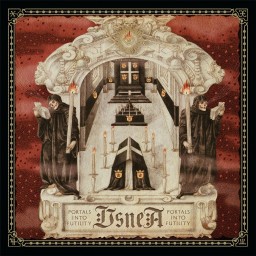
Metal Archives lists Usnea as “Blackened Funeral Doom Metal” which instantly coloured me interested. Having snapped up this album into my digital library after hearing the track ‘Eidolons and the Increate’ on the April Fallen playlist, I was eager to explore the whole record in some more critical detail. A backlog of albums to review that seems to only get longer, has meant that I am only just now getting around to dumping my thoughts into type. Thankfully though, this period has not seen any of my initial enthusiasm for Portals Into Futility dulled at all. When your band sounds like a cross between Bell Witch and Graves at Sea, you are guaranteed to drag a smile out of my otherwise grizzled expression. That’s right, music that explores the hopelessness of existence, the depravity of a dystopian world whilst also introducing themes of cosmic horror is a pleasing concept to me. A sort of much needed dose of reality being laid bare alongside some extra metaphors to really underline what a shitshow this planet is most of the time.
Whilst I may have just laid praise at Usnea’s door for their blunt summary of life, it is the more cosmic sound to their funereal atmospheres that I think keeps me more interested. Portals Into Futility has a clever way of hinting things always have the capacity to get worse, to spiral further out of our control, to reach levels of despondency that are frankly unearthly. Whilst I am going to flat-out challenge the “blackened” description of their sound, the sterility of their bleaker passages of music simply asks, “is this is as good as things get this side of the dirt”? It is perhaps only their general disdain for life that I can match to any blackened references that are inferred. Vocally, there is a definitive desperation to how Joel or Justin (both appear to be credited for the vocals) deliver their musings. Yet I would not compare this to anything in the black metal realm, if anything they are clearly more sludge orientated. The guitars also may possess a swarming quality on tracks such as ‘Lathe of Heaven’ but he pacing here is very much funeral doom or glacial sludge riffs.
Give me the murky and unfathomable depths of ‘Demon Haunted World’ all day, any day and I will gladly bathe in them until that mire is engrained in my skin. When that Bell Witch bass kicks in I am in utter joy on this track even if it suggests one of the more positive sounding moments on the whole album (that’s how bleak this thing is). The album artwork (which Justin is also credited with collaboration on – busy chap) sums up the contents perfectly. Ultimately, there is no comfort to be found is what that artwork says to me, and Portals Into Futility is an uncomfortable listen. Closing with a punishing, nineteen-minute track shows that the end is more agonising than the run up. Buckle up folks. Strap on in. This is going to be a rough one.
This one has been eating away at me for a while. Whenever I look at the earliest releases I haven't rated yet for the Fallen, this ugly, yellow and black fucking cover is always there staring at me like some recurring monochrome nightmare. I mean, look at it, it is fucking horrible. So today, as I am ploughing through some 1985 releases, I decided to get to grips with it and see what hides behind that menacing and manic-looking face. Well folks, don't be fooled because behind that ugly cover is an album of even more ugly-sounding music. Taking the idea of merging hardcore punk with the slower, looser and more distorted sound of Saint Vitus as originally posited by Black Flag's "My War" released the previous year, YDI have produced a noisy bastard child that dispenses with all the niceties of Black Flag's trailblazer.
This is filthy-sounding, virtually demo quality hardcore punk that has taken on board some of the aesthetics of the emergent doom metal scene to produce an album that sounds like it was recorded in an afternoon in the gutter of a Philadelphia back alley littered with used syringes and condoms. If anybody ever thought The Dead Kennedys and Black Flag were street punks then they will find "Black Dust" a fucking revelation that makes those guys sound like they went to Eton with singer Neil "Jackal Ssexzombie" Perry spewing forth a rasping bellow that makes Henry Rollins sound like a right stuck-up toff! This is such a dirty-sounding, gritty and groundbreaking record that I am genuinely not even sure if it really belongs in the Fallen at all. As is often the case with such revolutionary records, this is not easy to pigeon-hole, its hinting at what sludge would become being still in a very rudimentary stage of evolution. It is, however very noisy, very brash with an abrasive sound, ugly lyrics and a fuck-you-we-really-don't-care-what-you-think attitude that demands respect even if you don't enjoy the album itself. For myself, I am going to need to spend a bit more time with it to try to really get under its skin. I have it pegged at a 3.5/5 at the minute, but I feel this may rise as the album's essential ugliness smoothes itself out with further exposure and the involuntary gag reflex that it arouses subsides.
A week after Green Carnation's new addition to their Dark Poem trilogy, Lord of the Lost have just released another part of their own trilogy, Opvs Noir Vol. 3. That's right, it's the final part of this trilogy of albums that showcase their blend of gothic/industrial/symphonic metal. This ambitious guest-filled saga is coming to an end, and while I still think it should've ended as strongly as Vol. 1, I'm quite satisfied...
Frontman Chris "The Lord" Harms, guitarists Pi "π" Stoffers and Benjamin "Benji" Mundigler, bassist Klaas "Class Grenayde" Helmecke, keyboardist Gerrit "Gared Dirge" Heinemann, and drummer Niklas Kahl are still going. Opvs Noir Vol. 3 is the band's 12th album, and closes this long great trilogy.
Starting things off in an eerie note is "Kill the Lights". Here the verses are kept to a minimalistic style that then leads to a cool chorus. "I'm a Diamond" features Alea der Bescheidene of Saltatio Mortis. Honestly, her vocals adds more melody to this track that's already one of the most melodic ones here. "My Funeral" blends symphonic majesty with heavy dissonance. I love it! Then they really go aggro in the lyrics in "I Hate People", feature the rough vocals of Wednesday 13, plus some catchy riffing.
"The Shadows Within" has an ethereal start before reaching the more intense chorus while staying accessible. "La Vie Est Hell" is based on Les Fleurs du Mal, complete with some French singing by Kissin' Dynamite vocalist Hannes Braun. It's filled with perfect melancholy, which is kinda what I'm looking for in a ballad. "Square One" is kind of an one. The sound is generally synthwave, though I guess it allows Chris Harms to guide his vocals through those dancey verses without having to go edgy. Xandria vocalist Ambre Vourvahis appears in "When Did the Love Break?", and once again, all the vocals match with the soft verses and mighty choruses. So beautiful!
"Your Love is Colder than Death" strikes with their heavy side hard, breaking the earlier lightness with its aggression. Cats in Space's Damien Edwards comes in for the mesmerizing "Take Me Far Away". They really hit it with their respective vocal power. "The Days of Our Lives" is the grand finale of the entire saga. Chris and Gerrit perform their respective roles, shining as the vocals and keys close the gates on a solemn note.
So it seems Lord of the Lost has dropped the experimentation of the first two parts to give things more grandeur in Part 3. It's not perfect, but it's a very solid way to end this trilogy, all in the instrumentation and vocals. Serene, heavy, they can do it all....
Favorites: "I'm a Diamond", "My Funeral", "La Vie Est Hell", "When Did the Love Break?", "Your Love is Colder than Death", "The Days of Our Lives"
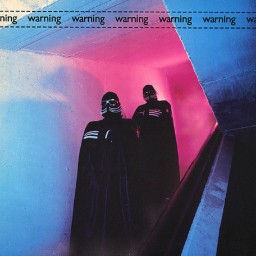
The earliest Infinite album is apparently this album by Warning, a short-lived band in Neue Deutsche Welle (different from Neue Deutsche Härte that started over a decade later). They released two albums in 1982 and 1983, then that was it. They split up and never reformed again with both members already passed away. RIP... Would I call their debut album avant-garde metal? I don't think so. It's more like alternating between the then-popular post-punk/new-wave sound and atmospheric doom. And with some of the earliest death growls ever witnessed, I can almost consider proto-death-doom, before even death metal was a thing.
"Why Can the Bodies Fly?" is an interesting catchy start, as the growls run through alongside operatic female vocals. See, this is their new wave-ish side, and the guitars are more like an afterthought. I can almost imagine Therion covering this, though it was instead covered by Austrian death metallers Pungent Stench. "Magic Castle" shows the band's doomy side with slow guitar heaviness, blended with electronic experimentation.
As for the rest of the album, it's just weird-a** sh*t. Emphasis on weird, emphasis on sh*t. As much as I wanna enjoy and appreciate this, I just can't. I also would rather hear Morgoth's cover of "Darkness". Not the most appropriate f***ing release to consider the start of The Infinite. I'll be doing another judgement submission ASAP....
Favorites (only tracks I even slightly like): "Why Can the Bodies Fly?", "Magic Castle"
This is the best Hanging Garden have sounded in a very long time. After 2017's I Am Become, they seemed to step away from their sombre, gothic texture in favour of a more atmospheric/post-metal one. And while I think that change was a nice turn of events, the songwriting became less refined and their more recent albums have become lackluster as a result. This time, Hanging Garden are heavier and have returned to that older songwriting style and it turns out really well. The opener, "To Outlive the Nine Ravens" with its blast beat introduction gives the listener somewhat of an idea what they are in for, in the same way that Aeonian Sorrow introduced themselves on their last album From the Shadows. As the album progresses, you really get a sense that Hanging Garden have learned how to incorporate dual vocals as they compliment each other beautifully. The backgrounds with the guitar make a third melody that weaves in-and-out of the two vocalists for even more dramatic effect. The bass lines are strong and tasteful and even the implement of synthesized instruments is very well done; unlike many modern metalcore bands, the synth an embellishment tool to give the album a slightly different timbre, such as keyboard countermelody on "Arise, Black Sun".
Best Songs: To Outlive the Nine Ravens, Eternal Tress of Turquoise, To the Gates of Hel, Arise, Black Sun
For Fans Of: Draconian, My Dying Bride, Ethereal Darkness
I picked "Writhe" up on its release via Bandcamp and, at time of writing eight years later, it remains the only release from the New Hampshire trio, amounting to two tracks spanning 25 minutes of material. Boghaunter's version of doom metal is heavily atmospheric and dips its toes into atmospheric sludge waters more than a little. Opener "Constellation Vows" builds on clean and clear lighter motifs and then batters them down with some crushing riffs and corrosively harsh vocals, only for them to reassert themselves in a to-and-fro of contrasting and complementary tidal shifts. This feels to me to be more than the usual atmo-sludge trick of build, build release, the two atmospheric poles weaving together like the intertwining twin serpents of celtic legend and displaying a nice level of songwriting maturity. Second track, "Ordeals in Stillness" is less intricate and more straightforward doom metal, albeit no less impressive, employing a memorable and melodic, gravitationally heavy riff which is accented by sparely used keys and soaring lead work. These provide a doom-laden foundation, dripping with melancholy over which the sludgy vocals bark and snarl in protest.
I was impressed by this opening salvo from Boghaunter back in 2018 and remain so to this day and it is a great shame that so promising a debut wasn't the springboard for a career of note. Even sadder is that there seems to have been very little activity from the three guys elsewhere, although I have just found the 2025 debut three-track EP from death doom band Departure which features Boghaunter guitarist and vocalist Michael Demers on lead guitar and which, although it is more straight-up death doom, is still a good listen. I guess the history of metal is strewn with such tales of exceedingly promising acts, for whatever reason, falling by the wayside while lesser talents thrive, but I am grateful that we got this beauty of a release anyway.
Doom and sludge when measured in the correct quantities on a record can make for a delicious combination to satiate the appetite of a lover of extreme metal. My preference with such blends is to go heavier on the sludge, forming a kind of sludge crust if you like and then let the doomier filling ooze out as I gorge further into the unholy pie in front of me. Quiescent in many ways is the à la carte of the sludge/doom menu. Seasoned with ethereal dissonance and packed still with the meaty density of CHRCH, these four tracks are filling, but all are of a length that gives the discerning diner the opportunity to savour each course.
Often resembling a slightly less ghastly Primitive Man, Dvvell possess that same pummelling yet torturous percussion that Joe Linden brings to the table. Vocally, Kristy Senkor-Hall is not a million miles away from the style of Ethan Lee McCarthy either. Dvvell in the comparison have the upper hand in the atmosphere stakes though. ‘Mother’, ‘Father’, ‘Son’ and ‘Daughter’ all have individual presence about them, and with no track under twelve and a half minutes, the band do a fantastic job of making every minute interesting. The combination of oppressive intensity and sonic ambushes certainly kept me on my toes throughout the album.
There is no time for polish here, no tolerance for avant-garde moments. Dvvell have all their ducks lined up, have addressed any elephants in the room and are well underway with frying any big fishes they have lying around the place. Indeed, Quiescent is so tight sounding that you could be forgiven for thinking it got laid down in one take. When a band manages to get into such a wonderfully dark zone so early on in a record, it is hard to see much that can distract them out of it.
I discovered this band from the November 2025 The Fallen playlist and I knew within one listen through that this was a purchase. Hence it now sits in my Bandcamp collection.
Lord of the Lost isn't the only band with a trilogy of albums having been released this year and last year. Green Carnation already have their own trilogy going on, titled A Dark Poem. The second part Sanguis was released just 7 months after the first part The Shores of Melancholia. And just like Part I, this part continues the band atmospheric gothic progressive metal sound, shining as bright as ever! That should help them stand in the prog-metal league alongside Amorphis and Opeth.
Now this alternation between heavy anthems and soft ballads may put some people off, particularly in a short 6-track album. However, I'm quite used to those kinds of jumps in some bands. Though a slight change in the order would set the style a little more straight.
The 9-minute opening title epic kicks things off hard. Music comes from the heart and mind, and they clearly have some melancholy going on, along with groovy keys. So amazing! It is followed by the ballad "Loneliness Untold, Loneliness Unfold" which goes as light as late Anathema. I would change a couple small things about it though. 1. Shorten the title so you're not just repeating it with one letter change. 2. Put it before the title epic as the album's intro, it sounds better that way. Other than that, good track!
Then things speed up in "Sweet to the Point of Bitter". Don't expect anything extreme in the vocals though, it's all clean. "I Am Time" has more melancholy in the music and the smooth vocal modesty of Kjetil Nordhus. In that sense, this is like a more progressive take on Demon Hunter's more melodic tracks.
"Fire in Ice" is bookended by an audio sample that I think is from Lord of the Rings. The music itself has the dark winter sorrow of Wolfheart (minus the harsh vocals). It's another long epic (though not as long as other progressive metal epics out there) that I enjoy, to end the action on a sweet and not bitter note. "Lunar Tale" is an uplifting ballad that is the most distant from the band's usual sound, even having some lovely flute by Ingrid Ose.
The Dark Poem saga may not be over yet, but so far those first two parts have quite impressed me. They're well connected to each other while each being their own offering. Sanguis maintains the strength while adding different moods to their writing. And I look forward to the third part to conclude the journey later this year or next year!
Favorites: "Sanguis", "I Am Time", "Fire in Ice"
As I listen to Gravity, I sense that there is a history of music represented here that I am not all that close too. The heavy-psych elements to Saturnalia Temple’s sound suggest to me at least one foot in the heady days of the 70’s and beyond, but at the same time I get a lot of modern Darkthrone in the sound as well. Add to this, aesthetic the creeping darkness of black metal that seeps into the occasional track and before I knew it, I was completely in love with this month’s feature release for The Fallen clan. In my weed smoking days (long, long since done with), I would have enjoyed Gravity on a whole different level, I am sure. It feels like a record that can, with the right tools deployed, unlock outer dimensions of the listener’s inner consciousness, if you know what I mean.
This transcendental potential is by no means wasted when listened to in an entirely clean and sober headspace mind. Using simple repetition and atmospheres, alongside a near-constant menacing rumble of bottom-end loaded bass, Saturnalia Temple make for an otherworldly experience without the need for chemical assistance. The whole album sounds a bit clunky to me, but this is part of its natural charm and is what helps keep it in the higher echelons of the appeal stakes. I can listen to the damaged soundtrack to a thousand sci-fi horror movies that is Elyzian Fields all day long, and the droning indulgence of Between the Worlds right after it help make the mid-point of the record particularly strong for me.
Although Gravity has many recognisable traits to it, I cannot help but feel that the album feels like an introduction to something new. Even though many if not all its roots are found in the past, somehow there is still an element of there being an aberration present in many regards. As the tracks pass by, they carve sigil like etchings into my brain, meaning the memorability factor is high. High enough in fact for me to be able to enjoy the record as both background music as well as a more critical listening session. Great find.
An initial listen to Swallowed's "Lunarterial" left me somewhat dumbfounded and confused I must admit. From Vinny's effusive description of the album in the feature thread's introduction this was apparently right up my street, yet I really wasn't feeling it. The disconnection was so pronounced that I really doubted my own ears and my interpretation of what I had heard. Determined to get to the bottom of this, I persisted and have now clocked up four or five listens over the last few days, both through intently concentrated listenings and as background whilst doing other tasks. Whilst my initial reticence has been alleviated somewhat, the truth is, I am still not completely sure how I feel about this, or even if I will ever be able to make a definitive judgement on my appreciation of it. I think this is one of those albums where there are moments that make me think "OK, right. Now here we go" when things click and fall into place and show glimpses of the album I envisioned getting at the beginning, but on the flipside there are also parts of seeming random chaos that literally make me want to turn it right down in order to lessen the discomfort I am feeling.
Anyway, this is an album that draws on a number of extreme metal influences, old-school death metal, death doom, disso-death, war metal and even drone metal, all combining to produce an, undoubtedly intentional, disconcerting feeling that all is not well or right with the world. To this end, at least with me, this was inordinately successful, although the effect was to alienate me from what I was hearing rather than drawing me into its aural maelstrom. The transitions from doomy oppressiveness to outright blackened violence overlayed with jagged shards of dissonance just overwhelm me I am afraid. At times the band sound a lot like Mayhem at their most experimental, a phase of the norwegian black metal legends that I have never been a big fan of. In an inversion of Vinny's view it seems, my favourite track is actually the 25-minute closer, "Libations" which appeals to the doom and drone fan in me and within the drone-y confines of which the band's tendencies towards dissonance makes more sense to me and if it had been released as a stand alone EP I may even have toyed with the idea of purchasing it.
I would claim to be a fan of extreme metal, but I guess an album that really pushes deeply into unconventionalism such as this, makes me question whether that is truly the case. Things still have to make sense to me and for many stretches "Lunarterial" really doesn't. "Libations" aside, which is actually really growing on me, I can't in all honesty say that I would return to this in the future.
Another Boris album, another slab of noise-drenched, riotous stoner metal. The Japanese crew just sound like they were having so much fun when they recorded this album. Some of the tracks here are just so insanely energetic and anarchic they sound like they have produced the perfect soundtrack to a riot. There are songs that poke their heads above the general mayhem, such as the industrial dance-beat affected Ghostly Imagination, the ominous, sax-laden Blah Blah Blah or the closing piano-led (Not) Last Song, but mostly this is an album to break stuff to! I know we are all supposed to stroke our chins and think deeply then write reams of crap because it's Boris, but fuck that, just slam it on, bounce around the room and have some fun.
Mike Scheidt seems like a nice bloke. Numerous interviews and documentaries that I have seen of late with him present have led me to this conclusion. Having come to understand his roots, influences and musical tastes has helped him to become more than just “that guy out of Yob who nearly died” as I sometime fear the music media typecast him as being. Whilst I have no doubt Mike is every part the survivor he gets portrayed as being, there is an intensity to his live performances that burns brighter than anyone else’s that I have seen over the many years that I have witnessed extreme music. Survival instinct aside, Scheidt’s a warrior when he has a guitar in his hands and a mic in front of his chin. Enduring a tough upbringing at the hands of peers that saw him plunge into the world of punk, metal as well as new wave (which remains a strong favourite of his musical tastes still) I imagine relates him to a lot of folks who didn’t fit with the “in” crowd in their younger years.
As a result of these insights, I feel I have more awareness of the depths present in Yob’s music. Something that may well have been previously lost on me. Understanding how Mike learned to stretch his legs (and hands/fingers of course) to move away from bar chords and pick out notes, becoming unafraid to change things up, has helped me to notice some of the nuances, touches and inflections present in the music of Yob. As a band who have always struck me as a trio who produce music with an enormous amount of structure, Yob have a reputation with me for building enormous soundscapes. Clearing the Path to Ascend was the most vast listening experience I had heard to date with the bands discography. With just four songs taking up over an hour of music, there was clearly little room for error here.
One could argue that with such a short array of lengthy tracks on offer, Yob could just throw the kitchen sink at each song and hope for the best. They don’t. As I mentioned earlier, if there’s one word I would associate with Yob, it’s “structure”. There is a level of patience required to be invested by the listener with this record, one that for me personally reaps some reward. The build ups take their time, but never to the detriment of the songs. My attention does not wane during these moments and let’s be honest, who comes to a doom record to be deterred by repetition? Scheidt’s nasal crooning and his guttural growls are probably the weakest part of Yob’s sound for me, yet I could not see any other style working half as well. They are delivered (like the rest of the music) from the heart. It is all about the riffs and heavy bass presence though for me, even if this does mean the drums are often lost in the fuzzy rumble of the mix of the album. It doesn’t feel like a deliberately obtuse production decision has been made here though, as I could argue more percussion just simply is not needed.
In a genre where most records can sound the same, Clearing the Path to Ascend uses cosmic atmospheres in places to provide “pauses for breath” I guess and to add variety. They are probably the most difficult aspect of the album to contend with for me. I would be happy for them to be ditched in favour of more pummelling for my ears. However, at over an hour long, I can see why the record needs these lulls in intensity. Yob manage to bounce the tracks back each time though, so as undesirable as it may be, I can forgive them at least. Listening to his album led me to the wider discography and I think that in comparison to some other albums, this one lacks any exemplar tracks. As strong an album as it undoubtedly is, there’s only really ‘Marrow” that deserves real note for the absolute poignancy of its delivery. No individual criticisms on a track-by-track basis then, but there are better Yob albums out there.